#1723 Emma's Dad - Part 1
You can always listen to the Juicebox Podcast here but the cool kids use: Apple Podcasts/iOS - Spotify - Amazon Music - Google Play/Android - iHeart Radio - Radio Public, Amazon Alexa or wherever they get audio.
Chris returns to redeem himself after episode 1600, discussing resilience, family health improvements, AI in diabetes care, and an unbelievable story about inheriting land and a battleship.
+ Click for EPISODE TRANSCRIPT
DISCLAIMER: This text is the output of AI based transcribing from an audio recording. Although the transcription is largely accurate, in some cases it is incomplete or inaccurate due to inaudible passages or transcription errors and should not be treated as an authoritative record. Nothing that you read here constitutes advice medical or otherwise. Always consult with a healthcare professional before making changes to a healthcare plan.
Scott Benner (0:00) Hello, friends, and welcome to the Juice Box podcast. (0:03) As we wrap up 2025, here's the old friends, new stories, and everything we've learned along the way.
Chris (0:23) My name is Chris. (0:25) I'm Emma's dad from episode 1,600 Into the Woods, and I'm here to sort of follow-up and redeem myself for all the nasty things she said about me in that episode.
Scott Benner (0:40) If this is your first time listening to the Juice Box podcast and you'd like to hear more, download Apple Podcasts or Spotify, really any audio app at all. (0:49) Look for the Juice Box podcast and follow or subscribe. (0:52) We put out new content every day that you'll enjoy. (0:56) Wanna learn more about your diabetes management? (0:58) Go to juiceboxpodcast.com up in the menu and look for bold beginnings, the diabetes pro tip series, and much more.
Scott Benner (1:05) This podcast is full of collections and series of information that will help you to live better with insulin. (1:15) While you're listening, please remember that nothing you hear on the Juice Box podcast should be considered advice, medical or otherwise. (1:23) Always consult a physician before making any changes to your health care plan or becoming bold with insulin. (1:37) Today's podcast episode is sponsored by Medtronic Diabetes, who is making life with diabetes easier with the MiniMed seven eighty g system and their new sensor options, which include the Instinct sensor made by Abbott. (1:52) Would you like to unleash the full potential of the MiniMed seven eighty g system?
Scott Benner (1:56) You can do that at my link, medtronicdiabetes.com/juicebox. (2:01) Today's episode is also sponsored by the Kontoor Next Gen blood glucose meter. (2:07) This is the meter that my daughter has on her person right now. (2:10) It is incredibly accurate and waiting for you at contournext.com/juicebox.
Chris (2:17) My name is Chris. (2:19) I'm Emma's dad from episode 1,600 Into the Woods. (2:24) And I'm here to sort of follow-up and redeem myself for all the nasty things she said about me in that episode.
Scott Benner (2:32) Well, that you're bringing it right back to me, actually. (2:36) Hey. (2:37) She gave it to you good. (2:38) That was fun. (2:39) Yeah.
Scott Benner (2:39) You you took it in, in good humor, I imagine?
Chris (2:42) Oh, yeah. (2:42) We have a very, I don't know if playful is the right word. (2:46) We have a good relationship. (2:48) We're very open, and, we have a good time. (2:50) So we're always we're always giving each other crap.
Scott Benner (2:52) She was excellent. (2:53) So if you're enjoying Chris, and you wanna hear Emma, she is in episode 1,600. (2:57) It and like Chris said, it's called Into the Woods. (3:00) So well, I'm at an advantage because I, of course, just remember that a little girl came on and busted her dad's balls, and I don't remember anything else. (3:09) So I'll be able to talk to you as if, as if I'm I'm not burdened by the by the backstory.
Chris (3:14) Awesome.
Scott Benner (3:15) I was just at a thing yesterday. (3:18) I was giving a talk at a for, you know, a company, and just kind of a motivational thing. (3:24) They had they kind of had, like, talk I don't know if they were talking, but say questions that they wanted to ask me. (3:28) They definitely weren't talking much. (3:29) There were questions they wanted to ask me.
Scott Benner (3:31) And then, you know, we met for, you know, a couple of times before I went out there. (3:35) You know, what what do you think your answer is to this question? (3:37) I would tell them, and and we get into a meeting, like, you know, a couple weeks later, and they'd say, what are the what you know, let's go over it again. (3:42) We'll transfer that question. (3:43) I'd say something different.
Scott Benner (3:45) And and they'd say, that that's not what you said last time. (3:48) Was like, well, that's what it made me think of today. (3:50) You know, I'm sitting there waiting for them to call me up, and I just kept thinking, like, I wonder what I'm gonna say. (3:56) I never know. (3:57) So we get up there and and I start talking, and and I told them, I'm like, I have an outline here.
Scott Benner (4:03) I said, I know there are people in the room who worked hard on it. (4:05) I I have to be honest with you. (4:07) I don't know how I'm gonna do following it. (4:10) I don't remember. (4:10) Like, standing here right now, I don't know.
Scott Benner (4:13) I have no idea what's about to happen. (4:15) And people looked at me a little weirdly. (4:17) You know, it's kind of a corporate thing where you could tell they had made sure they were delivering the messages they wanted to send from different departments and whatnot. (4:23) It was really well done, really, like, very professional. (4:26) And they kinda looked at me strangely, and and that's when I told them, I don't know who I'm talking to before I record the podcast.
Scott Benner (4:33) And that really flipped people out. (4:36) Anyway
Chris (4:36) Yeah. (4:37) Well, I I I agree with you. (4:38) I I love the approach. (4:39) I mean, I've listened to a lot of a lot of the episodes. (4:42) I think Emma actually mentioned it in her episodes that I stumbled into the podcast way immediately when she was diagnosed.
Chris (4:50) I was away at a work trip. (4:52) I got a call from my wife, and she said that Emma had type one diabetes, and I had absolutely no idea what that meant. (4:58) That's actually what I said. (4:59) I said, I I don't know what that means. (5:01) I feel like I'm supposed to be shocked.
Chris (5:03) I had no idea. (5:04) I listened to a lot of podcasts, so I just opened up opened up my podcast player and searched for diabetes, and yours was the first one. (5:10) So I started listening from the beginning.
Scott Benner (5:12) Isn't that something? (5:13) How that works? (5:13) Yeah. (5:14) Yeah. (5:14) Anyway, I I think this you know, it'll be interesting to to get the other side of it.
Scott Benner (5:18) Do you wanna trash your daughter at any point? (5:20) Like, I mean, how
Chris (5:21) Oh, absolutely. (5:21) I'm still I'm still trying to to plan on exactly how to do that. (5:25) I did ask her before I dropped her off at school this morning if there was anything that was absolutely off limits that I wasn't allowed to talk about. (5:33) So there's a couple things that I won't be able to say, but I don't know. (5:35) Well, I'm sure throughout the conversation, I'll find somewhere to It's very my fair.
Chris (5:39) Comeback. (5:40) Very, very
Scott Benner (5:40) So tell me a little bit about that. (5:43) You're in that hotel room. (5:45) How long were you there for by the time she called, and how long did you have to stay afterwards?
Chris (5:50) Yeah. (5:50) Real quick. (5:51) I'll I'll start with, she had a story about the bees. (5:54) She fell into some bees, and that sort of led to her diagnosis.
Scott Benner (5:57) Mhmm.
Chris (5:58) Just the the lead up to that. (5:59) It was a couple of months. (6:00) We don't know if that's what triggered it or whatever, but she'd been sort of acting out of character. (6:04) She was just always a great kid. (6:06) We have three kids.
Chris (6:07) They're all absolutely awesome, happy, fun kids, and she just wasn't herself. (6:10) She had just started going to daycare, and she was a monster, I guess, is the the way to put it. (6:15) Like, I'm like, I don't know who this kid is. (6:17) We would drop her off, and she would be crying. (6:20) And we felt terrible leaving her because my wife stays at home with the kids, which is awesome that we're able to do for them.
Chris (6:26) And but, you know, she wanted to get her socialized and get her around some other kids.
Scott Benner (6:30) Yeah.
Chris (6:31) We feel terrible that she's just doesn't wanna be there, she's crying. (6:34) And it's so unusual because she's such a great kid who's always laughing and loves to play with other kids. (6:41) So we drop her off and she'd be crying. (6:42) We'd pick her up and she'd be crying. (6:43) And, I mean, we could as we'd pull into the parking lot, we could hear the screams from outside.
Chris (6:48) It was awful. (6:49) Absolutely heartbreaking. (6:51) And she was really tired. (6:53) And my wife and I or my wife and and Emma went on a trip just just a couple days before diagnosis, and I had a work trip planned. (7:02) So I was a couple hours away, and they were in in Rhode Island.
Chris (7:07) And Molly called a couple times and said, I think I might take her to the doctor. (7:10) She's just really tired. (7:12) She's, like, lethargic. (7:13) All she wants to do is is just lay around and and drink juice. (7:18) She loved Capri Sun.
Chris (7:19) So, you know, right up to diagnosis, she was just rocking back the Capri Sun nonstop because she was so thirsty and wetting diapers, like, we had never seen. (7:29) And they were visiting her sister, and they had just got one of those brand new, like, ghost beds, These, like, $3,000 super nice beds. (7:36) And they let Emma take a nap in there. (7:39) And, of course, she peed completely through her diaper and all through that brand new ghost bed. (7:45) That was awesome.
Scott Benner (7:46) Did you have to buy a new one?
Chris (7:48) I don't know. (7:48) My my sister-in-law I I believe she probably did, if I had to guess. (7:53) But she said, holy cow. (7:54) I've never seen a kid pee so much. (7:56) What?
Chris (7:57) Does she have diabetes? (7:58) And we didn't think anything of it. (8:01) But after the diagnosis a couple days later, we thought that was pretty funny.
Scott Benner (8:04) How did your sister-in-law come up with that? (8:06) Do you know?
Chris (8:07) I don't know. (8:08) I think I if I'm not mistaken, I think her mom has type two.
Scott Benner (8:11) Okay.
Chris (8:12) So they knew the signs of high blood sugar being, you know, excess urination and whatnot.
Scott Benner (8:16) That would mean your wife's mom had type two.
Chris (8:18) And not my wife's mom. (8:19) It was my my sister-in-law. (8:21) So my oh oh, but so my let's see. (8:24) My wife's sister is of the other sexual preference. (8:27) So Oh, I gotcha.
Chris (8:29) She has a wife. (8:29) So I
Scott Benner (8:30) I see. (8:31) Also, that wouldn't have meant anything. (8:32) I I did familiar math completely wrong. (8:35) It could have been your wife's brother's wife.
Chris (8:38) Yeah. (8:38) Yeah. (8:38) Somewhere right now.
Scott Benner (8:39) So so
Chris (8:40) some remote family member.
Scott Benner (8:41) Yeah.
Chris (8:42) That's kinda what led up to us being like, alright. (8:44) We need to we need to go to the doctor and figure out what's going on. (8:47) Okay. (8:47) Then I got the call, and I started listening to I think it was episode two. (8:52) It was the the one somebody from Dancing With The Stars, maybe?
Scott Benner (8:56) Oh, yeah. (8:57) Oh, god. (8:57) It's funny. (8:58) I just brought him up. (8:58) He was actually on American Idol.
Chris (9:01) Yeah. (9:01) That's what it was.
Scott Benner (9:02) And his dad no. (9:03) His uncle was super famous.
Chris (9:06) Yeah. (9:06) Yeah. (9:07) I don't remember. (9:07) I yeah. (9:08) I had completely forgotten that.
Scott Benner (9:09) His uncle was Carlos Santana.
Chris (9:11) Oh, that's right.
Scott Benner (9:12) Yeah. (9:13) Yeah. (9:13) Yeah.
Chris (9:13) Adam something maybe.
Scott Benner (9:14) Adam. (9:15) Can't. (9:15) Adam Lasher. (9:16) Oh my god. (9:16) Adam Lasher.
Scott Benner (9:17) You got me too, Chris. (9:18) Thank I Sweet. (9:19) It's so funny. (9:20) Yesterday, I somebody asked me what was the first episode you ever did, I told them that I had this kinda cockamamie idea that I was gonna read my blog into a microphone, and that's what I thought the podcast was going to be. (9:31) And then I tried it and very quickly, like, literally within minutes was I I said to myself, like, I wouldn't even list this.
Scott Benner (9:36) This is terrible. (9:37) And in that time between me trying that and not knowing what to do, I had a podcast that was online and ready to go and no content for it, and this kid pops up on American Idol. (9:49) And I very much said yesterday, I don't know where I got the nerve for this. (9:53) Like, I reached out to him. (9:54) I was like, you wanna be on my diabetes podcast?
Scott Benner (9:55) And I didn't say the rest of it, like, that I've never made before. (9:58) And he said yes. (9:59) And that that's how that very oddly placed interview is at the very beginning of the podcast.
Chris (10:06) Oh, it's awesome.
Scott Benner (10:06) And I
Chris (10:07) mean, you hooked me on on day one. (10:09) So I Cool. (10:10) You know, I listened to that and a few other episodes on my on my couple hour ride home to meet my wife at the what I thought was going to be the hospital. (10:16) Right before I got home, I got a call saying that she they were sending her home. (10:21) So the reason that Emma doesn't remember anything about her her hospital stay was that there wasn't one, which is really cool.
Chris (10:28) So what it what it ended up ended up happening is they brought her into the pediatrician, and where we live, the pediatrician's office and the diabetes pediatric diabetes clinic are in the same building, which is pretty convenient in this case. (10:41) So they went into the doctor, and the first thing that the doctor said was, this kinda looks like diabetes. (10:47) So they went and they they did a, you know, blood glucose. (10:50) And I can't remember how high it was, but her a one c was, like, 14.1, if I remember right. (10:55) So it was up there.
Chris (10:57) And but she wasn't in DKA. (11:00) So they gave her some insulin, and it just turned out to it also happened to be that the diabetes specialist was Molly's child my wife's childhood pediatrician. (11:10) Oh. (11:11) So they had instant rapport. (11:13) You know, she walked into the room and said, oh, Corey, like, I haven't seen you in years.
Chris (11:17) And it just turned out to be that so they had they had rapport. (11:20) Emma responded really well to to insulin. (11:23) They gave her some Humalog rate in the office, and he could tell that that Molly could handle that type of stuff. (11:28) So he gave her just a real basic, like, you know, let's do a 10 to one carb ratio, and here's the don't die advice. (11:34) Stick it up on your refrigerator.
Chris (11:36) Call us if you have any questions. (11:37) And they sent her home, like, three or four hours after being there.
Scott Benner (11:41) Okay.
Chris (11:41) And and then they said, okay. (11:42) We're gonna have to go back in tomorrow, and we'll have some education. (11:46) So we went, and we had that Pink Panther book, of course. (11:49) So I'd, like, stayed up all night and read that Pink Panther book, and, I still don't remember a single word of what was in it. (11:55) I just remember the cover of it.
Chris (11:57) We went to training the next day and and, you know, learned the basics. (12:01) And then I was listening to the podcast at the same time. (12:05) So within a month, I knew I wanted a Dexcom. (12:09) And I brought it up to the the CDEs that were in the office, and they said, yeah. (12:13) You know, you you definitely do want that, but we have a rule here.
Chris (12:16) You kinda gotta go for a year without having you know, just on injections. (12:21) So I ended up calling the Dexcom and Omnipod reps. (12:25) And I don't know exactly how, but they thought that I was some sort of representative or something. (12:31) I'm not really sure what it was.
Scott Benner (12:32) Okay.
Chris (12:32) But they ended up calling the office and talking to to Corey. (12:37) They sort of laughed about the miscommunication thinking that I was looking for supplies to sort of become a reseller or something like that or that I was an educator. (12:45) I guess it made them all have a conversation, and they could tell that that we could handle it, and Emma was a tough kid. (12:50) So, like, I don't know, about two months in, we we ended up getting, getting on Dexcom and and Omnipod.
Scott Benner (12:56) Even if they wanted you to do MDI for year, why couldn't you do MDI with a Dexcom?
Chris (13:01) Probably could. (13:01) It was just that's the way they they were. (13:03) Like yeah. (13:04) I guess so not just MDI, but MDI and manual finger sticks. (13:08) They'd like to make people wake up at 2AM is what I think it is.
Chris (13:11) Yeah. (13:11) Like, to just punish them a little bit. (13:13) Seems to be
Scott Benner (13:14) I understand the concept. (13:15) I think it's misguided to some degree.
Chris (13:16) Oh oh, I yeah. (13:18) I mean, I've I've heard you talk about it many times on here, and I I couldn't agree more. (13:22) Like, I don't really know why they don't just stick a Dexcom on day one. (13:26) Emma sort of talked about the diagnosis of her cousin. (13:29) Like, he was over for Thanksgiving.
Chris (13:31) His girlfriend was talking about, he was peeing a lot and, you know, being grumpy and all that sort of stuff. (13:37) So we tested his blood sugar, it was, like, 500. (13:39) So, it was it was Thanksgiving on a Friday night. (13:43) So, the the hospital systems here are kind of in decay. (13:48) You know, it's every week they're they're talking about shutting down.
Chris (13:52) They've closed most of the ambulatory and walk in clinics. (13:54) Like, it's it's kind of rough. (13:56) So we knew he wasn't gonna get the best the best care if he went in. (14:00) We have mountains of supplies, so, you know, we we kind of and he actually did a paper when he was in college on type one diabetes because of Emma. (14:08) So he's he's sort of, like, been close to it.
Chris (14:11) Mhmm. (14:11) So we just sort of hung out and showed him how it all worked. (14:13) And so in a you know, over the weekend, he got his blood sugar back into range and, you know, I threw a g seven on him, and and he had all that to go into the the clinic. (14:23) And, of course, as you would imagine, he got faced with, we don't think you have diabetes because your blood sugar is in range.
Scott Benner (14:28) Because I fixed it over the weekend.
Chris (14:30) Yeah. (14:30) Yeah. (14:31) So it was a struggle. (14:32) It took, like, I think, three or four months for him to get a diagnosis.
Scott Benner (14:36) What part of the country?
Chris (14:38) We live in Maine.
Scott Benner (14:39) That's right. (14:40) Oh. (14:40) Oh my gosh. (14:41) Are you the story with the you helped the gentleman who's gonna bequeath his land to you one day? (14:48) The Kontoor Next Gen blood glucose meter is sponsoring this episode of the Juice Box podcast, and it's entirely possible that it is less expensive in cash than you're paying right now for your meter through your insurance company.
Scott Benner (15:03) That's right. (15:03) If you go to my link, contournext.com/juicebox, you're gonna find links to Walmart, Amazon, Walgreens, CVS, Rite Aid, Kroger, and Meijer. (15:15) You could be paying more right now through your insurance for your test strips and meter than you would pay through MyLink for the Contour Next Gen and Contour Next test strips in cash. (15:27) What am I saying? (15:28) My link may be cheaper out of your pocket than you're paying right now even with your insurance.
Scott Benner (15:35) And I don't know what meter you have right now. (15:38) I can't say that. (15:39) But what I can say for sure is that the Kontoor Next Gen meter is accurate. (15:43) It is reliable, and it is the meter that we've been using for years. (15:47) Kontoornext.com/juicebox.
Scott Benner (15:51) And if you already have a Kontoor meter and you're buying test strips, doing so through the juice box podcast link will help to support the show. (16:00) Unlike other systems that will wait until your blood sugar is a 180 before delivering corrections, the MiniMed seven eighty g system is the only system with meal detection technology that automatically detects rising sugar levels and delivers more insulin as needed to help keep your sugar levels in range, even if you're not a perfect carb counter. (16:21) Today's episode of the Juice Box podcast is sponsored by Medtronic Diabetes and their MiniMed seven eighty g system, which gives you real choices because the MiniMed seven eighty g system works with the Instinct sensor made by Avid, as well as the Simplera Sync and Guardian Force sensors, giving you options. (16:41) The Instinct Sensor is the longest wear sensor yet, lasting fifteen days and designed exclusively for the MiniMed seven eighty g. (16:50) And don't forget, Medtronic Diabetes makes technology accessible for you with comprehensive insurance support, programs to help you with your out of pocket costs, or switching from other pump and CGM systems.
Scott Benner (17:03) Learn more and get started today with my link, medtronicdiabetes.com/juicebox. (17:09) Are you the story with the you helped the gentleman who's gonna bequeath his land to you one day?
Chris (17:15) Yeah. (17:15) I think that's probably why you called it into the woods. (17:17) Yes. (17:18) Yeah. (17:18) Yeah.
Chris (17:18) Yeah.
Scott Benner (17:18) Oh my god. (17:19) That's awesome.
Chris (17:20) Yeah. (17:21) That's a crazy story. (17:22) Yeah. (17:22) I'll give a little little little short version of it here. (17:24) Right.
Chris (17:25) So I'm in IT. (17:26) You and I talked a little bit last time about, you know, doing some AI stuff and whatnot. (17:29) Right. (17:29) But I've I've done IT stuff forever. (17:31) I used to work at Circuit City.
Chris (17:32) I built these custom computers, so people would come in and Circuit City sold computers, but I would, like, take them apart and drum a hole in the side and put in plexiglass and flashy lights.
Scott Benner (17:42) And, you
Chris (17:42) know, I'd make these gaming computers and upgrade them. (17:44) Mhmm. (17:44) This guy came in one day and he this grumpy old old New York guy, sick accent and he he says, I wanna talk to the guy that built that computer. (17:54) So I talked to him and he says, I I wanna start playing video games. (17:57) I want that computer.
Chris (17:59) But I want it for half the price because you're gonna come out to my house and I'm gonna pay you cash. (18:03) And, I mean, I was, like, you know, 20 years old and I was like, oh oh, okay. (18:07) Sure. (18:08) That sounds great. (18:08) So I went out and showed him how to play video games, built him some computers and helped him with miscellaneous tech stuff.
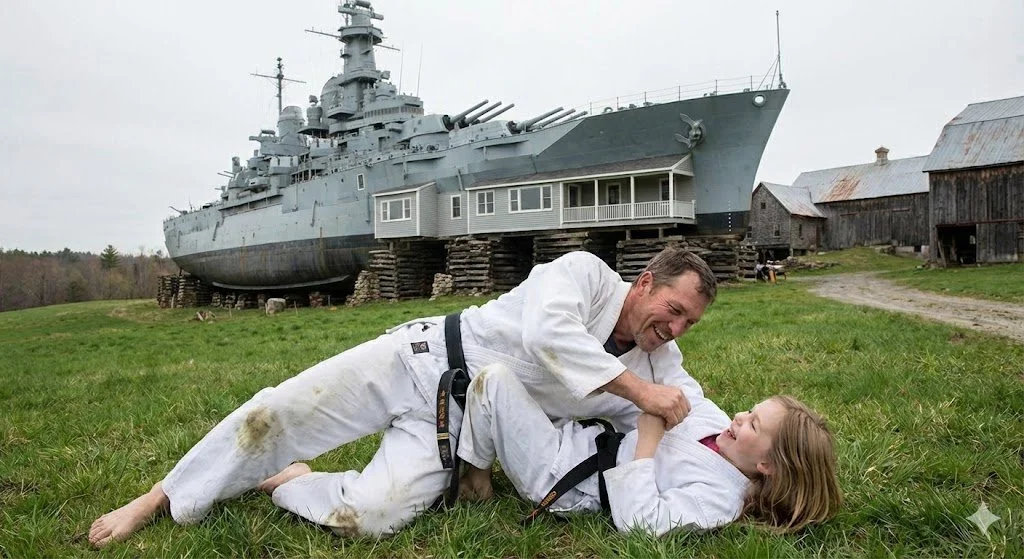
Chris (18:15) Like, he was really into music, so I'd help him set up different audio systems and showed him how to convert from VHS to DVD and just miscellaneous stuff while helping him play games. (18:26) He was just an eccentric guy. (18:28) He built a battleship. (18:30) He had airplane runway, like, right on his land out here, and he he bought the land for, like, $3,000 just almost by accident back in the seventies.
Scott Benner (18:39) Okay.
Chris (18:39) Just farm farm land, and he built an, runway on it, and he flew his plane in, he built a cabin. (18:44) Then he retired at at, like, 42 and turned it into a bed and breakfast and just built this, like, really cool place and lived out his his days just playing video games and doing miscellaneous hobbies and shooting guns and just a really fascinating guy. (18:59) So I always hung around, but, there was really nobody else in his life, just him and his wife. (19:04) And when he got sick and died a couple of years ago, he sort of said, Chris, I need somebody to take care of my wife. (19:09) You've got a couple of young boys, and, you I was kinda hoping maybe you'd help out.
Chris (19:13) And I, of course, said, absolutely. (19:15) We'd love to help. (19:16) Like, we're kinda caregiving, voluntary type people. (19:19) We do a lot of stuff with animals and whatnot. (19:21) Plus, he has a whole pile of Shih Tzu dogs, and they they loved us anyway.
Chris (19:25) So it just sort of happened naturally. (19:28) He passed away three weeks later, which was just unbelievable. (19:33) So, I kinda went out there and stayed a lot of the time and helped his wife through hospice care and whatnot. (19:39) And then we just continue to take care of the place. (19:42) And then as as Emma had mentioned just, I don't know, a year or so ago, she sort of dropped the news on us that they're leaving the land to us, which is absolutely insane.
Chris (19:52) It's like a like a fairy tale. (19:54) For years, I went out here and looked at this guy's beautiful land, and he'd always look at me and say, boy, isn't this isn't this beautiful? (19:59) Isn't this the place you'd like to live in? (20:01) You know? (20:01) And he'd always just sort of say that stuff, but I had no idea that, like, this grumpy old guy
Scott Benner (20:06) Was measuring you up.
Chris (20:07) Yeah. (20:08) Yeah. (20:08) And that's that's sort of what he said. (20:10) He's just like, you you know you you know how things run around here. (20:13) I understand how your brain works, and I know you're a good guy.
Chris (20:15) And yeah. (20:17) So that's that's the story.
Scott Benner (20:18) Even my wife when I couldn't do it myself, and here's here's the way I'm gonna say thank you.
Chris (20:24) Absolutely. (20:24) How many acres? (20:26) It's a a 102 acres.
Scott Benner (20:28) Wow. (20:28) That's really awesome. (20:30) Yeah. (20:31) It's nice you to tell his story because it could just I like the way he just seems to effortlessly move through his life and make big changes and shifts. (20:41) The only thing I didn't understand about your story was he built a battleship.
Scott Benner (20:44) What what are you telling me?
Chris (20:45) Oh, yeah. (20:45) That that was one of the coolest things. (20:47) It it's still out there. (20:48) He built the the German battleship, the Graf Spey, which I believe was, like, the first battle the first ship sunk in World War two, maybe.
Scott Benner (20:55) Okay.
Chris (20:56) But he just in his in his basement, he I I mean, there was no YouTube or anything to figure it out from back then. (21:02) He didn't have a background in it. (21:04) He just decided he was gonna build a battleship. (21:07) So he started off he was just gonna build a large model, and he ended up building, I don't remember the exact measure the exact size. (21:15) I think it's maybe, like, a one one twentieth scale or something like that, but it was, like, a 18 foot little mini battleship.
Chris (21:23) And he went to the extent of having he had he put all the little guns and the little people on it and all the rigging, but it was big enough that he was actually able to sit in it. (21:33) So he would play, like, what is it? (21:35) Rise of the Valkyries. (21:36) It was, you know, some classical music. (21:37) He'd just blare it while he'd ride around the lakes of Maine in this little battleship with war flags hanging from it.
Scott Benner (21:43) Wait. (21:43) You just Now you're telling me it floated?
Chris (21:46) Oh, it floated, and he drove it and brought it all over all over the state, all over New England, and it's it's in a museum. (21:53) I helped him sell it to a museum up in, up in Canada, and that's where it is now.
Scott Benner (21:59) Yeah. (21:59) Something. (21:59) That's really insane. (22:01) Oh, well, it's lovely. (22:02) So do you live I'm sorry.
Scott Benner (22:03) No. (22:04) Please. (22:04) What were you gonna say?
Chris (22:05) Oh, all I was gonna say is a fascinating side story to that is when we were trying to figure out what to do with this boat, he had me call the place that the ship was actually sunk. (22:15) I think it's called Monte Vaddeo, somewhere down in, like, Central America. (22:20) Mhmm. (22:20) And I couldn't call them, but I I I found their email address for, like, the naval base. (22:24) And I sent them a message, and it explained everything that this, you know, that this guy had built this this boat by hand, and he's looking for a place to sort of show it off so that it it lives out through history.
Chris (22:35) And the response I got that I never shared with him because I didn't wanna I didn't wanna break his heart, they said, the only thing we do with that boat is sink it so it could be right down there next to the other one. (22:45) Oh, I know. (22:47) I was like, wow. (22:48) Okay. (22:49) That's thank you for your time.
Chris (22:51) Yeah. (22:52) Yep. (22:53) Because I'm gonna ask
Scott Benner (22:53) you a question. (22:54) I don't find myself asking men that often. (22:57) Sure. (22:58) This is just my, my remembrance of me making the podcast. (23:01) Why are you such a nice person?
Chris (23:03) Oh, let's see. (23:05) I I think it's because I'll relate it to some of your your podcast episodes. (23:11) I think it's because I, score almost a perfect 10 on the Aces, and I, for some reason, got the resilience side of it.
Scott Benner (23:20) Ah, and none of the other stuff? (23:21) Some of it?
Chris (23:22) Some of the some of the other stuff. (23:23) I mean, none of the other stuff as far as, like, I don't have any of the aces, but I I mean, I have my my mental health demons that I battle. (23:31) And, actually, thanks to your podcast, I got into therapy. (23:34) Like, listening to you and Erica talk, I was like, oh, I would love to talk to somebody like this. (23:40) And that's that's helped a ton.
Scott Benner (23:43) Oh, you're gonna make her cry when she hears that. (23:45) She's gonna be so happy to know that.
Chris (23:47) Yeah. (23:47) Yeah. (23:48) Yeah. (23:49) Well, I I hope so. (23:50) I mean, it really it's it's been insanely helpful, it's helped my I mean, most of my family now.
Scott Benner (23:54) Oh, it's lovely. (23:56) Yeah. (23:56) Chris, for people who don't know, we I think we've done a an episode on it with Eric at some point, but the aces are the the original 10 categories are adverse childhood experiences, and they if you have a certain number of them, you're almost certain to have certain issues as an adult. (24:15) So they're physical, or sexual abuse, emotional abuse, physical neglect, emotional neglect, wasting, witnessing domestic violence, like your mother being treated violently, etcetera, household substance abuse, household mental illness, a separation or divorce with your parents, or someone in the household being incarcerated. (24:35) If if those things have happened in your life, the more you have, it kinda compounds and I can explain a lot of the, I don't know, a lot of the troubles you might be having as an adult.
Scott Benner (24:47) So you you identified some of those and you were like, oh, that's me?
Chris (24:51) Oh, yeah. (24:52) Yeah. (24:52) I mean, even as you're reading it now, I was like, oh, I might go for the I might go for the high score.
Scott Benner (24:57) Yeah. (24:57) Yeah. (24:58) I might be able to score a 10 here. (25:00) Hold on, everybody. (25:01) And so that happened to you, and then what came of it is you not wanting to be like that.
Chris (25:06) Yeah. (25:06) I mean, from from as young as I can remember of my so my mom was an alcoholic. (25:10) My parents split before I was born. (25:12) So I grew up with them just bashing each other constantly. (25:15) My dad went through some sort of midlife crisis and put his job when he was, like, 30, and I was a very late in life baby.
Chris (25:23) From my dad's perspective, I was a welfare baby because I was born just before my sister's eighteenth birthday. (25:30) And Oh, know.
Scott Benner (25:31) Oh, Chris, I gotta stop you. (25:32) I know I know I know people who do who've done that.
Chris (25:36) Oh, yeah.
Scott Benner (25:36) Have babies on a schedule to stay on welfare. (25:39) Right?
Chris (25:40) Right. (25:40) Right.
Scott Benner (25:40) What's that? (25:41) Oh, okay. (25:42) Sorry. (25:43) No. (25:43) Go on, and then I'll come back to my question.
Chris (25:45) It's okay. (25:46) Now here's the here's the the good part of that story is that when my dad died, I was able to figure that out for sure. (25:54) Mhmm. (25:55) And I found a bunch of letters from just probably four months before I was born between my mom and my dad and my sister, and they were happy and they were living together and everything was fine. (26:08) My mom didn't know she was pregnant, but everything was great.
Chris (26:12) And then there was an incident with my sister where my dad he he thought that there was something going on with her boyfriend and that she was lying all the time. (26:22) And, essentially, he kicked her out, my mom said, well, I'm going with her. (26:26) And that was that. (26:27) But it was just, you know, about four months before four or five months before I was born, it meant a lot to me to be like, ah, I was conceived in love.
Scott Benner (26:35) Yeah. (26:35) There were there was a good moment for them, and that's when you were conceived. (26:39) Yeah. (26:39) Yep. (26:40) That's lovely.
Scott Benner (26:40) I'm glad you were able to find that and have that. (26:43) Because otherwise, you I you're gonna come to the conclusion that it was it was time to get paid again. (26:47) So here comes Chris. (26:49) Right?
Chris (26:49) You go. (26:50) Yeah. (26:50) Absolutely. (26:51) That that's what I thought for a long time.
Scott Benner (26:53) Oh, jeez. (26:53) That must have been hard to live with.
Chris (26:55) I don't know. (26:56) It was just everything was so crazy as a child. (26:59) I was so I lived with my mom, but she was an absolutely severe alcoholic. (27:03) I was pretty much raising myself anyway. (27:05) I mean, I remember from a young age having to hide from CPS knocking on the door and having to like, I would, eight or nine years old, I would call the liquor stores in the area and be like, hey.
Chris (27:14) Can you please not sell my mom any alcohol?
Scott Benner (27:17) Uh-huh.
Chris (27:18) You know, she was passed out all the time. (27:20) So when I was, like, 10, my dad was he he worked a couple of hours away. (27:25) I basically called him one day and just begged him to come home because I didn't wanna live there anymore. (27:29) So I had to go to court and had to, like, testify in front of the judge and whatnot. (27:33) But, anyway, I ended up going to live with my dad, which was better than dealing with my mom because my dad just smoked weed.
Chris (27:42) He didn't drink at the time, so it was it was better. (27:45) He was happier, didn't have a job or anything. (27:47) So we were we squatted for a long time. (27:51) I mean, we lived in houses that that he either used to live in or he'd make a deal that he'd take care of a house for a few months and trade for us being able to stay there. (28:00) So we were homeless for quite a while, but it so just everything was so crazy.
Chris (28:04) It didn't didn't really matter. (28:06) So, you know, I I think that's that's where I built the resilience was I'd been through so much weird stuff that just didn't matter.
Scott Benner (28:14) Yeah. (28:14) Diabetes, you're like, oh, jeez. (28:15) This is easy. (28:17) Yeah. (28:17) Shouldn't I shouldn't have much trouble with this.
Scott Benner (28:19) Do you prefer chaos or calm now as an adult?
Chris (28:22) Oh, calm. (28:23) No question. (28:23) I mean, I I I do I thrive in chaos. (28:27) Mhmm. (28:28) But I like to control the chaos, if that makes sense.
Chris (28:32) You know, we're we're very busy. (28:34) We're into a ton of stuff. (28:36) We have chickens, and we foster cats. (28:40) And we we're into robotics, and we do, you know, Amazon a bunch of sports, and my son's in D and D clubs and math clubs, and we're always traveling around and doing all this stuff. (28:50) So we're very busy.
Chris (28:52) It that's the type of chaos I prefer now
Scott Benner (28:55) Yeah.
Chris (28:55) Versus the, like, the sky is falling chaos. (28:58) Like, whenever I got diagnosed with diabetes, that was a a sky is falling kind of chaos. (29:03) Definitely threw me into a funk for quite a while, you know, until I I wrapped my head around it. (29:08) And that's kinda how I handle most everything is, like, there's the initial, like, okay. (29:12) We've gotta figure this out.
Chris (29:13) And I go into, like, a survival mode. (29:17) And then, yeah, once I figure it out, then then it's autopilot. (29:21) And that's how I how I kinda handle everything. (29:23) Like, any issue that comes up, just throw my all into it, figure it out, and then move on.
Scott Benner (29:28) I wanna hear about the funk. (29:29) So tell me about that. (29:30) Like, she's diagnosed and and you fall into a bit of would you call it depression or just
Chris (29:35) Yeah. (29:35) Yeah. (29:36) I think so. (29:37) Just a, like, you know, this is the only thing that matters. (29:39) Just to add to this, I I have ADHD, which I didn't know until my boys get diagnosed with ADHD, and then I it made a whole lot of sense.
Chris (29:47) And this was right prior to me being medicated. (29:50) And one of the ways that it presents for me is either everything's overwhelming and there's a million inputs all at once, or it's just absolute complete hyperfocus. (30:00) And with diabetes, that's what it was. (30:02) It was just the only thing that mattered is making sure that that Emma's healthy, that everything's gonna be okay.
Scott Benner (30:09) Yeah.
Chris (30:09) So I remember when she first came home, and I realized the, like, relationship of carbohydrates to insulin, and and it was right before Halloween. (30:20) So I'm like, is she going to be able to have candy for Halloween? (30:25) And I remember, like, at nighttime, I would we used to have these, like, Dove chocolates that we'd keep in the house, I'd grab one out of the bowl. (30:32) And I remember going to eat it and being like, Emma would have to bowl us for this. (30:37) And it just, like, set me on this, like, sort of mental journey about, like, understanding everything and empathizing with her.
Chris (30:44) Yeah. (30:45) So that that's that's what I mean by funk. (30:47) It just sent me into this, like, overthinking everything and just really only focusing on this.
Scott Benner (30:53) Were you reflective in a good way, or were you thinking about it in an obsessive way?
Chris (30:57) I would say the first one. (30:59) My wife would probably say the second one. (31:01) Probably a combination of the two.
Scott Benner (31:04) Oh my gosh. (31:05) So the candy dish set you on on this path?
Chris (31:08) Yeah. (31:09) Yeah. (31:10) Actually, it it really was. (31:11) It was a it was a piece of chocolate.
Scott Benner (31:12) Yeah. (31:13) That just kind of made you think. (31:15) I I mean, I I imagine any of us who are being thoughtful who have kids with type one have had a moment where we picked up a piece of food and thought, oh, this this doesn't feel fair. (31:24) Yeah. (31:25) Yeah.
Chris (31:25) In a way, like so as far as that, like, obsessive thing you mentioned, I I did I did go the route of I see obsessive, but there's a silver lining. (31:35) There's a positive side of it. (31:37) I really dove into nutrition and just trying to wrap my head around how food works in the body and how insulin works. (31:45) It it was kind of pre a lot of your management episodes and whatnot with Jenny, but about the same time a lot of them started coming out. (31:51) I was also listening to Joe Rogan a lot, and that was back when he had a lot of people talking about nutrition coming on.
Scott Benner (31:56) Okay.
Chris (31:57) I really dove into it, and I I got myself really healthy. (32:00) I mean, at the time, back then, I was probably, like, a hundred and seventy, hundred eighty pounds. (32:04) I'm five seven. (32:05) I'm a nerd. (32:06) Physically active nerd.
Chris (32:08) Like, I I've always been very active, but I always had extra weight on me. (32:13) And I learned pretty quickly that, like, oh, if I just track my macros and understand you know, reduce my carb intake and, you know, add some intermittent fasting in here. (32:22) And within, I don't know, maybe a year, I got myself to a point that I was like, woah. (32:29) I look different. (32:29) I feel different.
Chris (32:30) I have so much more energy. (32:32) And all I did is make these little minor changes here and there in how I eat. (32:37) Like, I I cut out sugar, I just started eating more, like, kind of nothing from a box. (32:42) You know what I mean? (32:43) Just like like a paleo kind of thing.
Chris (32:45) And I got myself into into really good shape, and then that just sort of naturally started spreading to as I cooked and as I, you know whether it was around diabetes or or even just cooking for the family, was just, like, spreading some of that ideas, and it was interesting to watch, like, everything fall in line. (33:01) Like, one of the things we talk about is how Emma's diagnosis, it definitely sort of helped us all become healthier people.
Scott Benner (33:08) Mhmm. (33:08) Did your wife come along with that on that ride with you, or did she come along begrudgingly? (33:13) Or I'm always interested in how one person's change affects the the dynamic.
Chris (33:18) Yeah. (33:19) I mean, I like, I went I went hard into it, so a little too hard probably. (33:24) But, I mean, for their perspective, you know, because she's like, you know, we're still trying to eat all the regular foods. (33:30) So there were definitely times that I was, like, being overprescriptive or whatever, being like, hey. (33:35) Before you eat that, did you know how many grams of carbs are in that?
Chris (33:38) And do you know
Scott Benner (33:39) They're like, shut up.
Chris (33:41) Yeah. (33:41) Yeah. (33:42) Well, I mean so my boys are wired a lot like I am, so they were like, oh, fascinating. (33:47) You know? (33:48) And and and sometimes they'd be like, that's fascinating.
Chris (33:51) I'm gonna go eat this bowl of fudge now.
Scott Benner (33:53) Yeah. (33:54) Fascinating. (33:55) Not stopping. (33:55) And mom is rolling her eyes all the way to the back of her head right now.
Chris (33:58) Absolutely.
Scott Benner (33:59) Hey. (34:00) You didn't get to, like, nootropic gum or something like that. (34:02) How far did you fall down this rabbit hole?
Chris (34:04) No. (34:05) Nothing like that. (34:05) Good for you. (34:06) You know? (34:07) Well, I I got kids to feed.
Chris (34:09) You know? (34:09) There's a limited amount of money that
Scott Benner (34:10) you make in the world. (34:11) Gum.
Chris (34:12) Yeah. (34:12) If I I mean, I might have tried it. (34:15) I I remember trying Alpha Brain for a month and then being like, that seems like expensive pee. (34:19) But, you know, may maybe it did something, but not enough for me to try the second month.
Scott Benner (34:23) I'd like to give you credit for having an open mind and trying something in general. (34:27) So you get yourself in, like, awesome shape. (34:29) Your your kids are interested but not doing it. (34:33) Your wife is listening. (34:34) And then eventually, it just what it just kinda bled over.
Scott Benner (34:37) Just kinda cooked a certain way and didn't give them a a choice?
Chris (34:41) No. (34:41) No. (34:41) Not even like that. (34:42) Okay. (34:42) It was just like a I mean, I don't know.
Chris (34:45) It was like making little changes. (34:47) Right? (34:48) Like, changing out the type of pasta that we use, changing out the type of pasta sauce, and maybe getting a different bread. (34:55) Like, a lot of the stuff that I hear you and Jenny talking about as well, but just, like, mixing in little changes. (34:59) Yeah.
Chris (35:00) But then they they noticed it as well. (35:02) Right? (35:02) Like, my both my boys started noticing, like, oh, like, I'm looking looking much better when I look in the mirror, I feel stronger and have more energy. (35:10) So it just it just sort of happened. (35:13) That's awesome.
Chris (35:14) And yeah. (35:15) Yeah.
Scott Benner (35:16) Dug in pretty early on with the podcast to learn about diabetes and stuff. (35:19) Would you say there was ever a time where you guys struggled, you know, and where what was that like? (35:26) Or you know?
Chris (35:27) Yeah. (35:28) The I mean, the the early days for sure. (35:31) Trying to find that balance between keeping her safe and healthy and not being, like, totally overbearing and having to to to be by her side. (35:42) And I wanted her to be able to choose what she wanted to eat. (35:46) So I actually remember like, you had a podcast episode one time about a kid that wanted to eat some Skittles or M and M's or something along that those lines.
Chris (35:54) And he tried a little bit, tried the bolus. (35:56) That didn't work, and he wrote it down, made an adjustment. (35:58) And I just I remember those chocolates that I was talking about at the beginning, and I love those things. (36:04) And I was like, well, let's let's use that, and let's figure that out. (36:07) So we did that, and we just sort of figured it out one little thing at a time.
Chris (36:12) And then we just rinsed and repeated with that to be able to let her have the things she wants and and have predictable outcomes. (36:20) And then within within just a couple of months, we we we went from, like, you know, 1414 a one c, a diagnosis, to the next visit was a seven, next visit was a six, and then it's been six or below ever since then. (36:33) Just had had her, end of meeting last month. (36:36) It was, like, 5.6, I think.
Scott Benner (36:37) Yeah.
Chris (36:38) We just kept rolling with that. (36:39) And then with the introduction of Loop, and I'm I'm a software engineer anyway, so I remember buying a Mac and and setting up Loop and getting all that done. (36:47) But now with the newer versions, we have this Loop caregiver so we can manage things remotely. (36:52) So that enables us to start sending her to camp and being able to just kinda keep an eye on things and and giving her some of the control, but us still being able to, like, fix things remotely if if stuff goes sideways.
Scott Benner (37:03) Hey. (37:03) The loop caregiver, that's it's the icon with the blue circle. (37:06) Right?
Chris (37:07) Mhmm.
Scott Benner (37:07) Has it not been working for a while for you?
Chris (37:10) Oh, no. (37:11) I use it every single day. (37:12) I guess and I'm looking at it. (37:13) It's a it's a blue circle.
Scott Benner (37:15) Yeah.
Chris (37:15) Blue circle with the CG inside it. (37:17) It's a
Scott Benner (37:18) And your night scout can be in there as well?
Chris (37:20) Yeah. (37:20) Yeah. (37:21) I mean, it it it connects to night scout. (37:23) So that's how it that's how it functions, of course.
Scott Benner (37:25) Can you troubleshoot something for me while I have you here?
Chris (37:27) Oh, yeah. (37:28) Yeah. (37:28) What's up?
Scott Benner (37:28) So it hasn't been working for a while. (37:30) I haven't been able I mean, it's working as much as I can see things, but I haven't been able to send boluses or change targets or anything like that. (37:37) And now I just opened it up to talk to you about it, it says update available. (37:40) A new version is available. (37:41) Four point one dot o is recommended to update.
Scott Benner (37:43) I hit okay, but how do I update that?
Chris (37:46) So, nor the way that I do it is through through a GitHub repository.
Scott Benner (37:51) Oh, I have TestFlight, I think.
Chris (37:54) Yeah. (37:54) So so that that's where it lands. (37:56) It'll land in TestFlight. (37:57) But I don't know if you build your apps or if you have somebody else build your apps, but somebody goes into GitHub and sets up an action. (38:04) So you'd you'd go into GitHub, find the repo, you'd pull down the latest code from the repo, sync it with the source.
Chris (38:10) That gets you the latest version, then you'd build the app Okay. (38:14) Making sure that, you know, all your your Apple stuff is in. (38:17) If you've got another app building that you get through TestFlight regularly, then most everything's all set up and probably just need to rebuild the app.
Scott Benner (38:24) So may I be completely honest? (38:29) Yeah. (38:29) I know what GitHub is.
Chris (38:33) Sure you do.
Scott Benner (38:34) But a lot of what you said after that
Chris (38:36) Okay. (38:37) Alluded me. (38:38) So you you have somebody else that builds your app.
Scott Benner (38:40) Right, Scott? (38:41) So alright. (38:41) So I'm on GitHub. (38:42) I have trio loop oh, loop follow. (38:44) So I do I click on that on the left side?
Chris (38:46) I I don't know if loop follow is loop caregiver. (38:48) Loop follow is a is another one that sort of, is like a more advanced follow. (38:53) It like dexcom follow, but it also gives you pod info.
Scott Benner (38:56) Yeah. (38:56) That's the one I'm using because I don't see anything else there. (38:58) So
Chris (38:59) It it might be it might be similar. (39:00) So, I mean, I assume, yeah, that would be it. (39:02) And then you'd go into that repo.
Scott Benner (39:04) Okay. (39:05) Use English. (39:05) Go into the
Chris (39:06) Oh, okay. (39:07) Are you signed in?
Scott Benner (39:08) Get Yeah. (39:09) No. (39:09) I'm looking at it right now.
Chris (39:10) Okay. (39:10) So if you're into the repo, once you're in there, there should or the repo is the the thing. (39:15) So if you click on the name loop follow, it'll bring you to a sort of a landing page, and then you should have something like sync fork or
Scott Benner (39:23) I see sync fork.
Chris (39:24) Yep. (39:25) So you wanna sync the fork.
Scott Benner (39:27) This branch is not behind the upstream.
Chris (39:29) Oh, good. (39:30) So it's it's already done, which is cool. (39:31) Okay. (39:32) And then somewhere there's a there's an actions tab. (39:35) You'd click on actions.
Scott Benner (39:36) Somewhere there's an actions tab. (39:38) I see it. (39:38) Hold on a second. (39:39) Yeah. (39:40) I appreciate this, by the way.
Chris (39:41) Yeah. (39:41) Of course. (39:42) No problem.
Scott Benner (39:42) Alright. (39:42) Like, build loop follow main is green, but a lot of stuff is red in the past. (39:49) Oh, okay. (39:50) But the the latest one from a couple days ago is green. (39:55) So Okay.
Scott Benner (39:55) Check mark.
Chris (39:56) So that that's good. (39:58) Now the the question is the the way that loop the the way that we I have it set off anyway, and I think it's the default configuration, is that it'll do an auto build. (40:06) So does it say, like, build loop or whatever the the app is? (40:09) Does it say scheduled?
Scott Benner (40:11) Yes.
Chris (40:11) Okay. (40:12) So with the way that it works for ours, we have to manually build to actually deploy the new version of the app. (40:18) Mhmm. (40:19) So if if that number four action succeeded last time, you should be able to just click on that that that action and then click run. (40:28) So I'm on the
Scott Benner (40:29) it says build loop follow main, that's the only thing that's highlighted to click on or main I can click on. (40:33) Those are the two things that are clickable.
Chris (40:35) Okay. (40:36) Is is there anywhere that says, like, run?
Scott Benner (40:38) There's view workflow file, delete workflow, run. (40:41) Those are the clickable things. (40:43) Okay.
Chris (40:43) Let me
Scott Benner (40:43) click on this and see
Chris (40:44) what If you have run, that that should be it.
Scott Benner (40:46) One second, man. (40:48) Oh, why is everything so small? (40:50) That wasn't nice. (40:51) I I clicked on something out. (40:53) Run rerun all jobs?
Scott Benner (40:55) Yeah. (40:55) Check it out. (40:56) Yeah? (40:56) Alright.
Chris (40:57) So nor normally, with with the way I have it set up, if you do a manual run, that's the trigger that that says to actually deploy the application to TestFlight. (41:05) And so if that all succeeds, you know, half an hour or so after the build is complete, you should get an email.
Scott Benner (41:13) Okay. (41:13) And then do you click on something in the email?
Chris (41:16) Nope. (41:17) That's it. (41:17) You'll get an email from TestFlight saying your TestFlight apps are updated. (41:20) And then if you go into TestFlight, right beside the app, it'll say update.
Scott Benner (41:23) Okay. (41:24) Yeah. (41:24) I just saw it run it. (41:25) Now it's queued. (41:27) It's actually doing a lot here.
Scott Benner (41:28) And by a lot, I mean, there's things flashing and spinning.
Chris (41:31) Good. (41:31) So flashy, spinning things, and then as long as they're all green at the end, that hopefully will get that working for you.
Scott Benner (41:38) Okay. (41:38) Alright. (41:38) Can we pivot a little bit here?
Chris (41:40) So No. (41:40) Yeah, please.
Scott Benner (41:41) Like you said, when we set your daughter up to record, you and I chatted for a couple of minutes beforehand.
Chris (41:46) Yeah.
Scott Benner (41:46) And, I was probably talking about some of the stuff about AI that I'm excited about for health care and and maybe for the podcast too. (41:54) Did you see that the other day, ChatGPT released a browser called Atlas?
Chris (42:02) No. (42:03) I did not. (42:04) Yeah.
Scott Benner (42:04) I mean, technology in general. (42:05) Like, there you have to pick a point to jump in. (42:08) Right. (42:08) You you know what I mean? (42:09) And there's times where you're just like, I wanna know all about this.
Scott Benner (42:12) I think this is gonna be cool. (42:13) I can't wait to find out. (42:14) And there's times when you're like, you know what? (42:16) I'm gonna wait. (42:16) Something else is gonna happen.
Scott Benner (42:18) I'm wondering if this isn't something else.
Chris (42:22) Mhmm.
Scott Benner (42:22) So a browser with an AI sidebar in it that makes it feel like to me and I've only watched the the first overview of how it works, but it makes it feel to me that you can go to a website and then have ChatGP start talking like, looking directly at the website very closely while you're there. (42:42) Oh, wow. (42:42) And I'm thinking that most of the problems that I've imagined being alleviated for people, I think this might take care of a lot of it.
Chris (42:53) Oh, wow.
Scott Benner (42:54) Yep. (42:55) And I'm I'm I'm still, like, just beginning to dig into it, really. (42:58) So it'd it'd be unfair. (43:00) But have the things set up on the Circle group, which I don't have a lot of people in on purpose. (43:05) Right?
Scott Benner (43:06) They have, like, an agent in there, and you can load all the the transcripts of into the podcast. (43:11) And the agent you can ask the agent a question. (43:13) It does its best to go into the transcripts and pull out answers, etcetera. (43:17) But one of the things it does that really excites me and this weekend, actually, while I was away, it was a great example of why. (43:25) I had a woman contact me and ask me if it would be okay if she translated some of the transcripts of the podcast into Vietnamese so that she could so she could, share it in a local community, you know?
Scott Benner (43:36) And I was like, yeah, that's that's fine. (43:38) But if you go to that circle group and type a question into the agent in Vietnamese, it answers you in Vietnamese and every other language you can imagine. (43:51) So I've been talking for five, six years about, like, oh, we might have to pay voice actors to remake the episodes and, like and that that's financially impossible for me, but also, like, technically difficult. (44:03) Right? (44:03) Because you you're gonna just have people reading and it's gonna sound terrible and, you know, what are you gonna do and who's gonna pay for it and edit it all together?
Scott Benner (44:09) And I don't speak the languages, so I can't QC anything and just a really kind of a big mess. (44:14) I think this is gonna fill this in.
Chris (44:17) Absolutely. (44:17) We we have something similar for work now where we can enable a translator, and we have meetings where people are speaking different languages, Japanese and English, etcetera, and it just real time translates back and forth in, and it sounds like the person's voice who's speaking it in the other language.
Scott Benner (44:32) Yeah. (44:33) Isn't that crazy?
Chris (44:34) Oh, it's amazing. (44:35) Absolutely amazing.
Scott Benner (44:36) Yeah. (44:37) I I swear I I I think it's getting super close. (44:40) Like, I also understand the rest of it. (44:42) Like, if you wanna be social with me, I'll I could yell and scream about all the power this is gonna take and everything else too. (44:48) Like, I I know, you know, I'm not unaware of the problems.
Scott Benner (44:51) I'd assume I'm not gonna get in front of them, and I'm trying to figure out ways for this to help people. (44:56) So No. (44:57) I didn't. (44:58) I just went to my website, and I opened up I just downloaded the browser. (45:01) This is my first time using it.
Scott Benner (45:03) And I clicked on the chat GPT button at the top right. (45:06) It opens up a basically, like, a mini window inside of the browser. (45:09) I said, what is episode 1,600 like about? (45:13) Oh. (45:13) It says Into the Woods features 10 year old Emma who shares her life living with type one diabetes, everything from gymnastics to MMA, carb counting at school, and even how did she spot her cousin's diagnosis.
Scott Benner (45:23) That's just giving me something that's written on the page. (45:25) Then it says, if you'd like, I could pull a full transcript. (45:28) So pull transcript. (45:30) Let's see what happens there. (45:33) It's a little slow right now, but it's their first version, so I'm not overtly concerned about that.
Scott Benner (45:39) I want to see what happens as it opens up. (45:41) So, I guess my question is is where do you see AI in service of diabetes? (45:47) How do you think it might do that in the future?
Chris (45:50) Oh, yeah. (45:50) I I mean, with the way that it learns, it should be able to be able to look at your insulin delivery, your carb intake, and some any number of other variables and combine that with things like Apple Health and and other metrics. (46:06) And at some point, it should be pretty good at just doing what we do because we're just making decisions based on the data that we see, right, like as humans. (46:15) So this will definitely be able to do something very similar. (46:19) I mean, just watching seeing what it does in in my everyday use of it for work and and everything else in my personal life, it it's incredible.
Chris (46:28) So thinking about how that might apply to diabetes. (46:30) I mean, I talk to Emma about it pretty frequently. (46:32) Like, I think it's hopefully going to reduce her mental load a significant amount before she's at the age where she's gonna have to, you know, take more of it on.
Scott Benner (46:40) Mhmm. (46:40) Yeah. (46:41) Now I saw somebody online the other day asking a question, and they were clearly just trying to get other people's opinions. (46:47) But they had gone to chat GPT and had a a conversation about something about diabetes that they did, they didn't understand. (46:57) And I browsed it really quickly, I thought, I think this thing gave her a rock solid answer.
Scott Benner (47:02) And, you know, she was able to ask follow-up questions, which I think is maybe where that separates you from Google a little bit. (47:08) Like, you ask the first question, you get an answer back, and you might have more questions, but it's hard to know then where to go from there. (47:13) And then people came in, and they were like, this seems reasonable to me. (47:16) And people were interested in it too. (47:18) So it's gotta be coming a little bit.
Scott Benner (47:21) But I don't know how long till regular people who aren't, you know what I mean, digging into stuff like this, figure it out. (47:27) Because if you're online, you think everybody's doing this, but that's certainly not the case.
Chris (47:31) Right.
Scott Benner (47:31) Yeah.
Chris (47:32) Absolutely. (47:32) How do you use it at
Scott Benner (47:33) work where the translator helps again? (47:42) This episode was too good to cut anything out of, but too long to make just one episode. (47:47) So this is part one. (47:48) Make sure you go find part two right now. (47:50) It's gonna be the next episode in your feed.
Scott Benner (47:55) I'd like to remind you again about the MiniMed seven eighty g automated insulin delivery system, which, of course, anticipates, adjusts, and corrects every five minutes twenty four seven. (48:05) It works around the clock so you can focus on what matters. (48:11) The Juice Box community knows the importance of using technology to simplify managing diabetes. (48:17) To learn more about how you can spend less time and effort managing your diabetes, visit my link, medtronicdiabetes.com/juicebox. (48:28) I'd like to thank the blood glucose meter that my daughter carries, the Kontoor Next Gen blood glucose meter.
Scott Benner (48:35) Learn more and get started today at kontoornext.com/juicebox. (48:41) And don't forget, you may be paying more through your insurance right now for the meter you have than you would pay for the Kontoor Next Gen in cash. (48:51) There are links in the show notes of the audio app you're listening in right now and links at juiceboxpodcast.com to Kontoor and all of the sponsors. (49:01) Says to forget old acquaintances, but, honestly, I'm grateful for every one of you that keeps showing up. (49:07) Thank you so much for listening.
Scott Benner (49:09) Here's to a fantastic 2026. (49:11) Please make sure you're subscribed or following in your audio app. (49:15) I'll be back tomorrow with another episode of the Juice Box podcast. (49:23) Check out my algorithm pumping series to help you make sense of automated insulin delivery systems like Omnipod five, Loop, Medtronic seven eighty g, Twist, Tandem Control IQ, and much more. (49:35) Each episode will dive into the setup, features, and real world usage tips that can transform your daily type one diabetes management.
Scott Benner (49:43) We cut through the jargon, share personal experiences, and show you how these algorithms can simplify and streamline your care. (49:49) If you're curious about automated insulin pumping, go find the algorithm pumping series in the Juice Box podcast. (49:55) Easiest way, juiceboxpodcast.com, and go up into the menu. (49:59) Click on series, and it'll be right there. (50:02) If you're looking for community around type one diabetes, check out the Juice Box podcast private Facebook group, Juice box podcast, type one diabetes.
Scott Benner (50:11) But everybody is welcome. (50:13) Type one, type two, gestational, loved ones, it doesn't matter to me. (50:17) If you're impacted by diabetes and you're looking for support, comfort, or community, check out Juice Box podcast, type one diabetes on Facebook. (50:27) If you have a podcast and you need a fantastic editor, you want Rob from Wrong Way Recording. (50:33) Listen.
Scott Benner (50:34) Truth be told, I'm, like, 20% smarter when Rob edits me. (50:37) He takes out all the, like, gaps of time and when I go, and stuff like that. (50:42) And it just I don't know, man. (50:44) Like, I listen back, and I'm like, why do I sound smarter? (50:47) And then I remember because I did one smart thing.
Scott Benner (50:50) I hired Rob at wrong way recording dot com.










Please support the sponsors






The Juicebox Podcast is a free show, but if you'd like to support the podcast directly, you can make a gift here. Recent donations were used to pay for podcast hosting fees. Thank you to all who have sent 5, 10 and 20 dollars!
