#1736 With Haven
You can always listen to the Juicebox Podcast here but the cool kids use: Apple Podcasts/iOS - Spotify - Amazon Music - Google Play/Android - iHeart Radio - Radio Public, Amazon Alexa or wherever they get audio.
Heather discusses managing Type 1 diabetes and cancer within her family. She shares how AI provided emotional support, inspiring her to build an app for caregivers.
+ Click for EPISODE TRANSCRIPT
DISCLAIMER: This text is the output of AI based transcribing from an audio recording. Although the transcription is largely accurate, in some cases it is incomplete or inaccurate due to inaudible passages or transcription errors and should not be treated as an authoritative record. Nothing that you read here constitutes advice medical or otherwise. Always consult with a healthcare professional before making changes to a healthcare plan.
Scott (0:0) Welcome back, friends. (0:01) You are listening to the Juice Box podcast.
Heather (0:16) Morning. (0:17) My name is Heather Ruby.
Scott (0:20) If you'd like to hear about diabetes management in easy to take in bits, check out the small sips. (0:26) That's the series on the Juice Box podcast that listeners are talking about like it's a cheat code. (0:31) These are perfect little bursts of clarity, one person said. (0:34) I finally understood things I've heard a 100 times. (0:38) Short, simple, and somehow exactly what I needed.
Scott (0:41) People say small sips feels like someone pulling up a chair, sliding a cup across the table, and giving you one clean idea at a time. (0:49) Nothing overwhelming. (0:50) No fire hose of information. (0:52) Just steady helpful nudges that actually stick. (0:55) People listen in their car, on walks, or rather actually bolus ing anytime that they need a quick shot of perspective.
Scott (1:02) And the reviews, they all say the same thing. (1:04) Small sips makes diabetes make sense. (1:08) Search for the Juice Box podcast, small sips, wherever you get audio. (1:12) While you're listening, please remember that nothing you hear on the Juice Box podcast should be considered advice, medical or otherwise. (1:20) Always consult a physician before making any changes to your health care plan or becoming bold with insulin.
Scott (1:29) This episode of the juice box podcast is sponsored by the Kontoor Next Gen blood glucose meter. (1:35) Learn more and get started today at kontoornext.com/juicebox. (1:41) Today's episode is also sponsored by Medtronic Diabetes, who is making life with diabetes easier with the MiniMed seven eighty g system and their new sensor options, which include the Instinct sensor made by Abbott. (1:55) Would you like to unleash the full potential of the MiniMed seven eighty g system? (1:59) You can do that at my link, medtronicdiabetes.com/juicebox.
Heather (2:04) Morning. (2:05) My name is Heather Ruby.
Scott (2:07) Heather, I appreciate you having a name that is easy to spell.
Heather (2:11) Yeah. (2:12) It is people still ask me to spell it. (2:14) You would not be surprised, I guess.
Scott (2:15) No. (2:15) Wait. (2:17) They ask you to spell Ruby?
Heather (2:18) Yes.
Scott (2:20) Really?
Heather (2:20) All the time. (2:21) Yeah. (2:21) I almost always introduce myself and spell it, actually.
Scott (2:25) Well, what do you think they're expecting?
Heather (2:28) I have no idea. (2:29) I get Rudy, like, r u d y or I get Rudy, r u t I. (2:36) I I'm not really sure.
Scott (2:38) Will you say, hi. (2:39) I'm Heather Ruby, and they go, Rudy? (2:41) And you go, no, Ruby. (2:42) And they go Yes. (2:44) They say Ruby.
Heather (2:45) Favorite is is, like, professional emails where I'll sign my name, Heather Ruby.
Scott (2:49) Mhmm.
Heather (2:49) And then I will get an email back and it says, hey, Ruby. (2:53) Blah blah blah. (2:54) And you're like, I I sometimes I will sign it back all caps, Heather.
Scott (2:59) Have you ever heard me say on the podcast how when we introduce my son, people off often times hear Paul, but his name is Cole?
Heather (3:06) Oh, yeah. (3:07) Mhmm.
Scott (3:08) That one's interesting to me too. (3:09) Hey. (3:09) This is Cole. (3:10) Paul? (3:10) Cole?
Scott (3:10) Paul? (3:11) Cole? (3:12) No. (3:12) Paul? (3:13) What am I saying?
Scott (3:15) It just kinda goes back like that.
Heather (3:17) Yeah. (3:17) Alright.
Scott (3:18) Well, anyway, it makes it easier for me in the morning because my old eyes can't see the screen when I first sit down. (3:22) And I sometimes have to sit down and be like, oh, you know, I I I saved the file with your name. (3:28) And, you know, this morning, I was like, oh, Heather Ruby. (3:32) Awesome. (3:32) This is easy.
Scott (3:33) Yeah. (3:33) So thank you very much.
Heather (3:34) For Monday. (3:35) Yeah. (3:35) You're welcome.
Scott (3:35) No. (3:36) I take it. (3:36) So do you have type one? (3:37) Do have a kid with type one? (3:39) What is going on?
Heather (3:40) Yeah. (3:40) I have a daughter. (3:41) She's 12 with type one, diagnosed when she was three, and then my husband is also type one. (3:46) He was diagnosed when he was seven. (3:47) So he's been diabetic for forty years back when he was on, pork insulin.
Scott (3:51) Wow. (3:52) Do have any other kids besides the daughter?
Heather (3:54) We have three other kids. (3:55) I have an oldest who's 20, and then my stepson's 19. (4:00) And then mine and Eric's son together, Asher. (4:03) He is gonna be 14 next week.
Scott (4:07) Oh, wait. (4:07) How old are you? (4:08) Because I saw you for a minute. (4:09) You don't have
Heather (4:10) I know.
Scott (4:10) 20 year old son, do you?
Heather (4:12) I do. (4:12) I'm 38. (4:13) So if you do the math
Scott (4:14) I did it. (4:14) A
Heather (4:15) little surprise. (4:16) Yeah.
Scott (4:16) It's a little surprise. (4:17) I was just trying to go see a movie, Scott.
Heather (4:20) Right. (4:20) Right. (4:21) Yeah. (4:21) Was a surprise, but, you know, my life wouldn't be where it is, I don't think, without her. (4:26) So
Scott (4:26) Very nice. (4:27) Okay. (4:27) Okay. (4:28) So you got a a mixed family there. (4:29) There's, some step stepmoms, dads, kids, sisters, brothers.
Scott (4:34) Yep. (4:34) But the child who has type one is with you and your current husband?
Heather (4:38) Yes.
Scott (4:39) Yes. (4:39) Okay. (4:40) And she's 12, but she was diagnosed when she was three?
Heather (4:43) Yep. (4:43) Diagnosed on sweetest day.
Scott (4:45) Wait. (4:45) What is what day?
Heather (4:47) Sweetest day in October.
Scott (4:49) Sweetest? (4:49) Wait. (4:49) Now I feel like Ruby? (4:51) Rudy? (4:51) Yeah.
Heather (4:52) Sweetest.
Scott (4:53) Oh, sweetest day. (4:54) Yeah. (4:55) Yeah. (4:56) Is that a day? (4:56) I I don't know It's
Heather (4:58) like a homework holiday, but I just thought it was ironic that it was sweetest day when she was diagnosed.
Scott (5:03) Heard about it. (5:03) It's a it's a it's a card thing?
Heather (5:06) Yeah. (5:06) It's like some day in October. (5:07) I don't know. (5:08) It's
Scott (5:08) I don't believe in Arbor Day either.
Heather (5:10) Yeah. (5:10) No. (5:11) It's it's kinda like that.
Scott (5:12) I'm just kidding. (5:13) I do believe in Arbor Day. (5:15) Okay. (5:16) So when you get married, how long are you dating before you married this person?
Heather (5:21) We were we almost got married a year to the day of our first date.
Scott (5:26) Okay.
Heather (5:26) So we're pretty kinda quick.
Scott (5:28) How much did you know about his diabetes in that first year?
Heather (5:33) You know, he handled a lot of it, but I actually I was in a role of sort of a caregiver since I was pretty young. (5:40) My papa had type two diabetes, and so I've been giving shots since I was, like, 10 years old. (5:45) Oh. (5:46) My papa taught me how to give his, he had just long acting insulin, so I would give him his shots.
Scott (5:52) Okay.
Heather (5:53) So I was more familiar with diabetes, I think, than, like, a regular person.
Scott (5:58) You're like a little kid rolling around with a syringe just hitting their grandfather with insulin?
Heather (6:02) Yeah.
Scott (6:03) How did that fall to you? (6:04) I I'm I'm so interested.
Heather (6:06) I think I was, like, the first grandchild, so I was over there all the time. (6:10) And he'd just feel like, hey, sis. (6:12) Go get my shot. (6:13) I'm gonna teach you how to do it. (6:14) And I was like, okay, papa.
Heather (6:15) And so he taught me how to draw off the insulin and get the air bubble out and do a shot in his arm. (6:22) And
Scott (6:22) I'm not gonna stay too long on this, but is this like when my dad made me go for cigarettes? (6:26) Like, he was a thing he didn't wanna do, or was it him trying to involve you? (6:30) What do you think it was?
Heather (6:32) I think, you know, he it's probably because of this, but he always told me. (6:36) He's like, Heather Marie, you should be a nurse one day. (6:39) You're just natural, you know, a natural caregiver, a natural caretaker. (6:44) And I think he just knew that I could do it. (6:49) And I was like, well, if papa thinks I can do it, I probably can do it.
Scott (6:52) So Nice.
Heather (6:53) I've never been scared of needles or anything, I think, because of that.
Scott (6:56) Pretty awesome. (6:56) Give you a little confidence. (6:57) And tell people now you're an astronaut now. (6:59) Right? (6:59) You did not become a nurse?
Heather (7:01) No. (7:01) I did not become a nurse. (7:04) But I have been very heavily involved in a caregiver role increasingly so further in my life, not just diabetes, but we had a cancer diagnosis this year too.
Scott (7:13) Heather, you're a little bit of a storyteller setting me up to get your to get me where you want me to go. (7:19) It's very nice.
Heather (7:20) Oh, thanks.
Scott (7:22) Okay. (7:22) So you've been given shots for a long time, but you're dating a guy who's taking care of it himself. (7:29) Like, I'm always very interested in the in the unspoken part of the courtship with the diabetes. (7:35) You know what I mean? (7:36) Like, I don't know how to put this.
Scott (7:38) I I I don't wanna be indelicate, but there's no moment where you're just like, the guy I'm with, he seems to have a lot of medical problems, like or does it not feel like that? (7:47) Like, I'd love to understand that piece a little better.
Heather (7:50) Sure. (7:50) Yeah. (7:50) You know, it never really fazed me. (7:52) And looking back on it now that my older kids are dating, I think I can't believe that that never was a consideration for me Mhmm. (8:01) Which I guess, like, not to pat myself on the back, but, like, I guess I really loved him that it never mattered to me that he had diabetes.
Heather (8:08) You know? (8:09) But, like, for me as a parent now, I'm like, I I think maybe that would be something I'd be like, well, you need to really understand that before you commit to this relationship.
Scott (8:20) Yeah. (8:20) I mean, I feel the same way. (8:21) I I wonder about it for Arden when she's dating too. (8:24) Like, is, like, is the guy just unaware? (8:27) Does he not understand the the level of, you know, intensity that comes with diabetes?
Scott (8:33) Does he, you know is he not thinking that, oh, you know, ten years from now, I might have a kid with this person and that kid might have type one, like Right. (8:43) You know what I mean? (8:43) Like, it or or is it just, you know, is it like you say, you're just so much in love, don't really care.
Heather (8:48) Right. (8:49) Yeah. (8:49) I just think I didn't really care. (8:50) And he liked I think right be back to my papa, like, I was just sort of used to it, I guess, like the the insulin and things. (8:59) And then when my husband was doing his shots and everything after or before his meals or whenever, I would just, you know, see him do it.
Heather (9:07) It was really quick. (9:08) And then it was, like, not really it was such a small part of our day even though it's part of every single part of our day. (9:18) Yeah. (9:18) You just kinda get used to it, and it's just something that you do.
Scott (9:22) I wonder what percentage of the people listening right now are singing the song from Yentl. (9:27) Yeah. (9:27) Yantel. (9:28) Because you keep saying pop like, papa, papa, can you hear me? (9:31) Yeah.
Scott (9:31) Right. (9:32) Right. (9:32) Like, that's what I'm like because I'm I'm oh, there's part of me that's like, I wish you would stop saying that so that I I'm sorry. (9:37) So I could stop thinking it. (9:40) Okay.
Scott (9:41) Alright. (9:41) So you get married. (9:42) Boom. (9:42) Things are going along okay. (9:44) Have a baby.
Scott (9:45) Zing, zing. (9:46) Everything is good. (9:47) Do you start learning more about the diabetes, or does he keep the same level of distance between you and it in the beginning of your marriage?
Heather (9:54) I think I I definitely looked into it more, you know, with obviously, there's a different huge difference between type one and type two. (10:01) And then, you know, I remember early dating and him him showing me where the glucagon was and telling me what to what to do if his sugar got low and he needed that. (10:12) And I remember, like, my eyes wide, like, oh, wow. (10:14) This was not ever a conversation I had about type two diabetes. (10:19) Yeah.
Scott (10:19) Did it feel like a bait and switch at that point?
Heather (10:23) No. (10:24) I don't think so. (10:24) I just remember being like, oh, wow. (10:26) This is a little more intense
Scott (10:28) than I thought.
Heather (10:29) Than the type two for sure.
Scott (10:30) Okay. (10:31) Well, you're also like a you seem like a really kind person, so I don't imagine you're judging along the way. (10:36) But, I mean, I'm trying to feel, like, feel it through. (10:39) Like, are it's not not your story, but it could be somebody's story that they're like, woah. (10:43) You didn't mention that before I signed up.
Scott (10:45) You know what I mean? (10:45) Like, what's going on? (10:48) And I I that's what I wondered about. (10:49) I don't think he was hiding it either. (10:51) Right?
Heather (10:52) Yeah. (10:52) He never, hit it or anything, and he was always like, he didn't care if he did a shot in front of other people or whatever. (10:58) It was never a big deal. (11:00) It was just, like, I have diabetes. (11:03) If it comes up, it comes up.
Heather (11:04) If not, it doesn't matter where it's just a part of who I am.
Scott (11:07) Gotcha. (11:08) Maybe he just got comfortable enough to start sharing that stuff with you. (11:11) So that's interesting. (11:12) So do you have any expectation, does he, that you have I mean, how many babies did you make together together?
Heather (11:20) Two. (11:20) Two. (11:21) Right. (11:21) Right. (11:21) So we had a yours I had one, he had one, and then we had the two together.
Scott (11:25) Yeah. (11:25) Yeah. (11:25) And and did you have any feelings like, oh, I might have a baby one day with type one, or is that not a thing that entered your mind?
Heather (11:31) You know, kind of, but my stepson has a rare genetic disorder. (11:35) So he's actually a double organ transplant recipient, from when he was 16. (11:40) He got that because of his disease. (11:42) So really what we were worried about was that. (11:45) So we got genetic testing together to make sure that I didn't have that same gene that my husband and his ex wife had to to get that disease because that, to us, is way more catastrophic or can be than, you know, the type one diabetes.
Heather (12:01) So we were really more focused on making sure when we had kids, they didn't have that gene.
Scott (12:05) Yeah. (12:05) You had bigger Gefilte fish to fry.
Heather (12:07) Right. (12:08) Exactly.
Scott (12:08) That I just blended together the Yentle thing with the other thing. (12:12) I mean, basically, I'm a genius. (12:15) So so you were more focused on on that. (12:18) Oh, can I ask what organs did he have, transplanted?
Heather (12:23) Yeah. (12:23) Liver and kidney.
Scott (12:24) Because of some like, a genetic disease that if you told me about it, I'd never heard of it before.
Heather (12:29) Yeah. (12:29) It's called methylmalonic acidemia, and it's very rare. (12:33) It's sort of part of the organic acidemia group of diseases. (12:37) So he's, like, being followed by NIH because he's doing so well. (12:42) It's been amazing.
Heather (12:42) But, like, a lot of kids who have what he has have feeding tubes, and they never walk, and they never talk. (12:48) And he was diagnosed on the newborn screen here in Michigan when he was, like, day three, years old. (12:55) Sorry.
Scott (12:56) Jeez.
Heather (12:57) And they called the the Amy and Eric and said you have to go to the hospital right now. (13:03) And he was like, failure to thrive, and they were kind of trying to figure out exactly what it was. (13:08) And then they figured that out. (13:09) So we had to count his protein. (13:11) We had to he had to be on a special formula that was stripped of the proteins and the acids that offend his body.
Heather (13:20) So until he got that liver and kidney transplant, he was on, like, I think we were up to, like, 36 or 38 grams of protein a day, which for a teenage boy is not a lot. (13:30) Like, he really couldn't eat meat.
Scott (13:32) Right. (13:32) Hey. (13:33) Why were you involved so young in his life?
Heather (13:37) We know each other. (13:38) My husband and I have known each other for a really long time, which is probably why we got married so fast. (13:42) So we knew each other, like, through a family and stuff beforehand. (13:45) So I knew when he was born, and I wasn't really involved. (13:49) That's just I know how it went from being married.
Scott (13:53) Okay. (13:53) Heather, just because people are gonna wonder, you're not like a homewrecker. (13:56) Right?
Heather (13:56) No. (13:57) I'm definitely not a homewrecker. (13:58) Okay.
Scott (14:00) You're like, listen. (14:01) I saw the the great gig he had going on over there with the type one diabetes and the child with a rare illness, and I thought, let me get involved in this. (14:08) Right. (14:08) Yeah. (14:09) Yeah.
Scott (14:09) Yeah. (14:09) Yeah. (14:11) I would imagine because of his situation, the three of you, meaning his ex, you, your husband are probably in contact a lot. (14:19) Is that accurate? (14:22) Unlike other systems that will wait until your blood sugar is a 180 before delivering corrections, the MiniMed seven eighty g system is the only system with meal detection technology that automatically detects rising sugar levels and delivers more insulin as needed to help keep your sugar levels in range, even if you're not a perfect carb counter.
Scott (14:43) Today's episode of the Juice Box podcast is sponsored by Medtronic Diabetes and their MiniMed seven eighty g system, which gives you real choices because the MiniMed seven eighty g system works with the Instinct sensor made by Avid, as well as the Simplera Sync and Guardian Force sensors, giving you options. (15:04) The Instinct Sensor is the longest wear sensor yet, lasting fifteen days and designed exclusively for the MiniMed seven eighty g. (15:12) And don't forget, Medtronic Diabetes makes technology accessible for you with comprehensive insurance support, programs to help you with your out of pocket costs, or switching from other pump and CGM systems. (15:26) Learn more and get started today with my link, medtronicdiabetes.com/juicebox. (15:32) The Kontoor Next Gen blood glucose meter is sponsoring this episode of the juice box podcast, and it's entirely possible that it is less expensive in cash than you're paying right now for your meter through your insurance company.
Scott (15:46) That's right. (15:47) If you go to my link, contournext.com/juicebox, you're gonna find links to Walmart, Amazon, Walgreens, CVS, Rite Aid, Kroger, and Meijer. (15:58) You could be paying more right now through your insurance for your test strips and meter than you would pay through MyLink for the Contour Next Gen and Contour Next test strips in cash. (16:10) What am I saying? (16:12) My link may be cheaper out of your pocket than you're paying right now even with your insurance.
Scott (16:18) And I don't know what meter you have right now. (16:21) I can't say that. (16:22) But what I can say for sure is that the Kontoor Next Gen meter is accurate. (16:26) It is reliable, and it is the meter that we've been using for years. (16:31) Kontoornext.com/juicebox.
Scott (16:35) And if you already have a Kontoor meter and you're buying test strips, doing so through the juice box podcast link will help to support the show.
Heather (16:42) Yeah. (16:43) I mean, we had to pass the information back and forth. (16:45) You know, Jesse's always been fifty fifty.
Scott (16:48) Mhmm.
Heather (16:49) So meaning custody wise. (16:51) I'm sorry. (16:52) And so, you know, we he had a chart that we had labeled, you know, for breakfast, lunch, and dinner, how much protein he had so that we could add it up every day and make sure he hit his mark. (17:02) Because you want him to hit the mark so that he grows. (17:04) Yeah.
Heather (17:05) But you don't want him too much because that kind of poisons his body. (17:09) And then, you know, he had a bunch of medications that we had to make sure that he got, and so it it required a lot of communication between everybody.
Scott (17:17) Managing that more or less intensive with your effort, time, and thoughts than diabetes?
Heather (17:25) More.
Scott (17:26) More. (17:26) Okay. (17:27) Yeah. (17:28) Alright. (17:28) So then let's see.
Scott (17:31) How do you notice that your it's your daughter. (17:33) How do you notice your daughter is exhibiting signs of type one?
Heather (17:37) Yeah. (17:37) So she was potty trained, and she didn't really take a bunch of naps anymore. (17:43) And she had maybe had one other accident, and we were like, that sounded kinda weird. (17:50) But then it was a Saturday. (17:51) We were watching, you know, Michigan football.
Heather (17:53) She was sitting on the couch with us, and she fell asleep between us, and then she peed during this nap. (18:03) Yeah. (18:03) And we were like, we just need to check her sugar. (18:06) So we checked her blood sugar, and I think she was five eighty. (18:10) So we knew we were like, okay.
Heather (18:13) Well, obviously, she has diabetes. (18:15) We called ahead to the ER, and I was like, well, I'm coming in. (18:19) I'm bringing my daughter. (18:20) She's three. (18:20) You're gonna tell me she has type one diabetes.
Heather (18:23) I'll be there in thirty minutes.
Scott (18:24) Mhmm.
Heather (18:24) So when we walked in, they were like, okay. (18:27) Like, how do you know? (18:28) And I'm listen. (18:29) We've been dealing with or my husband has been dealing with diabetes for, like, thirty years. (18:34) She peed.
Heather (18:35) She's sleeping more. (18:36) She's probably more thirsty, and I hadn't picked up on it yet. (18:38) Her sugar's, like, five sixty, and we came in. (18:41) She wasn't even in DKA. (18:42) It was the first time that that particular doctor had seen a child come in with diabetes and not be sick.
Scott (18:48) Yeah. (18:48) You guys found it, like, right away. (18:50) Right? (18:50) Yeah. (18:51) Well, okay.
Scott (18:52) Well, that's a that's a positive. (18:53) Yeah. (18:53) Then because of your husband having type one for so long, did they treat you like you don't need to be told anything? (19:00) Like, how long are you in the hospital? (19:02) Did you feel good about what they, you know, what they educated you on?
Heather (19:06) Yeah. (19:07) We were in for just two days. (19:09) The real, I guess, biggest adjustment other than, you know, having a three year old who's like, wait. (19:14) I have to get a poke every time I wanna eat something. (19:18) Was figuring out, you know, her carb ratio and then doing the math because you don't get to just walk out with a pump.
Heather (19:24) They weren't gonna give us a Dexcom in the hospital, but my husband took his off and we put it on her and we hooked it up right away. (19:31) We we just said, we don't care. (19:32) She's three. (19:33) There's no way we're not putting this on her.
Scott (19:35) You your husband was wearing a CGM and they wouldn't give your daughter one?
Heather (19:39) Right. (19:39) They were like, you have to get trained and whatever. (19:42) We were like, okay. (19:43) No. (19:43) Yeah.
Heather (19:44) We have
Scott (19:44) I've been on
Heather (19:45) We're trained.
Scott (19:45) I've been on the job training for, like, a while now. (19:48) Yeah.
Heather (19:49) Yeah. (19:49) So in the hospitals, I find even this year with dealing with the cancer stuff, the hospitals are really have against, I guess, using some of the tech that we are so used to using to manage diabetes. (20:03) They don't wanna have him like, when Eric was in the hospital, they don't want him to use his pump. (20:09) Like, they wanna control it. (20:10) And he said, why would you do that?
Heather (20:12) You're gonna make my sugar high when it's automated. (20:15) Yeah. (20:16) You're gonna do me more harm.
Scott (20:18) Are you are you Rural Michigan? (20:21) Are you
Heather (20:22) No. (20:22) We live in, like, Southeastern Michigan, so we're fortunate to be about thirty minutes from U of M, and then we're about an hour from Detroit, like Henry Ford.
Scott (20:33) Was he able to keep his pump on in that situation?
Heather (20:36) Yeah. (20:36) We fought pretty hard for it and then they also wanna do the finger pokes every four times a day and we're like, come on. (20:42) No.
Scott (20:42) I think they wanna charge you for them.
Heather (20:44) Yes. (20:45) That's why we said we're charged us a $100 for every finger poke. (20:48) You're not doing anything with the data because I'm already way ahead of you.
Scott (20:51) Yeah. (20:52) That's it. (20:52) Yeah. (20:52) Well, that probably has more to do with it than anything. (20:55) Yeah.
Scott (20:56) Yeah. (20:56) Okay. (20:57) So she's diagnosed. (20:59) You use your husband's CGM. (21:02) What do you figure out?
Scott (21:04) Is she honeymooning or is it was this a pretty quick because at that age, it usually is a pretty fast onset.
Heather (21:10) Yeah. (21:10) It was really quick. (21:11) I don't like, when even still when people talk about honeymooning, I'm just really I don't understand it because we didn't go through that. (21:19) She was it was like, bam. (21:21) She's diabetic.
Scott (21:22) Yeah.
Heather (21:22) A 100% all in.
Scott (21:23) Somebody said to me recently a thing that I either just didn't know or never occurred to me, one probably both, that because I said the same thing. (21:32) I'm just like, Arden had one, like, burst where it seemed like she made insulin for, like, a day and a half, and then it was over. (21:39) And, you know, other than that, it was pretty quick. (21:41) And they said, well, yeah, she's tiny and little, and her pancreas is tiny and little, and there's fewer beta cells. (21:47) And I was like, wait.
Scott (21:47) Is that true? (21:48) Like, I don't even know. (21:48) Like, I haven't looked that deep into it. (21:50) So but so there's less of them to, you know, stop working. (21:55) So there's there's not as many to hold on kind of an idea.
Heather (21:58) That makes sense.
Scott (21:58) Yeah. (21:59) I was like, I have to look into that more one day. (22:01) But, I mean, you you found it to be the same. (22:04) So now you're are you I stay at home or how are you what do you do for, like, with your time?
Heather (22:10) Yeah. (22:11) I was staying at home at that point because we had four kids in, like, four different schools. (22:17) So Cecilia and Jesse were in different districts, which we live, like, right on the line between Howell and Brighton. (22:23) So it was okay, but they were still like, I could have her ride the bus, but I had to drive Jesse on the days he was over. (22:28) Asher was in junior kindergarten, so he was in a different building.
Heather (22:32) And then Elon was in preschool, and she was in a different building. (22:34) So I had to I was the, chauffeur.
Scott (22:37) Alright. (22:38) And you've got the child with the the other issues. (22:40) Like, there's a lot going on there.
Heather (22:42) Yeah.
Scott (22:42) Okay. (22:42) Alright. (22:43) And so alright. (22:44) So you're home with her. (22:45) And are you now like, at what point, I guess, do you think, oh, I didn't realize all this was being managed by my husband.
Scott (22:54) Like, when when does the full weight of it hit you?
Heather (22:57) I well, I feel like when I made the call to the ER to let them know that we were on our way, as soon as I hung up the phone, I just lost it. (23:06) I was like, dang it. (23:07) This changes everything for her. (23:09) Everything. (23:10) And then I started thinking, like, I mean, the birthday parties at school.
Heather (23:15) If her sugar's high, she won't be able to have the treat. (23:17) Like, all those little tiny things. (23:19) So she's gonna have to do shots during the day. (23:22) People are gonna notice that she's different. (23:24) Mhmm.
Heather (23:24) And that's hard it's hard to be different. (23:26) And and, you know, Jesse was different too. (23:28) That's my stepson with the methylmalonic acidemia. (23:31) It's hard to be different when you're a kid.
Scott (23:33) Yeah.
Heather (23:33) You know, people latch on to that, and Elon has come home crying a few times. (23:37) Somebody made fun of me because I can't have, you know, the cake for their party, or somebody made fun of me because my sugar was low and I got to eat candy. (23:46) Like, stupid stuff. (23:47) Kids are mean.
Scott (23:48) Yeah. (23:48) No kidding. (23:49) So that's the first thing that occurs to you is, like, she's gonna be different. (23:52) This is gonna be harder. (23:54) Yeah.
Scott (23:54) Not the health
Heather (23:55) of it. (23:56) No. (23:56) It sucks. (23:56) Like, every everything about it sucks. (23:58) And even when they're so little, you're watching them and your heart just breaks to give them those shots.
Heather (24:04) Like, I I just remember feeling so like, I wish I could take it away from her watching her cry or having to hold her down. (24:12) That's the worst. (24:14) As a mom, you're like, I have to do this to you, but it's breaking my heart.
Scott (24:18) Yeah. (24:18) It's interesting too that it doesn't say that your brain doesn't say I have to do this for you if it says to you.
Heather (24:24) Right. (24:25) Yeah. (24:25) Yeah. (24:25) Yeah. (24:26) Because it is for them.
Heather (24:27) I mean, obviously.
Scott (24:28) Yeah. (24:28) But that's not how it feels.
Heather (24:29) Yeah. (24:30) It feels terrible. (24:31) And you're just like, she's she's mad, she's crying, she's scared, you know. (24:35) And I I remember, like, every time we had to do more or another thing or every time she cried, like, heart breaks a little bit more that you couldn't protect her from it. (24:43) And, you know, she came out of the hospital doing her own finger pokes because she did not want us doing it.
Scott (24:48) Really? (24:48) And
Heather (24:48) she's she is a firecracker. (24:50) I always I've always said even before the diabetes, if anybody's gonna run a company, it's gonna be Elin. (24:57) She is just tough as nails in charge. (25:01) She will tell you what she thinks. (25:02) She doesn't take any crap.
Heather (25:03) And now if anybody makes fun of her about her diabetes, she tells them politely.
Scott (25:09) It doesn't go as nicely as it used to when she was younger.
Heather (25:12) Right. (25:12) Yeah. (25:12) No. (25:13) She's she's pretty tough, and I'm just so proud of her. (25:17) And I think, you know, a lot of us probably can say our kids with diabetes, you know, as much as it sucks, it has turned them into these amazing, beautiful, resilient humans who can be examples for the kids, and hopefully, there's less that come after them.
Scott (25:32) Yeah. (25:32) I definitely like it when that happens. (25:34) How does she manage today? (25:35) What kind of technology does she have?
Heather (25:37) So when we went to Friends for Life this year, she she was on Omnipod forever because she didn't want well, she didn't think she wanted a tube because my husband has never wanted a tube. (25:50) So she wants to kinda do what dad does. (25:54) And the only reason my husband went on a pump is because we put Elin on a pump. (25:57) So we were with Omnipod, and then we had talked to the tandem people while we were there. (26:05) And learning about the tighter control of the Moby, I just looked over at Elon.
Heather (26:10) I'm like, what will it take for me to get you to try this? (26:13) We're at Disney. (26:14) Like, she could've asked for for anything. (26:16) Really, I would because I wanted that tighter control. (26:18) You know, she's 12 now.
Heather (26:20) The bouncing around of the sugars and the hormones and everything has been difficult for us during this last year. (26:27) And she goes, I'll try it. (26:28) And I was like, wow. (26:29) That was easy. (26:30) You coulda asked me for so much right now at Disney.
Scott (26:34) Well, you know, that's a interesting space. (26:36) Right? (26:37) Being there with all those people probably made her feel lighter about the whole thing, maybe more more hopeful.
Heather (26:43) You know, it's so it's so special there. (26:46) When you go and you're just everybody's beeping, everybody has supplies, somebody's parent has something if you need if your sugar's low. (26:54) Everybody kinda looks out for everybody. (26:57) And there's no I don't I don't think that I found a greater sense of community with diabetes than I have at Friends for Life.
Scott (27:05) Yeah. (27:05) Just being around a bunch of people who are all impacted is, it's it's different in a great way.
Heather (27:10) Yeah. (27:11) And it really is the name is so true. (27:12) Elon has a friend since she was four from there, and there are kids that, you know, whose parents founded Friends for Life. (27:19) They are in their, I think, twenties, and they're all still friends and still getting together. (27:23) So I think you just kinda meet your people there.
Scott (27:26) Yeah. (27:26) I think I've told this story, but I was there this year, and I was at dinner with my wife, and there was a a table next to us, like, kinda, like, eighteen, twenty ish year old women, and they were all eating together. (27:40) And they were very clearly because of their I mean, honestly, because of their skin color, they were very clearly not related, you know what I mean, by blood. (27:46) Yeah. (27:46) And I sat down.
Scott (27:47) I didn't notice anything about them other than there were, like, three people sitting together. (27:51) And then they got up as they walked away. (27:53) I realized they were each and every one of them wearing some sort of a diabetes device. (27:57) Yes. (27:58) And I thought, oh my gosh.
Scott (27:59) This must be like, they they must get together every year and just see each other. (28:04) Like, you know I mean? (28:05) Like, these are probably people who have met years ago and they come back every year and sit and have dinner and talk and check-in. (28:12) They're probably friends online and really it was really lovely, actually.
Heather (28:16) Yeah. (28:17) It's awesome. (28:17) And you know when you see people with the armbands, like, even walking around the parks, you can ask them. (28:21) Like, we we ran into somebody when we were waiting in line at Epcot, and she was like, I noticed your band. (28:27) Do you happen to have a test strip?
Heather (28:29) I was like, sure. (28:30) Yeah. (28:30) And everybody shares everything you need to censor. (28:32) I'll ask Dexcom for a new one. (28:34) It just you know, the sense of community there is pretty amazing.
Scott (28:37) So I I'm interested because you mentioned your husband started using a pump when your daughter was diagnosed. (28:42) So this is a very, very common theme. (28:45) I was actually just talking about this with somebody last week where you you don't it always seems to take somebody else. (28:54) Like, I don't know, the love for somebody else or something like that. (28:57) I mean, the examples are are pretty wide.
Scott (28:59) People get married. (29:00) They wanna do better for a spouse. (29:02) They wanna have a baby, so they wanna do better for the baby. (29:04) But I found myself saying just last week to somebody, I find often with adult men who have type one that when their kids get it, they suddenly take better care of themselves. (29:17) And I'm wondering, like, would you how would you have classified your husband's care for himself prior to your daughter's diagnosis, and how would you classify it now?
Scott (29:27) And how much of that do you think happened there?
Heather (29:30) Yeah. (29:30) I think he was pretty, like, set in his ways. (29:32) He was okay doing his shots. (29:34) He didn't really he he knew he didn't want a tube. (29:37) So before the Omnipod, he was just zero interest in a pump.
Heather (29:41) And at that point, you know, I didn't know to push him to do that to be better because I really you know, he was still mostly managing all of it until Elon was diagnosed. (29:53) I wasn't doing all of the little things that I realized, like you said, that he was doing.
Scott (29:59) Yeah.
Heather (30:00) And, you know, when she was diagnosed and we knew that that would be less pokes for her and, you know, better control than doing the shots, he was like, okay. (30:10) Well, if if you want me to show you, I'll do it first. (30:13) And then we we all put the sample pumps on so that she could see us all wearing them. (30:18) But he made the switch too. (30:20) And I think it really motivated him, like you said, to be better about it because now he knows that he really is this example, and he's gotta show up so that she knows that she has to show up for herself too.
Scott (30:32) Have his outcomes improved over time?
Heather (30:34) Oh, yes. (30:35) Definitely. (30:36) I mean, his a one c the other day, we were at his endo, and I think he was 6.2.
Scott (30:41) Do you have any idea where he was before she was diagnosed?
Heather (30:44) I think we were at before she was diagnosed, I think he was in this high sevens.
Scott (30:51) Okay. (30:52) Alright. (30:52) Well, that's a pretty great improvement. (30:54) And you think that's what? (30:56) Just more focus, or what do you think is the the big factor in there that creates that change?
Heather (31:02) I think they kinda do it together. (31:04) You know? (31:05) Like, oh, did you dose did you dose that? (31:07) You know? (31:07) Kinda reminding each other to to take care of to take care of their diabetes needs.
Heather (31:12) And, you know, I think he really he knows how he's had, you know, the retinopathy and the shots in his eyes and the surgery and all of that stuff. (31:21) And now he's, you know, terrified for that to happen to her. (31:25) So I think it even helped him more to show her that she needs to be in in range.
Scott (31:31) Yeah. (31:32) Did he have, I mean, you said he started with beef and pork. (31:35) Is that right?
Heather (31:35) Yeah. (31:36) Yep.
Scott (31:37) So there are a lot of years in there where you didn't know what was going on exactly.
Heather (31:40) Right. (31:40) Yeah. (31:40) I mean, I think that he said they checked his sugar, like, once a day, and it took a really long time for the number to show up. (31:46) And so it was a lot of guesswork back back in the eighties.
Scott (31:51) Born in Michigan? (31:53) Was that where you grew up?
Heather (31:54) Yep. (31:55) Michigan.
Scott (31:56) Okay. (31:57) Hold on a second. (32:00) Have I misread you a couple of times or have you gotten emotional while you're talking?
Heather (32:06) I have had a super emotional year, so I find, like, sometimes I feel like I'm I'm shocked at when I get re emotional because we Elon's 12. (32:16) So we've been having, you know, a kid with diabetes for, you know, a number of years.
Scott (32:21) Yeah.
Heather (32:22) And you think you're you think you're over it. (32:24) Not that you ever get over it, but you don't think but talking about about those moments and the stuff that she do that she does every day that we just get used to, you know, it kind of brings it all back up. (32:36) It's like, it's really not fair. (32:38) You know?
Scott (32:38) No. (32:39) No. (32:39) I I'm a little, ultra aware of it, but I felt like I've I I don't know how much of this I should say. (32:45) I did a private speaking event last week, and I was there to try to give it was a pretty pretty big group of people. (32:54) It might have been 600 or more people in that room.
Scott (32:57) And I was there sort of to share, you know, my perspective on what it's like to be the father of someone type one, what, you know, maybe things I've heard through the podcast over the years and to try to give these people a feeling of, you know, what their work is touching, if that makes sense. (33:15) Like, because, know, you get a job doing something you don't necessarily you know what mean? (33:19) It's almost like a widget, you know. (33:20) I don't know. (33:21) We'd make a thing.
Scott (33:22) I put it in a box. (33:22) The thing gets to there. (33:24) Like, they're not thinking about, like, what the device is doing, right, or or what it could mean for somebody. (33:29) So you're kinda telling some stories back and forth. (33:32) And I I ended up in one session telling the story of Arden's senior prom when she had her seizure.
Scott (33:41) And I I'm going through the whole thing and getting done and getting ready to, like, move on, meaning, like, I'm and there's, a teleprompter in front of me. (33:50) Like, I'm not reading from it, but I know there's another question coming for me. (33:53) Like right? (33:54) Like, I don't have my answers pre preapproved, but I can see that when I get done telling the story, the person on my right is gonna ask me another question.
Heather (34:01) Mhmm.
Scott (34:01) And so I'm finishing up and I start turning to my right just kind of, like, waiting to be asked my next question. (34:08) And off in the distance, it's tough because there's lights in your face and, you know, it's hard to see out of the crowd. (34:14) But there's, forty forty, 50 feet out in front of me, maybe 20 feet to the right. (34:19) I just see, like, a body move in a strange way. (34:22) And then someone yells, we need help.
Heather (34:24) Oh, no.
Scott (34:25) And I was like, oh, gosh. (34:26) Like, what's happening? (34:27) Like, you know, like, so you just get quiet and you kinda see what's going on and, you know, the gentleman is struggling, you know, conscious, but it looks like he might have passed out. (34:37) I'm not really sure. (34:38) He's holding his chest a little bit.
Scott (34:40) They they try to get him out of the room. (34:41) He kinda can't make it. (34:43) He ends up on the floor. (34:44) Next thing you know, they're emptying the room, you know, EMS is coming. (34:48) Like, this whole thing's happening.
Scott (34:50) And it it later turns out, and I've spoken to him since then, he and he's fine. (34:55) He was fine that day still. (34:56) But he has a, I don't even know what to call it. (35:00) He he has if he gets too empathetic, he can pass out.
Heather (35:04) Oh my gosh.
Scott (35:05) And I was because I was like, as he was walking away, like, I found myself thinking in my mind, like, looks like he's alright. (35:11) You know what I mean? (35:12) Like and then they get him on a gurney and he you know, he does seem to be fine. (35:15) Then you start hearing somebody say, like, oh, this can happen to him. (35:18) He's gonna be alright.
Scott (35:19) I heard another person say he's probably not even gonna go to the hospital. (35:22) And I so I started feeling better about it, and then they let us back into the room. (35:27) And somebody comes up to me, I think, to try to because I'm an outsider. (35:30) I think somebody came up to me to try to make me feel better about what was going on. (35:35) And I said, I'm so I just I feel like that's my fault, you know, like in in some strange way.
Scott (35:40) But I hadn't had any context for it yet. (35:41) That person goes, no. (35:42) No. (35:42) No. (35:43) No.
Scott (35:43) No. (35:43) It's not your fault. (35:44) Don't worry about it. (35:44) Like, being really, like, supportive. (35:46) And then that person leaves the table and the person sitting next to me turns to me and says, actually, I know him.
Scott (35:52) You completely did that. (35:53) I was like and I was like, oh my gosh. (35:55) And then they explained to me, you know, what happened. (35:59) But anyway, I'm like, as you're talking today, I'm starting to feel like I don't want you to get upset. (36:04) Like like, you know what I mean?
Scott (36:05) I'm like, god. (36:05) Don't need making more more people upset by asking questions and saying stuff. (36:10) But tell me a little bit about, like, this year and and what brings all this up.
Heather (36:15) Yeah. (36:15) So diabetes to me this year feels really like old hat, you know. (36:20) We're like, we're used to it. (36:22) We've got it. (36:22) We're in a groove, and it's it's the easier of the things that we've dealt with.
Heather (36:28) And then January, January 4, my husband and I were supposed to go the following week out of the country with some friends, and he was just like his stomach was bothering him a little bit. (36:41) And he had an appointment with his primary on that Wednesday. (36:46) This was a Sunday. (36:47) And he's like, you know what? (36:48) Let's just go into the ER, see if they'll do, like, a scan or something.
Heather (36:52) And that way, we'll have information when we go see our doctor on Wednesday because we wanna get, like, checked out before we go out of the country. (36:59) You know, if if I have appendicitis or something, I'd rather get it taken care of here than in The Caribbean. (37:05) So we went to the ER, and there was nobody there. (37:09) We got right in. (37:11) And they did a CT scan, and, you know, the MyChart pops up, and I have no patients.
Heather (37:16) So I'm, like, clicking it. (37:19) And, you know, you just see the words mass, metastasis, likely cancer, immediate follow-up. (37:27) And then your whole world turns upside down and gets shaken
Scott (37:30) up. (37:31) Yeah.
Heather (37:32) And I think it was, like, similar to with Elon with the diabetes, but I think because of my husband, like, I knew we would be okay with that. (37:41) But this was not what we were expecting. (37:44) We thought, like, kidney stone, just appendicitis, something. (37:47) And I'll never forget this ER doctor comes in like James Dean, and he leans up against the wall, his hands in the pocket of his scrubs, one leg up on the wall. (37:58) And he's like, well, did you look at your chart?
Heather (38:00) We're like, yeah. (38:02) And he said, well, you guys are gonna be busy for a while. (38:05) It's not good news. (38:07) And I'm like, okay. (38:11) So now what?
Scott (38:12) Yeah.
Heather (38:12) Like, do we need to get admitted right now? (38:14) Is this it feels like
Scott (38:15) an
Heather (38:15) emergency. (38:17) Mean, he's like, well, I want you to call this doctor tomorrow. (38:21) Yeah. (38:21) You know, I already let him know you'd be calling. (38:23) You know, for now, you you just go home and try to relax.
Heather (38:27) And I'm like, are you kidding me?
Scott (38:29) Yeah. (38:29) That's not gonna happen, but okay.
Heather (38:31) Yeah. (38:32) So that whole time I'm thinking, like, as, you know, as a caregiver, I am freaking out, but I can't because he's the one who's got the cancer or what they think is cancer. (38:45) So I've gotta pull myself together and drive us both home and then try to figure out how on a Sunday we just sit here and wait Right. (38:55) To call the doctor on Monday.
Scott (38:57) Yeah. (38:57) Yeah. (38:57) And what do you tell like, do you tell the kids? (38:59) And
Heather (39:00) We're pretty open, so we did. (39:02) And there was no like, I before they unhooked him and everything from the I don't know if they gave him fluids or they just took his stuff off, you know, the I don't remember what, but I went to the bathroom, and that's where I had my on my knees break down in the hospital bathroom floor. (39:20) And I'm a very ugly crier, so there was zero chance nobody was gonna know that I wasn't crying, and my kids, especially. (39:27) So
Scott (39:27) Were they at the hospital with you,
Heather (39:29) the kids? (39:29) No. (39:29) No. (39:30) Live we live, like, seven minutes from the little hospital, so I knew there was no way I could get myself together. (39:37) And we're pretty open too.
Heather (39:38) So as we're driving home, we're kind of bewildered. (39:42) Yeah. (39:42) Like, what do you say? (39:43) I mean, what is we don't know what this means. (39:47) It doesn't sound good, but we really have no idea.
Heather (39:52) So we get home, and we tell all the kids to come upstairs. (39:54) And we just say, dad has a tumor, and they think it's cancer, and we're gonna call doctors tomorrow. (40:01) And, you know, we kinda just said, whatever it is, we're gonna get through it together just like we have everything else. (40:07) And our kids, a couple of them cried, and the boys just kinda like, so I guess the girls cried. (40:15) And the boys just were kinda like, okay, and shake their heads.
Heather (40:18) And, you know, I'm crying. (40:20) It's just it was a mess and kind of everybody hugged, and then, you know, they all kinda went on their own to process things for a little while. (40:29) And then I started making phone calls to, like, our family to let them know. (40:35) And I remember, like, we have our own business too. (40:37) So then I called also my accountant and my attorney because I felt like I needed to do both of those things on that day.
Heather (40:44) And I I'm not sure why, but I think it was, like, a a task list that I had made in my mind. (40:50) Like, okay. (40:50) If if my life immediately changes, like, you guys are kind of on call for me. (40:56) And the next day, I I called that doctor that the ER doctor called or told me to call, and he said, oh, well, we don't even see those kind of patients here, so we don't know why you're calling. (41:08) And like, oh, wow.
Heather (41:09) Great. (41:09) Thanks.
Scott (41:09) Awesome.
Heather (41:10) Yeah. (41:12) So then I called University of Michigan, which we have been patients at for a long time. (41:16) And as I'm about to say this, I will say that I I am a student and an alumni at U of M, and I'm very biased to the university. (41:24) But the health system let me down a little bit when they didn't wanna see him until February 17, and this was January 5. (41:31) And we know that he has a tumor.
Scott (41:33) Six weeks?
Heather (41:34) Yeah. (41:35) I was like, are you kidding me? (41:37) And she was like, no. (41:38) That's the first available. (41:39) I'm like, he has cancer.
Heather (41:41) Mhmm. (41:42) You want me to wait? (41:43) And she was like, yeah. (41:43) I wanna go, well, I'll take it. (41:45) But because I want this appointment because I don't know where else I'm gonna get to go, but this is bullcrap.
Heather (41:51) And then, fortunately, we have some connections through some family, and we ended up getting into Henry Ford that Thursday. (42:03) And we got to this appointment, and the doctor came in. (42:08) And she had already looked at his chart and already had a plan. (42:11) It was amazing. (42:13) And she said, okay.
Heather (42:14) Well, this is what I think it is. (42:16) Here's, you know, what your imaging looks like. (42:18) This is what I see. (42:20) The plan is gonna be, I'm gonna go in. (42:22) I'm gonna take out the primary tumor.
Heather (42:24) We're gonna test the pathology. (42:25) Once we have that, what's likely gonna happen is you'll do 12 rounds of chemo. (42:29) This is the oncologist you're gonna see. (42:31) And then at the end, you're gonna see this amazing other surgeon who's, like, a subspecialist in this, and he's gonna do a really big surgery with some heated chemotherapy. (42:43) And then you're gonna be good.
Heather (42:45) Not really, and then you're gonna be good. (42:46) But Yeah. (42:47) That's kinda how it felt. (42:48) It was like, okay. (42:48) Well, she has this plan.
Heather (42:49) Here's this plan. (42:51) Let's go. (42:52) And we went into surgery or, well, we had the surgery scheduled the next Friday. (42:57) But while I was there, she has a nurse navigator, which I think all of the surgical oncologists do and the oncologists at least at Henry Ford. (43:06) And her name is Kelly, and she is a saint.
Heather (43:11) And she hands me a card with a cell phone number on it. (43:17) And she said, my hours are seven to five. (43:19) You can call me anytime. (43:20) You can text me any questions you have. (43:22) Anything you need, she's saying this to me.
Heather (43:24) Let me know. (43:26) And I thought, oh my gosh. (43:28) Thank you. (43:29) Somebody who can who knows him, who can answer my questions, or who will pick up the phone, that seems like amazing. (43:36) I felt like she had just handed me the key to the city.
Scott (43:39) Mhmm.
Heather (43:40) And so that whole week leading up to the surgery, poor Kelly, I'm like, he feels like this. (43:46) Is this normal? (43:47) Is this normal? (43:48) Is this normal? (43:49) A bunch of times, she's always very patient.
Heather (43:51) She would call me. (43:52) I just want you to hear my voice so that you know, Heather, that this is okay or this is what we expect. (43:58) So we get to the surgery. (44:00) We have the surgery. (44:01) It goes pretty well.
Heather (44:03) She gets what she needs to get. (44:05) And then we have to go home after the surgery and kinda wait for pathology, and you, you know, you kind of cancer is very much hurry up and wait. (44:12) So you hurry up and have a surgery, then you wait for the pathology, and then you have a plan. (44:16) And then their plan goes from, like, having the surgery and being in recovery from an abdominal surgery, but now you have to get a port, and you have to plan for the chemo. (44:26) And you kind of are learning all of this stuff as you go.
Heather (44:29) And, like, I didn't know before we had to deal with cancer that every chemo was different. (44:36) I thought chemo was chemo. (44:38) You know? (44:39) I had no I'd never really thought about it. (44:42) And so Eric's type of chemo, you only have, like, every two weeks, and it didn't make him lose his hair.
Heather (44:48) It still made him, like, not feel good, but overall, it was pretty
Scott (44:52) Hard?
Heather (44:53) Well, easy. (44:54) The chemo. (44:55) Really? (44:55) Yes. (44:56) He got sick one time.
Heather (44:58) I mean, you kinda learn a schedule when you're in chemo. (45:01) Like, okay. (45:01) We have chemo Tuesday. (45:03) Thursday, Friday are the days that he feels the worst, so those are the days we're gonna lay around the house. (45:08) But everything else in between was kinda normal.
Heather (45:11) But as you do those, then you're like, every four rounds, then you go get another scan. (45:16) And so that's another moment of anticipation and scary where you're, like, waiting. (45:22) So we get the first scan, and then the results come back. (45:25) And you're like, what does it mean? (45:26) Is the chemo working?
Heather (45:28) So during all of this time, I had sort of used AI to help me understand what we were looking at. (45:36) Because I I did have Kelly, and she would answer all of my questions, but she was only available seven to five. (45:43) And I don't know, you know, as a caregiver in any capacity, seven to five are not when I tend to have my breakdowns when I can get a hold of somebody who knows medicine. (45:54) I am a 02:00 in the morning panicker.
Scott (45:56) Okay.
Heather (45:58) And nobody's really available then.
Scott (46:00) So you turned to AI to to get your answers?
Heather (46:04) I did.
Scott (46:05) How valuable was it?
Heather (46:06) It changed my life. (46:07) It saved my life. (46:08) How? (46:08) Actually. (46:09) I was able to get advice and guidance through AI in a emotionally intelligent and personal way that made me feel okay about the questions that I was asking and the feelings that I was feeling with no judgment and no worry about anybody else seeing it, hearing it, or ever finding out that I had that question or worry.
Scott (46:32) Wow. (46:33) What do you think is you have an example of a question that you asked AI that was valuable for you to get the answer for that you wouldn't have asked another human being?
Heather (46:42) Yeah. (46:42) I mean, I think some of them, my questions multiple times were yeah. (46:47) I guess there's a couple. (46:48) One was, like, how am I like, I feel like I'm drowning. (46:53) How can I take care of him when I'm looking at him and bursting into tears every time because I don't know if he's gonna die?
Heather (47:02) How how am I supposed to do this? (47:05) You know? (47:05) And and the AI said, you know, Heather, you've been dealing with a lot. (47:09) This is a lot. (47:10) And how you're supposed to do it is take a moment to cry for a second.
Heather (47:14) Cry for a second. (47:16) Get it out. (47:17) Get yourself back together. (47:19) You'll feel a little bit better, and then you can take care of him, but you gotta take care of yourself too. (47:24) And another one would be like, oh my god.
Heather (47:26) I feel so bad. (47:27) I'm so grateful he's here. (47:29) But if I have to hold the puke bucket for ten more minutes, I'm gonna lose it. (47:36) I'm tired of this job. (47:37) You know, stuff like that that you sometimes you feel selfish, but you have these thoughts where you're like, I am so tired.
Heather (47:44) I'm sick of cancer. (47:45) And I know he's sick of it too, and I feel guilty. (47:48) A lot of my processing was, like, feeling guilty for how I was feeling as the caregiver. (47:54) So I I just could use that AI. (47:57) And I had as I had used it, I had sort of developed it into having these emotionally intelligent responses, and I had sort of prompted it into being what it was.
Heather (48:06) And then I I had a little bit of an epiphany, and I realized, well, if I'm using this and this saved me, I bet you it could save other people.
Scott (48:17) Did you share with him what you were doing?
Heather (48:20) In the night it's always in the night, I feel like. (48:23) I don't know if that happens to you, but, like, if if somebody's sick, it's in the middle of the night or if you have a breakdown, it's, like, in the middle of the night. (48:29) But in the middle of the night, Eric and I were just kind of talking about life and having some of these conversations that you you don't wanna have to have until you're, like, old. (48:39) But we're just talking and and somehow we are on the subject of prompt engineering. (48:44) And he's like, well, what kind of is prompt engineering?
Heather (48:46) Because we're in the tech space with our business anyways. (48:49) We do automation and robotics. (48:52) And but we and we just sort of barely used AI for basic stuff. (48:57) And so I went into mine, and I was like I was using ChatGPT. (49:01) And I said, so explain what prompt engineering is.
Heather (49:04) And he said, well, I always say my chat GPT is named Lloyd, and I always say he's a he. (49:10) So Lloyd said, well, it's kind of what you've been doing with me. (49:14) That's the reason why I'm this, like, caregiver support because you've prompt engineered me to be empathetic. (49:20) And you've you've told me how you want me to respond, and you told me that you like information in this way. (49:26) And so you everything that you've done has prompted me into be the thing that I am.
Heather (49:31) And I just had a light bulb moment at that time where I was like, oh my god, Eric. (49:36) Do you know what I've done? (49:37) Like, this could be an app. (49:39) This could help so many people. (49:42) I wished I had this altogether.
Heather (49:44) You know, I was developing it unknowingly as I was going through the cancer from January, and then I had this epiphany sort of April 15.
Scott (49:53) Yeah.
Heather (49:54) And so I I didn't it wasn't intentional, but then I realized, holy moly. (49:59) I know that this could help other people because it's saving me. (50:02) It's kept me from drowning. (50:04) So then Eric and I were like, oh, wow. (50:07) Yeah.
Heather (50:08) That does seem like a a good idea. (50:10) So I got up the next morning, and I, like, made up a business. (50:13) I registered the name. (50:14) I did all of these things. (50:16) And then after we worked on it for until I think we launched with our app in August in app the Apple App Store and then September in the Google Play Store.
Scott (50:30) What's it called?
Heather (50:31) Yeah. (50:31) So it's called With Haven AI, and it's on both of those platforms. (50:36) But it's specifically for caregivers to help you get through your moments, you know, when it's hard for you. (50:43) Because I think sometimes we don't give ourselves enough grace to realize, like, as a mom, as a wife, as a husband, as anybody who loves somebody who you're caring for, your feelings and emotions are all normal, and they're all valid. (51:00) And you do have to take care of yourself.
Heather (51:02) And I know one of our biggest instincts is to always, especially our children, put them first. (51:08) But, you know, in with using, you know, my app, I think taking the time is less. (51:14) You know, I I couldn't take time for a support group because I was already doing so many appointments on top of our regular stuff in our business, and I I didn't want to. (51:24) And I didn't like, you know, some of the support groups I was seeing online with unnecessary advice or things that were really scary that I couldn't handle the thought of in doing what I was dealing with.
Scott (51:36) Heather, I'm so sorry to ask you in the middle of this, but is there a snoring dog in the background?
Heather (51:40) Yep. (51:42) Sorry.
Scott (51:43) Can you nudge the dog
Heather (51:44) for I a didn't even hear her.
Scott (51:46) You're talking. (51:48) You're saying this this lovely stuff, and all I hear is
Heather (51:52) like, what's happening?
Scott (51:54) I mean, at first, was like, Heather is farting like crazy, and then I realized that was not it. (51:58) And I was like, okay. (51:59) Oh,
Heather (52:01) Ruff.
Scott (52:02) What's his name? (52:04) I can't believe you got a dog too.
Heather (52:06) No. (52:06) She's a little chihuahua too. (52:08) That's so funny. (52:08) It sounded like that she stopped it like a little
Scott (52:11) So I've I've done what you've done not about, like, emotional stuff, but I've had thoughts about, like, I don't know, am I saving enough money for the future? (52:22) Am I and the I I didn't grow up with that kind of knowledge. (52:25) Right? (52:25) Like, there's nobody that I'm related to who could help me decide if I'm, you know, even on the right track. (52:32) And I don't know when it was, maybe two summers ago now or that they they added, a voice to ChatGPT.
Scott (52:40) Yeah. (52:40) And I thought, oh, I could put my headphones on, fire this thing up, and talk to it. (52:45) Mhmm. (52:46) Right? (52:46) And so I started asking you questions about, you know, the the course we were on.
Scott (52:50) We're trying to save, you know, for our future And really could talk it through. (52:55) And and even when you got to a thing where you're like, well, I don't understand if I put this much money in and it let's say, returns at this percentage, like, how much is that over a year, five years, ten years? (53:04) And to just hear it, like, pop back and go, oh, if it's a thousand dollars and it's compounded by this and, like, and it just gives you and I'm like, wow. (53:11) This is really helpful. (53:12) Like, in I think I pulled weeds and gave myself, like, a lesson in in, you know, saving for the future that took, like, forty five minutes.
Heather (53:20) Yeah. (53:21) It's amazing what it can do. (53:22) And I think, you know, I know I know some of the feedback that I've gotten is that people are a little bit afraid of AI. (53:30) They're not sure what it means, and people are worried about it replacing jobs and things like that. (53:35) I think that it's a great, amazing tool.
Heather (53:39) And, you know, the toothpaste is out of the tube, but just like with the Internet, there's no going back. (53:44) We have to embrace it however we we figure that out as we go because the technology is developing so fast. (53:50) Yeah. (53:51) But, you know, I think we can all definitely learn, like you said. (53:55) I mean, I've not only figured out how to I've never developed an app before.
Heather (54:01) So not only did I did I figure that out, but I mean, yes, some of this stuff I'm getting my master's now at U of M. (54:09) And sometimes I can go, hey. (54:11) You know, this is a question. (54:12) I got it wrong. (54:13) Can you explain this to me?
Heather (54:15) I remember having to, like, Google that and YouTube it and try to find other professors' ways of explaining it. (54:22) And now, you know, it kinda knows the way I learn and it's like, oh, here's another way to look at that. (54:27) And I'm like, wow, that's super helpful.
Scott (54:28) Yeah.
Heather (54:29) That makes me way more sense to me.
Scott (54:30) $20 a month. (54:31) Right?
Heather (54:32) Yeah. (54:32) Yeah. (54:33) Yeah. (54:33) It's amazing.
Scott (54:34) Yeah. (54:34) And it started they've already, like, added memory to it. (54:37) And I mean, listen. (54:39) I run my business completely by myself with the exception of Rob who's, like, right now, just heard those words and was like, hey, asshole. (54:46) I edit the show.
Scott (54:47) But, like, but I run it by myself. (54:50) Right? (54:50) And, you know, I guess it's important to say there are people that are helping through the Facebook group too. (54:55) A lot of group experts that help a lot of people. (54:57) I'm talking about the podcast part of it.
Scott (54:59) Right? (54:59) Mhmm. (55:00) And I don't know what I'm doing. (55:02) I've been doing it for eleven years. (55:03) For the first four or five years, I was more successful than I realized I was.
Scott (55:09) Like, that was a real thing. (55:10) I was undercharging for things. (55:12) I didn't understand my place in the space, like, the whole thing. (55:16) I got some human interaction that helped me with that a little bit, which was awesome. (55:20) But in the last couple of years, there's part of me that felt like it had capped out.
Scott (55:24) I was like, I I think I hit my head on the ceiling. (55:26) I'm just, I guess, I'm supposed to just live with my head banging into the ceiling and this is what I do now. (55:30) But then I realized, like, that can't be true. (55:32) There's gotta be more to this that I don't understand. (55:34) Like, in little nooks and crannies of of my life and of the, you know, of the business part of being in a having a podcast, it's actually, know, not not a hobby level podcast, like a popular can support advertising podcast.
Heather (55:46) Right.
Scott (55:47) And I just sat down and started asking it. (55:49) I was like, what do think of this? (55:50) What do you think? (55:50) And sometimes it comes back and it's like, it gives you an answer and it is as sure it could be. (55:55) And and I just respond back and I go, I've tried that.
Scott (55:57) It doesn't work. (55:58) Like, you you know, it goes, oh, okay. (55:59) Well, then let's think of something else. (56:01) And sometimes it gets to the end and it goes, you've done all the stuff that I can think to do. (56:04) I'm like, alright.
Scott (56:05) At least that's an answer.
Heather (56:07) Right.
Scott (56:07) You know, at least I'm not up every day staring at the screen going, what is it I don't know? (56:11) Yeah. (56:11) Yeah. (56:12) Yeah. (56:12) And wasting my whole life wondering.
Scott (56:14) Instead, I go, okay. (56:15) Everything I thought to do, I did. (56:17) This part of it works. (56:18) That part of it doesn't. (56:20) Somebody was able to come along and tell me, you know, I think you're right about that.
Scott (56:23) And you think, well, you know, you should go find other people in your business or, like, there's not that many people. (56:29) And those people are not real keen sharing, by the way Yeah. (56:33) Which is really interesting about people. (56:35) Like, people gatekeep information like crazy. (56:37) Yeah.
Scott (56:38) You know who doesn't talk about stuff? (56:40) People who breed chameleons are very tight lipped about it.
Heather (56:43) Really?
Scott (56:44) Yeah. (56:45) So it's not just like it's people. (56:47) It's not like the space you're in. (56:48) Like, I know people are like, oh, I'm in this and then nobody shares. (56:51) It's everybody.
Scott (56:52) People get information like, mine, mine, mine, mine, mine, and then they don't give it away, you know? (56:56) Yeah. (56:57) So, like, here's another opportunity to just, like, chat it through with somebody. (57:00) Or how about the other day? (57:02) I have these little tiny lizards.
Scott (57:03) Right? (57:04) And they're not kept in captivity very often. (57:07) So I found, I don't know, three conversations on YouTube where these guys are talking about keeping them. (57:14) And I just took all their transcripts, threw them all into chat GPT, and I was like, look, here's three conversations from people who are keeping these lizards. (57:21) Can you put a care guide together for me?
Scott (57:23) And it was like, here you go.
Heather (57:25) I know. (57:25) I love that. (57:26) It's made my life so much easier, like, with all that stuff. (57:29) Or like, I take pictures. (57:30) This is something you can do.
Heather (57:32) And it's like, here's what I have in the pantry. (57:35) For Elin, like, her sugar's high. (57:37) This is how she's feeling. (57:39) Can you tell me what's a good dinner, low carb, with what I have?
Scott (57:42) Yeah. (57:44) Yeah. (57:44) Yeah. (57:44) No. (57:44) I'm telling you, I y'all are gonna figure out this thing and I'm not gonna have a podcast anymore.
Scott (57:49) The people who are making money to, like, help you with your diabetes, their days are numbered. (57:55) But you know what? (57:56) They're not because most of you aren't gonna make the leap to try the thing.
Heather (58:00) Right. (58:00) No. (58:01) Totally.
Scott (58:01) I think there'll be a time like, people listening now who are in their thirties, your children, some of your children will go to college to learn how to talk to AI.
Heather (58:11) Yep. (58:11) Totally.
Scott (58:12) Prompting AI is gonna be a job.
Heather (58:14) Mhmm. (58:15) Yeah. (58:15) You can already take classes actually.
Scott (58:17) And it should be because the one of the other things that's gonna stop it from becoming a more popular more quickly until it goes through a couple generations. (58:25) People are used to living with it. (58:27) Is that if you don't know how to talk to it, then you're not getting anything back. (58:30) And I don't mean I think cynical people hear that and go, oh, yeah. (58:34) We have to trick it in telling you what you wanna hear.
Scott (58:36) That's not what I'm saying. (58:37) You have to ask it questions that get it thinking about what you're thinking about.
Heather (58:42) Right. (58:43) Yeah. (58:43) That's what we did with the app. (58:44) We spent a lot of time like teaching it how to respond empathetically, but with information, you know, accurate information. (58:51) So all of the prompts that we wrote, I actually was able to get I have a pen pending for them.
Scott (58:57) For the prompting?
Heather (58:58) For the prompts that I wrote for the app. (59:00) Yeah. (59:00) Because it's specifically for caregivers and in that space so that way it responds. (59:05) You know, because when you Google something, it's immediately like, well, you're dead.
Scott (59:10) Yeah. (59:10) That's probably not okay. (59:11) Right. (59:12) You know, listen. (59:13) I you and I met briefly at Friends For Life.
Scott (59:16) Right? (59:16) Mhmm. (59:16) And I'm not cynical when it comes to this. (59:20) I am a start from no person. (59:21) Like, if you give me an idea, I start with no.
Scott (59:24) I go, well, here's why it doesn't work, and I work backwards from it.
Heather (59:27) Right.
Scott (59:28) And so your business really is a little more about how you taught it than it is about the thing. (59:33) Because, like, somebody else could go get ChatGPT and have that conversation with it. (59:36) Right? (59:37) But Yeah. (59:37) Tell them why you think your app is valuable in that situation.
Heather (59:41) I think when you're a caregiver, especially if you're thrown into it, like, with the cancer unexpectedly, you know, it's hard to take the time. (59:49) It took me months to get it to where I realized, wow, this could be an app. (59:53) But you don't have you're in crisis mode. (59:55) You know? (59:56) So it's already ready for you as a caregiver.
Heather (59:59) You don't have to train it. (1:00:01) You don't have to ask it the right questions the right way. (1:00:04) You know? (1:00:05) It's already there to kind of guide you and help you in your new role as a caregiver.
Scott (1:00:13) So I whip this app open and I just go, hey, my kid was just diagnosed with type one diabetes and I'm freaking out and it starts to and it starts to talk to you.
Heather (1:00:20) A 100 yep. (1:00:22) And you can divide it up too. (1:00:23) For me, I have three people in my life who I have caregiving for. (1:00:27) So it has a little space, separate chats for each individual that you're caring for.
Scott (1:00:32) Your app opens up to you and goes, which one of these albatrosses are we here to talk about today? (1:00:36) Yeah.
Heather (1:00:38) Mine looks like by the end of the day, it looks like that one robot guy that you see on Instagram sometimes is like me my chat GPT at the end of the day where it's like beating itself up. (1:00:48) That's the minus.
Scott (1:00:49) Do you still use it?
Heather (1:00:51) Yes.
Scott (1:00:52) Now that you've had it for a while, how do you still find it to be valuable?
Heather (1:00:56) You know, we're still we're still in the cancer. (1:00:59) Okay. (1:01:00) So I just have to say my husband had his last surgery after everything. (1:01:03) He's cancer free.
Scott (1:01:04) What kind of cancer was it, by the way? (1:01:06) And congratulations.
Heather (1:01:07) Thank you. (1:01:08) It was adenocarcinoma of the small intestine that had metastasized to the peritoneal lining.
Scott (1:01:14) Wow. (1:01:14) Jeez.
Heather (1:01:15) Yeah. (1:01:16) So he it was not great. (1:01:18) And and thank god for for Henry Ford and their top notch, like, research scientists because the treatment that he had, some places wouldn't have even done. (1:01:28) You know, he would have been chemo, and we'll see how long it last.
Scott (1:01:32) Yeah.
Heather (1:01:32) And, and we got the surgery and it it's been incredible. (1:01:37) How long? (1:01:37) But I still use it.
Scott (1:01:38) How long since he's had the surgery? (1:01:39) I'm sorry.
Heather (1:01:40) It was October 1. (1:01:41) So I think you and I were originally supposed to talk, like, on the third or something and I was like, I there's no chance. (1:01:46) Yeah. (1:01:47) I'm still not, so I cannot find a quiet space. (1:01:49) And, emotionally, I don't think I'm ready.
Scott (1:01:51) He had that he had that surgery less than a month ago? (1:01:54) Yeah. (1:01:54) My gosh. (1:01:55) How's he doing? (1:01:55) Is he up on his feet or not not yet?
Heather (1:01:57) He's doing pretty well. (1:01:59) He had a weird of course, we have a weird rare complication because everything about our family is weird and rare except for the diabetes. (1:02:07) I think that's probably why I'm like, oh, diabetes. (1:02:09) Okay. (1:02:10) But he had some your brachial plexus are, like, the nerve bundles that are kind of by your armpits.
Scott (1:02:18) Okay.
Heather (1:02:19) And they lead down to your all your nerves in your hands and your fingers. (1:02:23) And so when you're have surgery, they put your arms straight out kinda like Jesus on the cross. (1:02:30) I don't know.
Scott (1:02:30) Yeah. (1:02:31) No. (1:02:31) No.
Heather (1:02:31) Yeah. (1:02:32) And they strap you down, and his surgery was twelve hours. (1:02:37) And when he woke up, those nerves had stretched and he couldn't use his arms.
Scott (1:02:42) Oh my god.
Heather (1:02:43) And we were like, what the hell?
Scott (1:02:46) Didn't say I give up?
Heather (1:02:48) Yeah. (1:02:48) You know, you know how many times you've been like, I gotta run away. (1:02:51) I'm so tired. (1:02:52) I'm so tired. (1:02:53) And he's tired and we're just we've been really beat down this last year.
Scott (1:02:57) Yeah.
Heather (1:02:58) So every day, he gets a little bit more function back of his arms. (1:03:01) He's in PT a few times a week, and he can do most of his fingers work now. (1:03:07) The pointer and the thumb on on both hands don't work, and he lost a ton of strength. (1:03:12) So he really can't. (1:03:13) Like, I thought I was a caregiver before, and God was like, no.
Scott (1:03:17) Wait. (1:03:18) That Here you go. (1:03:18) That big burly guy I met in Orlando can't move his some of his arms at this point. (1:03:23) Is that gonna come back?
Heather (1:03:25) Yeah. (1:03:25) It's it's supposed to. (1:03:27) Everybody that we've talked to said that it's gonna come back, but nerve healing is at one millimeter a day. (1:03:32) If it started up at his armpits and we needed to get back to his fingers, we're going one millimeter a day.
Scott (1:03:38) That'd take a while.
Heather (1:03:39) Yeah. (1:03:40) So it's just really slow, and I feel so gosh. (1:03:42) He's been through. (1:03:44) It it feels like you've been through war. (1:03:47) Yeah.
Heather (1:03:47) And and it's one more thing. (1:03:49) And so, yeah, my my AI is like, okay. (1:03:54) Well, here's how you deal with this. (1:03:57) Yeah.
Scott (1:03:57) Are you finding his diabetes to be easier, harder, not any different during chemo and all that other stuff and the surgery?
Heather (1:04:06) You know, during this whole thing, his a one c has went down, which is crazy. (1:04:11) Like
Scott (1:04:12) Is he eating less?
Heather (1:04:13) Yeah. (1:04:13) He is eating a little less now. (1:04:15) But during chemo and stuff, everything was pretty normal, and it it all went down. (1:04:18) I thought maybe, like, being so hard on your body and the stress would make it go up. (1:04:23) And then they also give you a steroid during when you have chemo.
Scott (1:04:27) Yeah.
Heather (1:04:27) Yeah. (1:04:29) We he just would have some units of NPH during days where he had infusion.
Scott (1:04:36) Mhmm.
Heather (1:04:37) And that would help steady things out, and then we just do low carb, the infusion day and the day after.
Scott (1:04:43) Okay.
Heather (1:04:44) But overall, we manage that pretty well, and that's why I feel like, oh my gosh. (1:04:48) Compared to everything else, the diabetes is, like, old hat.
Scott (1:04:52) Are you finding yourself ignoring other things? (1:04:55) Are other things slipping away and getting ignored on unintentionally? (1:04:59) Like, how's your daughter's diabetes going?
Heather (1:05:01) Oh, yeah. (1:05:02) She's doing great, and she's so good. (1:05:03) Like, she for being 12, she's almost 30. (1:05:07) She manages herself. (1:05:09) You know, we got the new the new tandem, which is obviously way different than the Omnipad, and she just really took charge.
Heather (1:05:16) She watched a bunch of YouTube videos. (1:05:18) You know, we did it together the first couple times with her changing it and, you know, learning the pump, but she had watched tips and tricks that I hadn't even seen before we got it to be prepared. (1:05:29) And she just took such charge of it and really owned it. (1:05:34) I was super impressed and proud of her.
Scott (1:05:37) Very nice. (1:05:38) Very nice. (1:05:38) Do you think that's part of her going like, hey. (1:05:40) They might not have a ton of time for me. (1:05:42) I might have to start, like, picking up some of this here and doing it myself.
Heather (1:05:46) You know what? (1:05:46) I think it's probably a combination. (1:05:48) Like, she was kind of already getting there and as, like, the youngest of four, I think she just really she's sort of, like, a oldest youngest child in a way. (1:05:58) Like, a lot of her personality in the way that she is is a is to lead and to wanna be in charge and to, you know, make a difference. (1:06:06) And I think a lot of it probably was her saying, my mom really is gonna lose her mind, so I'm just gonna do this.
Heather (1:06:15) Yeah. (1:06:15) And she did. (1:06:16) And she never she doesn't complain. (1:06:18) Isn't that one of the best parts about about our kids with diabetes? (1:06:21) I know they have some.
Heather (1:06:22) They have their moments, but, man, I feel like overall, these kids are so tough. (1:06:26) And they don't complain and they make it look easy.
Scott (1:06:28) Yeah. (1:06:29) No. (1:06:29) I I know I sometimes wonder, like, how Arden does what she does too, to be perfectly honest with you.
Heather (1:06:34) Yeah. (1:06:35) They're amazing. (1:06:35) They're just amazing people.
Scott (1:06:37) Tell me again the name of your app.
Heather (1:06:40) It's called with Haven AI.
Scott (1:06:43) With Haven? (1:06:43) Yeah.
Heather (1:06:44) Haven, h a v e n. (1:06:46) Yeah. (1:06:46) It's kinda like with Haven, you're never alone.
Scott (1:06:49) Oh, very nice. (1:06:49) Where'd you come up with Haven?
Heather (1:06:52) Chat GPT.
Scott (1:06:54) You're like, what do I call this thing?
Heather (1:06:56) Yeah. (1:06:57) Yeah. (1:06:57) I just had this whole idea that I I really I've never done hard drugs, and I don't know if we're allowed to talk about this, but
Scott (1:07:04) You can do whatever you want.
Heather (1:07:04) Think I think that must be what it's like because I felt like I was on cocaine during that time when I was really just I'm like, I have this idea. (1:07:14) I'm gonna make it work. (1:07:14) I want this launched by July. (1:07:17) You know? (1:07:17) And I the next day, was interviewing developers and, like, I had my logo made.
Heather (1:07:22) I had social media. (1:07:23) I bought my website name. (1:07:25) I have all this stuff.
Scott (1:07:26) Yeah.
Heather (1:07:26) I just
Scott (1:07:27) Explain to me what where all that came from because it wasn't from cocaine, it sounds like. (1:07:31) So where did, like, where did, like, did you just feel like, oh my god, I have it. (1:07:35) I figured something out that's really valuable or
Heather (1:07:37) Yeah. (1:07:38) I really felt like because I knew how much that had really saved me and pulled me out because I I've I felt really at times, like, I was drowning and I don't know how I can take care of of Eric with the cancer and even with the diabetes
Scott (1:07:52) Mhmm.
Heather (1:07:53) And my post transplant kid and my regular kid
Scott (1:07:58) Yeah.
Heather (1:07:58) And my business and and and and and.
Scott (1:08:00) Right.
Heather (1:08:01) And so getting through those moments and processing those emotions and even using, you know, using it to help me, what's the next step? (1:08:09) Mhmm. (1:08:10) I feel so overwhelmed right now. (1:08:11) I just don't know what to do. (1:08:12) And it and it would say, okay.
Heather (1:08:14) Well, what do you have to do today? (1:08:16) Derek has an appointment at two. (1:08:18) Okay. (1:08:19) Well, right now, it's ten. (1:08:21) Go for a walk around the block.
Heather (1:08:23) Take a breath. (1:08:24) Have your coffee. (1:08:26) Just take a minute. (1:08:27) It's okay. (1:08:29) And then you can come back in, and you can get the stuff you need to get, and you can go to the appointment.
Heather (1:08:35) So sometimes I think when you're in crisis, it's hard to really think and make decisions, and it really gave me a way to break things down and do what made sense. (1:08:48) And also to let give myself some grace.
Scott (1:08:50) How does it come up with that? (1:08:52) Like, so is it going to the Internet? (1:08:54) Is it because then then we're talking about tokens at some point, like, does it cost to run?
Heather (1:08:58) Yeah. (1:08:58) It uses OpenAI in the back end. (1:09:00) So it it uses the the tokens, like you said, to go back and and get, you know, the answers or whatever it is. (1:09:09) Sometimes it's don't always ask it for answers or kind of guidance, and it really just it's just emotionally intelligent to be able to respond in an empathetic way that makes me feel heard without putting myself out there for judgment.
Scott (1:09:24) What's it gonna cost a person to use it in a course of a month if if they talk to it, you know, with any regularity?
Heather (1:09:31) It costs $14.99.
Scott (1:09:34) No matter how much I talk to it?
Heather (1:09:36) Yeah. (1:09:36) No matter how much you talk to it. (1:09:37) You can talk to it as much as you want and it'll be $14.99. (1:09:41) I kinda tried to align it with, like, BetterHelp or not BetterHelp, Calm and those other sort of, like, mental health apps.
Scott (1:09:49) Okay. (1:09:50) As far as pricing goes.
Heather (1:09:51) Right.
Scott (1:09:52) Yeah. (1:09:53) How's it how's it working out for you? (1:09:55) Like, you having luck? (1:09:56) Because the I mean, having a good idea and even making something work, you know, is hard, but it's not nearly as hard as getting it into people's consciousness. (1:10:03) So how's that part going?
Heather (1:10:06) It's going slower than I would like. (1:10:08) Like I said in the beginning, I don't have a lot of patience. (1:10:11) So I was hoping immediately it would be like a major success. (1:10:14) But, it is going. (1:10:15) I have we have, over 200 downloads and we have about 50 paying users right now.
Heather (1:10:24) I've been fortunate. (1:10:26) Here in Michigan, we were featured on Fox two news Detroit, and then there's been some local articles about it. (1:10:33) So we're getting some traction through U of M. (1:10:36) My master's program, we've done a couple of projects with it there. (1:10:39) So it's getting a little bit of recognition at U of M.
Heather (1:10:42) It's slow.
Scott (1:10:43) But Oh, very nice.
Heather (1:10:45) I'm a little bit I have a little bit more. (1:10:47) Well, I was hoping I would have a little bit more time after the surgery, but now
Scott (1:10:52) Not a lot of time.
Heather (1:10:53) With the the full time being two people's arms.
Scott (1:10:55) Yeah. (1:10:56) No kidding. (1:10:58) I would be such a pain in the ass if I didn't have my arms These I just wanna say right now, I can't
Heather (1:11:02) Oh, my you know, you don't realize, like, how much you use your arms.
Scott (1:11:07) Oh, no. (1:11:07) I would say to Kelly, like, make a sticky that says don't smother me and stick it to my forehead so you don't forget. (1:11:13) Because, you know, it's bet you it's a lot. (1:11:16) No kidding.
Heather (1:11:17) Yeah. (1:11:17) It is a lot. (1:11:18) But, you know, it's just at this point, it's like, okay. (1:11:22) One more thing we have to get through. (1:11:24) And, you know, if we went if my family went through this so that we could develop something that can help other people out of the the darkness and the drowning feeling, then, you know, it'll happen worth our our year struggle to to help.
Heather (1:11:41) Because there's millions. (1:11:42) There's 53,000,000 unpaid family caregivers
Scott (1:11:45) Mhmm.
Heather (1:11:45) In The just in The United States. (1:11:47) You know, all diagnoses, diabetes, cancer, you know, elderly parents even. (1:11:52) There's there's so many of us who are in that role. (1:11:56) And often we aren't we aren't seen or we're just taking it on the chin and, you know.
Scott (1:12:01) Yeah. (1:12:02) Well, I will say this. (1:12:03) I I haven't used your app directly, but I will tell you that if you're listening and you're like, oh, it would be nice to have something to just express myself to that would respond back to me and I can't maybe you don't have time to go to therapy or whatever else is a possibility for you. (1:12:19) I know it can sound strange to like say, I'm gonna talk to my phone, it's gonna talk back to me, I'm gonna have a conversation with it. (1:12:24) But I am I am here to tell you, I am not embarrassed to tell you that I have had some really awesome conversations with AI.
Scott (1:12:33) Like like, if they if it was a person, I would have walked away and said, oh, I met a really cool person today who really understood what I was talking about and, like, that guy. (1:12:41) I mean, I realized it's not I'm not I'm not out of my mind. (1:12:44) But, like, you still get, like, some of the, you get the benefit of it. (1:12:48) I just saw a post the other day where a woman said, I just got dumped by my best friend who said they didn't wanna hear about my diabetes anymore. (1:12:57) And I thought, oh my god.
Scott (1:12:59) That's horrifying. (1:13:00) Like, you know, how do you you spend ten, fifteen years being friends with somebody, you get diagnosed with type one, you think, here's a friend. (1:13:06) I'll talk to him about it. (1:13:07) They look at you one day and they go, I'm done with you now. (1:13:09) I don't wanna hear about this anymore.
Heather (1:13:11) Yeah. (1:13:12) That's terrible.
Scott (1:13:13) I was shocked when I saw the post, but that's terrible. (1:13:15) Like, imagine if that person had somewhere else to offload these feelings and, you know, and I'm sure listen. (1:13:22) There's been news stories about people who have had
Heather (1:13:25) Mental breakdowns.
Scott (1:13:26) Yeah. (1:13:26) Mental breakdowns and and the AI, like, leads them in the wrong direction, stuff like that. (1:13:30) You know, I guess I don't know from that one way or the other, but, I I don't know. (1:13:34) Like, I think anything's worth trying, especially when you're suffering and and struggling like that.
Heather (1:13:40) Yeah. (1:13:41) Yeah. (1:13:41) Me too. (1:13:41) And it's seven it starts out with seven days free, so, you know, you can try it before you buy it and Yeah. (1:13:48) You know, I'm always looking for feedback too to let me know.
Heather (1:13:50) We're constantly trying to make improvements, but, and doing updates and things like that. (1:13:55) And as I as we grow, we'll we'll be able to make it better and better. (1:13:59) You know, I have so many ideas, but I'm gonna try to be, smart about growth too.
Scott (1:14:05) So Hey. (1:14:05) Listen. (1:14:06) I'll tell you this. (1:14:06) I hope you don't give up, and I hope it helps to know this. (1:14:09) I have been making the most popular diabetes podcast in the world for eleven years.
Scott (1:14:15) I've never had one viral leap in my growth, Never once. (1:14:19) And I spent a lot of time just thinking, like, can I just get a jump? (1:14:23) Like, you know what I mean? (1:14:24) Like, I just go from here to here in a day? (1:14:26) Like, you know, like, I see happens to people online constantly, and then one day I just gave it away.
Scott (1:14:30) I was like, it's never gonna happen. (1:14:32) I this is this is how it grows, and and I'm lucky that it just keeps happening.
Heather (1:14:38) Yeah. (1:14:38) Slow and steady?
Scott (1:14:39) Yeah. (1:14:39) Very slow and steady. (1:14:40) Yeah. (1:14:40) So I'm just gonna stick with slow and steady. (1:14:42) Although, I mean, like, it's hard.
Scott (1:14:44) Like, I'm a person too. (1:14:45) Like, I I wake up one day and I'm like, how come I can't just double one time? (1:14:49) Like like, one time. (1:14:51) Like and no. (1:14:52) Eleven years, all this effort, all this time, it just chugs along and does what it does and grows and grows and grows.
Scott (1:14:59) And I and I just one day it was probably, like, three years ago. (1:15:01) Was like, oh, you know what? (1:15:02) Screw it. (1:15:02) I'm like, it's fine. (1:15:03) I'm not gonna think about it anymore.
Scott (1:15:05) I spent too many years, like, wondering when that thing was gonna happen for me. (1:15:09) And in the in the meantime, it was out there helping a ton of people. (1:15:12) So
Heather (1:15:12) Yeah. (1:15:12) Yeah. (1:15:12) You're doing amazing things for for the community. (1:15:15) So thanks for that.
Scott (1:15:16) No. (1:15:16) Please. (1:15:17) You're very nice. (1:15:17) I didn't I didn't say that so you'd say something nice to me, but thank you.
Heather (1:15:20) No. (1:15:21) Yeah.
Scott (1:15:21) Well, I appreciate this. (1:15:22) Is there anything we missed or or skipped that I shouldn't have?
Heather (1:15:26) I don't think so.
Scott (1:15:27) Alright. (1:15:28) So then you're saying we did a good job?
Heather (1:15:30) I think so. (1:15:30) I think we did a great job.
Scott (1:15:31) Awesome. (1:15:32) I am gonna find, so I'm on your website just so oh, it's it's with haven.org?
Heather (1:15:39) Yep. (1:15:40) .Org or dot oops. (1:15:41) Sorry. (1:15:41) Or .ai. (1:15:42) Or .a both.
Heather (1:15:43) Yeah.
Scott (1:15:44) Oh, okay. (1:15:44) I'm gonna say with haven.ai because that seems, like, rememberable to me. (1:15:49) Yeah. (1:15:49) Okay. (1:15:49) Well, maybe one day you'll click on that link and you'll hear this conversation.
Heather (1:15:54) Yeah. (1:15:54) Definitely. (1:15:55) If you, if you share it back with me, I can I was gonna post it to the website if I can?
Scott (1:16:00) Oh, I I can give you a little player to put up.
Heather (1:16:02) Okay. (1:16:02) Yeah. (1:16:03) That would be awesome.
Scott (1:16:03) Very nice. (1:16:04) Good for you. (1:16:04) Alright. (1:16:05) Hey. (1:16:05) Listen, Heather.
Scott (1:16:06) I I wanna wish you a ton of luck, you, your husband, your kids, that whole freaking disaster you have going on over there.
Heather (1:16:12) Thank you.
Scott (1:16:14) And I hope things start to to go the right way for you and things ease up. (1:16:18) So you you're my thoughts.
Heather (1:16:19) Yeah. (1:16:20) Thank you so much. (1:16:21) It was it was great talking to you.
Scott (1:16:22) You too. (1:16:22) Hold on one second for me. (1:16:23) Okay?
Heather (1:16:24) Okay. (1:16:24) Mhmm.
Scott (1:16:30) I'd like to remind you again about the MiniMed seven eighty g automated insulin delivery system, which, of course, anticipates, adjusts, and corrects every five minutes twenty four seven. (1:16:40) It works around the clock so you can focus on what matters. (1:16:45) The Juice Box community knows the importance of using technology to simplify managing diabetes. (1:16:50) To learn more about how you can spend less time and effort managing your diabetes, visit my link, medtronicdiabetes.com/juicebox. (1:17:01) I'd like to thank the blood glucose meter that my daughter carries, the Kontoor Next Gen blood glucose meter.
Scott (1:17:08) Learn more and get started today at kontoornext.com/juicebox. (1:17:14) And don't forget, you may be paying more through your insurance right now for the meter you have than you would pay for the Kontoor Next Gen in cash. (1:17:23) There are links in the show notes of the audio app you're listening in right now and links at juiceboxpodcast.com to Kontoor and all of the sponsors. (1:17:33) Hey, kids. (1:17:34) Listen up.
Scott (1:17:34) You've made it to the end of the podcast. (1:17:36) You must have enjoyed it. (1:17:37) You know what else you might enjoy? (1:17:38) The private Facebook group for the Juice Box podcast. (1:17:42) I know you're thinking, ugh, Facebook, Scott, please.
Scott (1:17:45) But, no, Beautiful group, wonderful people, a fantastic community. (1:17:50) Juice Box podcast, type one diabetes on Facebook. (1:17:52) Of course, if you have type two, are you touched by diabetes in any way, You're absolutely welcome. (1:17:58) It's a private group, so you'll have to answer a couple of questions before you come in. (1:18:01) We'll make sure you're not a bot or an evil doer, then you're on your way.
Scott (1:18:05) You'll be part of the family.
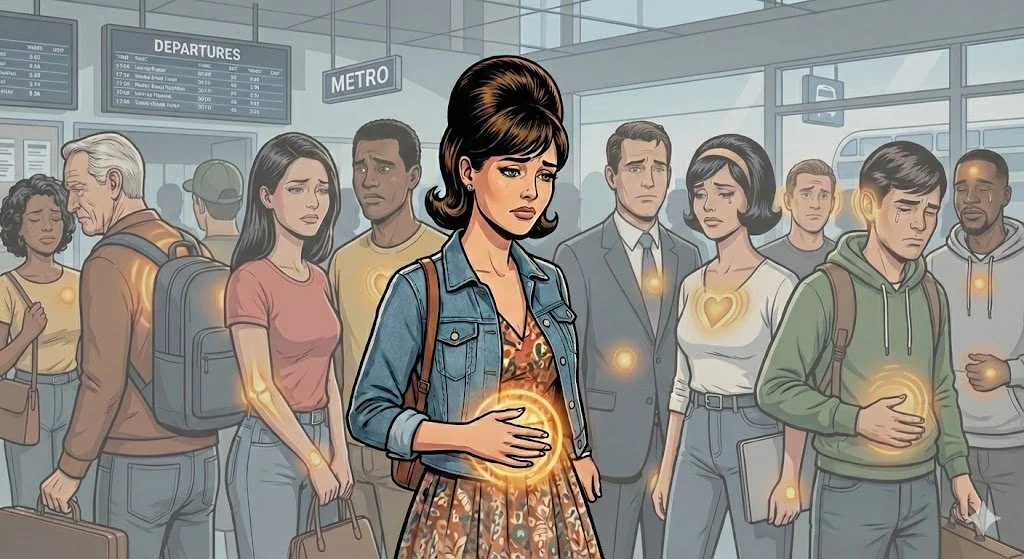




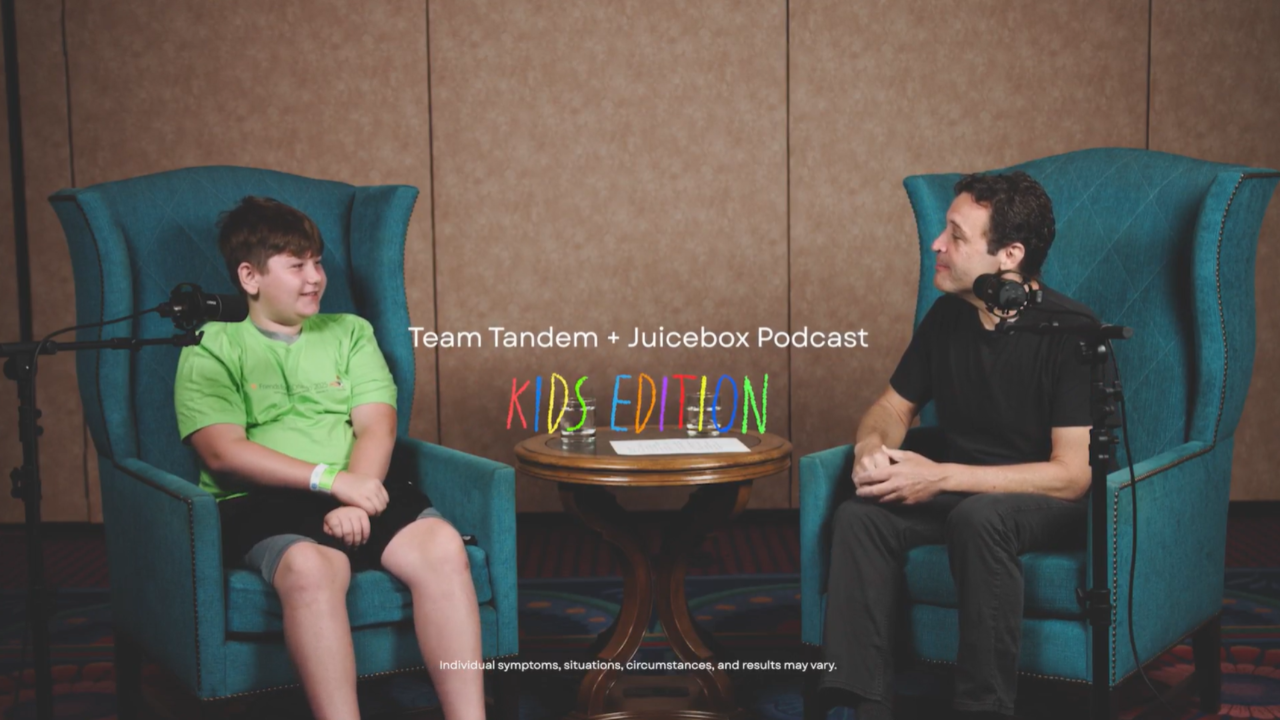
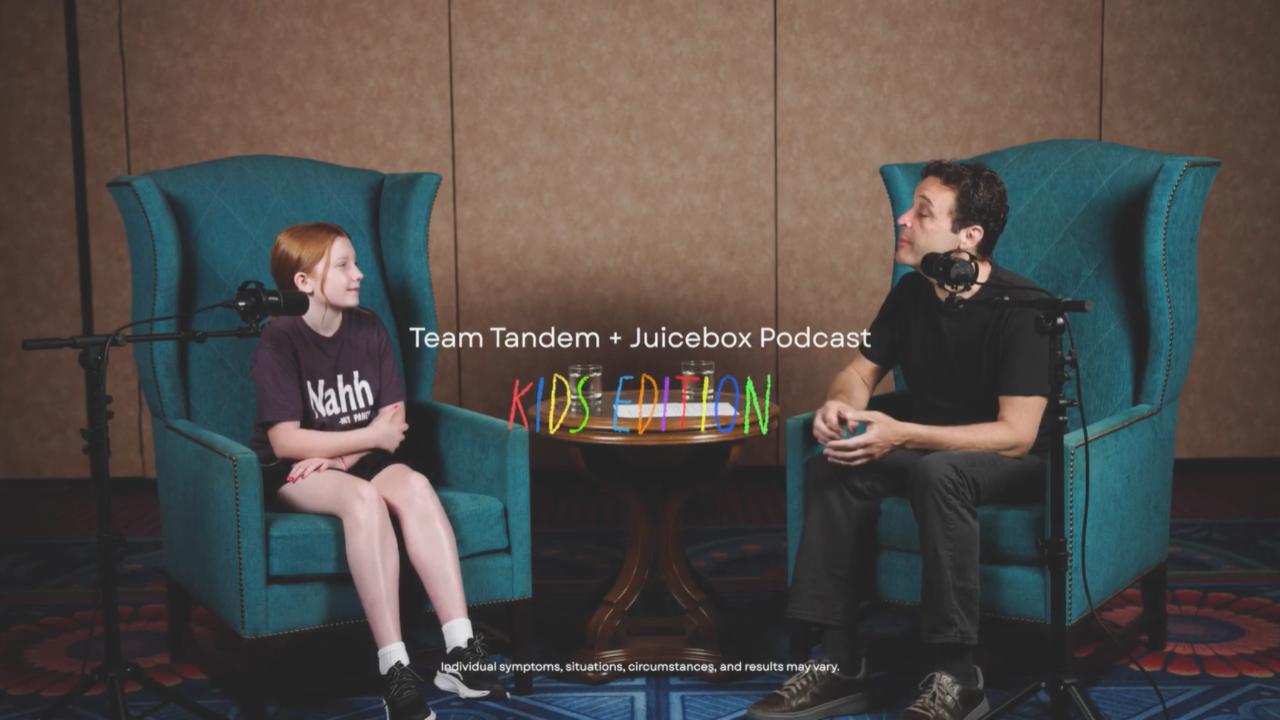







Please support the sponsors





The Juicebox Podcast is a free show, but if you'd like to support the podcast directly, you can make a gift here. Recent donations were used to pay for podcast hosting fees. Thank you to all who have sent 5, 10 and 20 dollars!
