#1754 Bolus 4 - McDonald's
You can always listen to the Juicebox Podcast here but the cool kids use: Apple Podcasts/iOS - Spotify - Amazon Music - Google Play/Android - iHeart Radio - Radio Public, Amazon Alexa or wherever they get audio.
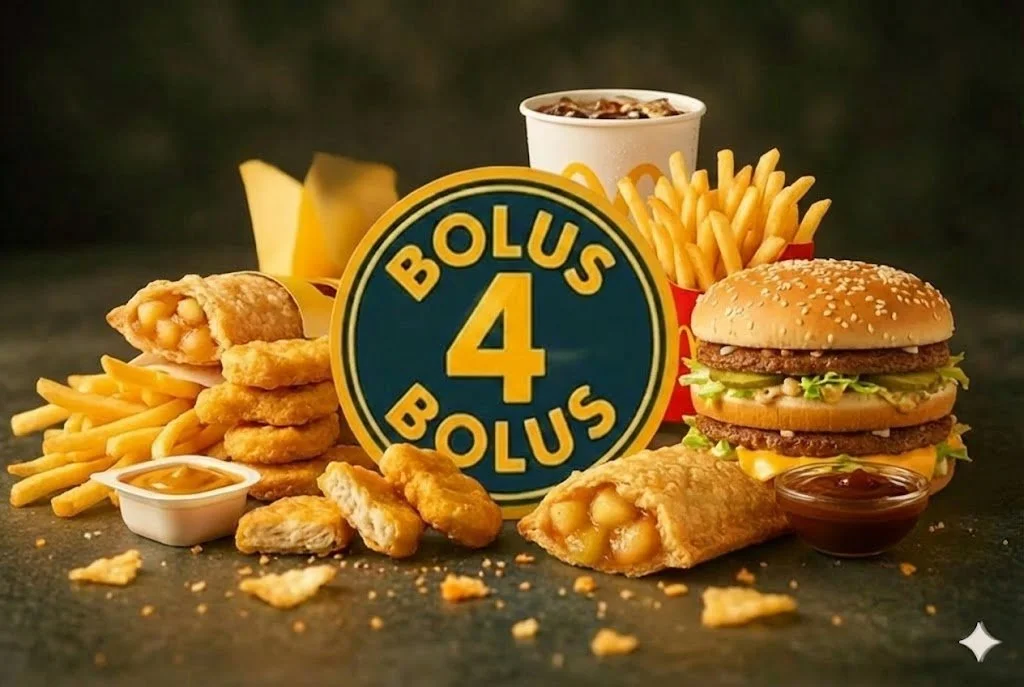
Scott and Jenny discuss how to bolus at McDonald's
+ Click for EPISODE TRANSCRIPT
DISCLAIMER: This text is the output of AI based transcribing from an audio recording. Although the transcription is largely accurate, in some cases it is incomplete or inaccurate due to inaudible passages or transcription errors and should not be treated as an authoritative record. Nothing that you read here constitutes advice medical or otherwise. Always consult with a healthcare professional before making changes to a healthcare plan.
Scott Benner (0:00) Friends, we're all back together for the next episode of the Juice Box podcast. (0:04) Welcome. (0:15) While you're listening, please remember that nothing you hear on the juice box podcast should be considered advice, medical or otherwise. (0:23) Always consult a physician before making any changes to your health care plan or becoming bold with insulin. (0:32) In every episode of bolus four, Jenny Smith and I are gonna take a few minutes to talk through how to bolus.
Scott Benner (0:38) Jenny and I are gonna follow a little bit of a road map called meal bolt. (0:42) Measure the meal. (0:44) Evaluate yourself. (0:45) Add the base units. (0:47) Layer a correction.
Scott Benner (0:48) Build the bolus shape. (0:49) Offset the timing. (0:50) Look at the CGM. (0:52) Tweak for next time. (0:54) Having said that, these episodes are gonna be very conversational and not incredibly technical.
Scott Benner (1:00) We want you to hear how we think about it, but we also would like you to know that this is kind of the pathway we're considering while we're talking about it. (1:07) So while you might not hear us say every letter of Miele Bolt in every episode, we will be thinking about it while we're talking. (1:14) If you wanna learn more, go to juiceboxpodcast.com/meal-bolt. (1:20) In today's episode, we're gonna head over to Ronald McDonald's and see what he's got to offer. (1:31) This episode of the juice box podcast is sponsored by the Kontoor next gen blood glucose meter.
Scott Benner (1:37) Learn more and get started today at Kontoor next dot com slash juice box. (1:43) Today's podcast episode is sponsored by Medtronic Diabetes, who is making life with diabetes easier with the MiniMed seven eighty g system and their new sensor options, which include the instinct sensor made by Abbott. (1:58) Would you like to unleash the full potential of the MiniMed seven eighty g system? (2:02) You can do that at my link, medtronicdiabetes.com/juicebox. (2:08) I'm hitting record to tell Jenny this because I don't want her to be able to argue with me too much.
Scott Benner (2:13) This is like Okay. (2:14) This is like asking your wife for something in public. (2:16) Feel like
Jenny Smith (2:18) I feel backed into a corner all of a sudden.
Scott Benner (2:21) Don't worry. (2:21) You will be. (2:24) Will you help me do something today? (2:26) And I know you won't have any trouble with this. (2:28) I shouldn't joke like this.
Scott Benner (2:29) But I want to do some bolus for some stuff that I know that you're gonna wanna tell people not to eat the whole time, but I'm gonna ask you not to do that.
Jenny Smith (2:37) And I yes. (2:38) A 100%. (2:39) And I will say that, have I said that before? (2:41) Like, please don't eat this? (2:43) Maybe I have, and I'm sorry if I've done that.
Jenny Smith (2:45) Because every everybody's thing you put in your bot, it's entirely your choice. (2:48) I certainly just want you to cover it the right way, which is obviously the intent for the bolus four to begin with.
Scott Benner (2:54) Exactly.
Jenny Smith (2:54) So, yes, I I don't want people to be like, oh my god. (2:57) Jenny doesn't well, no. (2:58) No. (2:58) No.
Scott Benner (2:59) I think your intention has been very clear. (3:01) It's just this one's going to knock you over, and I just want you to be able to breathe through it. (3:05) That's all.
Jenny Smith (3:06) It's worse than the boba tea.
Scott Benner (3:08) I don't know. (3:08) That one worked well and
Jenny Smith (3:09) knocked me over. (3:10) I was like, what?
Scott Benner (3:11) I gotta tell you, I thought it was I didn't think it was going to be, but as I picked through and looked at the things that I wanted to talk about today and some of the stuff I picked out, I it's I mean, it's gonna be some significant insulin and and some significant extensions and stuff like that. (3:27) But
Jenny Smith (3:27) But it's also stuff people are doing.
Scott Benner (3:30) Here's where it came from. (3:31) It came from me the other day listening to somebody talk about something, and
Jenny Smith (3:35) they Okay.
Scott Benner (3:36) They talked about how many Happy Meals are consumed in America. (3:41) McDonald's Happy Meals. (3:42) So today, we're gonna bolus for McDonald's. (3:44) Okay? (3:44) We're gonna pick out a few different things.
Jenny Smith (3:47) Okay.
Scott Benner (3:47) I'm gonna give you the number. (3:49) Actually, let's let you guess. (3:50) How many Happy Meals cheeseburger Happy Meals do you think are sold daily in The US?
Jenny Smith (3:58) I don't oh my god. (4:00) I don't even know. (4:00) A million? (4:01) I don't know. (4:02) I have no idea.
Scott Benner (4:03) Two and a half to 3,000,000 a day, they think sales exceed about 1,000,000,000 annually.
Jenny Smith (4:11) Isn't that still on their signs, McDonald, like this many billions served or something? (4:16) I don't know.
Scott Benner (4:16) I mean, it's a
Jenny Smith (4:17) It used to be when we were a kid, we'd wait for the number to change.
Scott Benner (4:20) Yeah. (4:20) It's a hell of a flex, I'll tell you that from a business perspective. (4:24) But I heard that somewhere, I thought, okay. (4:26) Like, that means they're they're beaten. (4:28) They're being eaten all the time, so we should talk about it.
Jenny Smith (4:31) Like, you know,
Scott Benner (4:32) you know? (4:32) And so I am going to I'm also gonna I'm gonna put I'm asking you to put yourself out. (4:38) I'm gonna put myself out here too. (4:40) I've, you know, I've put together a calculator to to help you put meal boluses together. (4:46) I've not made it public yet.
Scott Benner (4:47) I am gonna make it public for this episode and and leave it up. (4:51) It's gonna be behind a pretty big disclaimer you're gonna have to click on before you get to it, but it asks you for your insulin to carb ratio, your insulin sensitivity factor, your target blood sugar. (5:03) It sets a max bolus limit at 25 as a default. (5:08) You can enter carbs, fat, protein, your current blood sugar, any insulin on board, if your arrow is stable, rising, or falling, and then it will generate a meal strategy for you.
Jenny Smith (5:19) Okay.
Scott Benner (5:20) Great. (5:21) So I'm gonna we're gonna use that today while we're talking about this.
Jenny Smith (5:24) Cool.
Scott Benner (5:25) So cool. (5:25) Hold on a second, Jenny. (5:27) Hold on to your hat. (5:28) Okay? (5:28) What do you wanna start with?
Scott Benner (5:29) Should we start with do you wanna start with a Happy Meal? (5:32) Because I brought it up first.
Jenny Smith (5:33) Let's start with a typical cheeseburger Happy Meal. (5:37) Why not?
Scott Benner (5:38) Cheeseburger Happy Meal. (5:40) Let's see. (5:40) Well oh, here's the double quarter pounder with cheese. (5:43) We'll get back to that. (5:45) Okay.
Scott Benner (5:46) Menu. (5:48) I have to tell you this. (5:50) Huge props to to them. (5:53) They don't hide anything. (5:54) This
Jenny Smith (5:54) No. (5:55) Website is all there.
Scott Benner (5:56) Very easy to get through. (5:58) Hamburger happy
Jenny Smith (5:58) What website are you using?
Scott Benner (6:00) Mcdonald's.com.
Jenny Smith (6:01) Oh, McDonald's. (6:02) Okay.
Scott Benner (6:03) Yeah. (6:03) It's very clear. (6:04) Hamburger Happy Meal, 475 calories. (6:07) Now we're gonna choose some, like, standard numbers to do these with today. (6:12) So let's use insulin to carb ratio 10.
Scott Benner (6:14) What do you think a common insulin sensitivity factor would be 50. (6:19) 50? (6:19) K. (6:20) We'll make that 50. (6:21) I'm gonna make the target blood sugar 90, and I don't even wanna make you guess, Jenny.
Scott Benner (6:27) A cheeseburger happy meal comes with milk, a fry, apple slices, and the burger.
Jenny Smith (6:36) Okay.
Scott Benner (6:36) Okay?
Jenny Smith (6:37) Does it still come with a prize?
Scott Benner (6:39) I'm sure it yeah. (6:40) It does. (6:40) Actually, there's a whole part of the website that, like, tells you, like, what toy is available right now.
Jenny Smith (6:44) Oh, that's fancy.
Scott Benner (6:45) 475 calories. (6:47) This is not cheese, by the way. (6:49) This is the this this is
Jenny Smith (6:50) Cheese food.
Scott Benner (6:51) This is well well, they I'm saying this is the hamburger version of it.
Jenny Smith (6:55) Oh, okay.
Scott Benner (6:56) Okay. (6:57) Total carbs for this thing, you wanna just like, go ahead and guess, but you don't have to think about it. (7:02) Just try to guess.
Jenny Smith (7:03) Sure. (7:04) I mean, I'm a this is just the burger one, not the cheeseburger one.
Scott Benner (7:08) Yep.
Jenny Smith (7:09) The burger probably has about 30 grams in the bun would be my estimate. (7:16) I expect, unless they've changed it, that their french fries are a small fry.
Scott Benner (7:22) Yeah. (7:22) It's pretty small.
Jenny Smith (7:23) Right? (7:24) So probably also about 30 grams of carb for the french fries. (7:29) Mhmm. (7:30) The apple slices, maybe somewhere between 10 to 15 grams depending on how many are in the package. (7:39) Okay.
Jenny Smith (7:41) And milk is usually in a carton about 12 grams.
Scott Benner (7:45) Yeah. (7:45) So
Jenny Smith (7:45) this carb. (7:47) If you just want the carbs, I mean, I don't know if you want proteins and stuff too as a guess.
Scott Benner (7:51) Well, it has it it's telling us here that it's it's 60 as a total. (7:56) Six Oh, wow. (7:57) 60 carbs total. (7:59) I'm gonna take them at their word. (8:00) Total fat Really?
Jenny Smith (8:02) For all of
Scott Benner (8:03) Wait. (8:03) Wait. (8:03) Do we get
Jenny Smith (8:03) That's interesting.
Scott Benner (8:04) To get to the bigger one.
Jenny Smith (8:05) Maybe the maybe the serving fries is smaller then.
Scott Benner (8:07) Okay. (8:08) 16 grams of fat total. (8:11) Protein total, 22. (8:14) This is all listed on their website. (8:16) I'm gonna Okay.
Scott Benner (8:17) I'm also gonna give you all the benefit of the doubt that you've listened to the pro tip series already. (8:20) Your blood sugar's a 100. (8:21) I'm gonna make your current blood sugar 100. (8:23) No insulin on board. (8:24) Stable arrow.
Scott Benner (8:26) Okay. (8:28) This says that you should start with a 6.2, and then you're going to need a two point three unit extended bolus over about four hours total dose.
Jenny Smith (8:42) Fat and protein.
Scott Benner (8:43) Yep. (8:43) Total dose, eight and a half units. (8:46) Sound like
Jenny Smith (8:47) And the 6.2 is because target is 90 and blood sugar was a 100?
Scott Benner (8:51) Yes.
Jenny Smith (8:51) That extra point two. (8:52) Right? (8:52) Okay.
Scott Benner (8:53) Yeah. (8:53) It's trying trying to get you to target. (8:55) Okay. (8:55) Okay. (8:56) So now there you go.
Scott Benner (8:57) That's a that's a a hamburger happy meal. (9:00) Now let's pretend you're not a kid, and you're like a like a regular person, and you just want a french fry, Jenny. (9:06) You just want a large fry. (9:08) Right?
Jenny Smith (9:08) A large fry.
Scott Benner (9:09) Yeah. (9:09) Well, your time of the month is coming. (9:11) You're out on the road. (9:11) You're driving around. (9:12) You think, oh, salt and Styrofoam.
Scott Benner (9:15) This is what I want. (9:16) Okay?
Jenny Smith (9:16) I guess.
Scott Benner (9:17) Okay. (9:18) And we're gonna leave everything the same, but change the carbs. (9:22) Now in that large fry, there are 65 carbs Yep. (9:28) 23 grams of fat. (9:31) There's actually seven grams of protein in there.
Scott Benner (9:34) So just a large fry if your current blood sugar is a 100, you have no insulin on board, just a large fry is six point seven
Jenny Smith (9:43) Point seven.
Scott Benner (9:43) Units. (9:44) Yeah. (9:45) And it's asking for a 2.35 extended over four hours for the fat.
Jenny Smith (9:50) You So even
Scott Benner (9:51) You'll think that's a little heavy? (9:53) Right? (9:53) You think worsens
Jenny Smith (9:53) are a heavy? (9:54) Curious what so well, we had a whole packaged meal before that had I'm assuming about the same amount of fat in it as this does. (10:05) Right? (10:06) Yeah. (10:06) To make it about the same for the fat protein extension.
Scott Benner (10:09) I think there's about six more grams of fat in this, but there's Uh-huh. (10:13) There's less sugar in this.
Jenny Smith (10:14) Less sugar?
Scott Benner (10:15) Yes. (10:15) So there's no so total sugars in the fries, zero. (10:20) Total
Jenny Smith (10:20) sugars Added sugars. (10:22) Let's be clear about that.
Scott Benner (10:24) It says total sugar zero. (10:25) Added sugar zero.
Jenny Smith (10:27) Right. (10:27) Which means that these aren't no carbohydrate. (10:30) They're just I have no sugar added.
Scott Benner (10:32) They didn't sprinkle any sugar over top of
Jenny Smith (10:34) it. (10:34) Yes.
Scott Benner (10:34) Yes. (10:35) There was more sugar in the Happy Meal because of Uh-huh. (10:38) The apples, I would imagine.
Jenny Smith (10:40) And the milk.
Scott Benner (10:40) The little milk and the whole other thing. (10:42) Right? (10:42) But my point in doing this one next is the hamburger happy meal and the large fry, basically the same bolus as Mhmm. (10:51) As far as it goes. (10:52) Right?
Scott Benner (10:53) Now why don't we do why don't we do just a quarter pounder with cheese
Jenny Smith (11:00) or Okay.
Scott Benner (11:02) Royale with cheese if you've seen Pulp Fiction? (11:05) Yes. (11:05) Yes. (11:05) You have.
Jenny Smith (11:06) Many times.
Scott Benner (11:07) My god. (11:08) I know probably, like, once a year for quite some time. (11:10) 42 carbs. (11:12) This is just the burger. (11:14) 26 grams of fat in the burger.
Scott Benner (11:18) Protein, 30. (11:21) That's encouraging somehow. (11:25) So just the quarter
Jenny Smith (11:26) Because you know we're all supposed to be eating more protein and fat now. (11:29) Right?
Scott Benner (11:29) I heard that. (11:30) Yeah. (11:30) I
Jenny Smith (11:31) to sneak that in there.
Scott Benner (11:33) So this this just this quarter pounder with cheese, 4.4 unit meal bolus with three and a half, 3.54 over five hours. (11:43) And you'll probably tell me five hours is a little long, you think? (11:46) Or
Jenny Smith (11:46) might be. (11:47) Mhmm. (11:48) But it's a good I would have guessed probably at least four.
Scott Benner (11:53) Okay.
Jenny Smith (11:55) Again, everybody's digestion in terms of that is a little bit different. (11:59) So it's one of those experimental, but you go with what's recommended, and then you make if this is your thing to do once a week on Friday on your way home from work and that's what you like, then
Scott Benner (12:09) Right on.
Jenny Smith (12:09) At least you got enough experimentation time.
Scott Benner (12:12) I I'm telling you that I'm doing this a little bit because I want people to see that the calculator is kind of a quick easy way to, like, figure out some things. (12:20) I also kinda want them to to I want people listening to think, oh, I would not have guessed that much. (12:26) Like, that's kind of that's my kind of idea here.
Jenny Smith (12:29) Well, I know and I think it's it's valid because it is something that over and over when I work with people individually, it comes into the discussion, and there's there's a piece that I can see in people's face Mhmm. (12:43) You know, when we're talking about it that I never I never thought about that. (12:50) Even though we've had this fat protein piece already in the mix for several years now, it's been a little bit more forefront in discussing the impact. (13:01) I do I do see that people still undercover it, though, And I expect from a consideration of more worry that it's how can I really need this much more insulin?
Scott Benner (13:14) Yeah.
Jenny Smith (13:14) I was only ever taught to count the carbohydrates.
Scott Benner (13:17) Right.
Jenny Smith (13:18) How is it that I missed covering so much? (13:21) And now that I start using it, you see improved glycemic control, which is fantastic.
Scott Benner (13:28) Are there some people who just don't need the bolus for fat? (13:31) Because they come to me online, though. (13:32) Like, they're like, listen. (13:33) I never need the bolus for fat, or do you think their settings are just so wonky and they're used to giving themselves so much insulin they're covering it and not realizing it? (13:41) Unlike other systems that will wait until your blood sugar is a 180 before delivering corrections, The MiniMed seven eighty g system is the only system with meal detection technology that automatically detects rising sugar levels and delivers more insulin as needed to help keep your sugar levels in range even if you're not a perfect carb counter.
Scott Benner (14:02) Today's episode of the Juice Box podcast is sponsored by Medtronic Diabetes and their MiniMed seven eighty g system, which gives you real choices because the MiniMed seven eighty g system works with the Instinct sensor made by Avid, as well as the Simplera Sync and Guardian four sensors, giving you options. (14:23) The Instinct sensor is the longest wear sensor yet, lasting fifteen days and designed exclusively for the MiniMed seven eighty g. (14:32) And don't forget, Medtronic Diabetes makes technology accessible for you with comprehensive insurance support, programs to help you with your out of pocket costs or switching from other pump and CGM systems. (14:45) Learn more and get started today with my link, medtronicdiabetes.com/juicebox. (14:51) The Kontoor Next Gen blood glucose meter is sponsoring this episode of the juice box podcast, and it's entirely possible that it is less expensive in cash than you're paying right now for your meter through your insurance company.
Scott Benner (15:05) That's right. (15:06) If you go to my link, contournext.com/juicebox, you're gonna find links to Walmart, Amazon, Walgreens, CVS, Rite Aid, Kroger, and Meijer. (15:18) You could be paying more right now through your insurance for your test strips and meter than you would pay through my link for the Contour Next Gen and Contour Next test strips in cash. (15:30) What am I saying? (15:31) My link may be cheaper out of your pocket than you're paying right now even with your insurance.
Scott Benner (15:37) And I don't know what meter you have right now. (15:40) I can't say that. (15:41) But what I can say for sure is that the Kontoor Next Gen meter is accurate. (15:46) It is reliable, and it is the meter that we've been using for years. (15:50) Kontoornext.com/juicebox.
Scott Benner (15:54) And if you already have a contour meter and you're buying test strips, doing so through the juice box podcast link will help to support the show.
Jenny Smith (16:02) A blanket answer would be that something else behind the scenes has likely not been tested without the amount of fat that they've been typically eating. (16:14) Mhmm. (16:15) I mean, high fat is usually deemed at more than about 20 grams per sitting. (16:20) Right? (16:20) And at that point, the very good potential that you're going to see an impact in the later hours after that meal.
Jenny Smith (16:29) Same thing with proteins. (16:30) More than about twenty, twenty five grams of protein in a typical sitting or eating time, you have the potential to see a drift up later. (16:40) Yeah. (16:41) Again, nothing to do with the carbohydrates that you probably really precisely counted. (16:46) But as you said, I I think that there may be the fact that people have just tested their background settings, their basal, with some of the stuff in the picture that they didn't know was important to keep out to get a true base.
Scott Benner (16:58) Mhmm.
Jenny Smith (16:59) So it's making up for an issue in a way.
Scott Benner (17:03) Let me make your point. (17:04) I just I still had the numbers up from the quarter pounder with cheese. (17:08) I deleted the carbs. (17:09) So now the bolus is zero carbs, 26 fat, 30 protein. (17:13) It wants you to bolus point two up front, but to set up a 3.54 unit bolus over five hours.
Scott Benner (17:21) And that's with no carbs whatsoever, just the protein and the and the fat. (17:24) Which
Jenny Smith (17:25) is and if you're using this as an extended, which is what we're talking about from this recommendation. (17:30) Right? (17:31) An extended nature for those who are mostly eating either ketogenic or paleo, very low carb, higher protein, or all very high fat. (17:43) The idea is often covered with our insulin. (17:47) So there is no extended need Mhmm.
Jenny Smith (17:50) Because that type of insulin hits in a very slow continual time period over the time that you would need coverage for these. (17:58) And so it has been figured out.
Scott Benner (18:01) Yeah. (18:01) Yeah. (18:02) If you go to juiceboxpodcast.com, there's guides up in the menu, and you choose fat and protein insulin calculator. (18:09) It will, after you agree to the disclaimer, it'll explain the Worsol method to you in painful detail so that you can you can understand it. (18:18) There's also four episodes linked there that you can list to about fat and protein in the Worsaw method, and there's a small calculator there just to help you with fat and protein aside of of carbs.
Scott Benner (18:30) That's not a that's not the full calculator that I'm using here. (18:33) I actually I guess I'm gonna have to decide on the link right now while we're talking because I'm gonna wanna put it in here. (18:39) But first, Jenny, it's a special day. (18:41) You've lost your mind. (18:43) You've stopped at the the McDonald's.
Scott Benner (18:46) Do you want
Jenny Smith (18:47) It is a special day.
Scott Benner (18:48) It's a special day. (18:49) Do you want a Big Mac meal, a quarter pounder with cheese meal, a bacon quarter pounder with cheese meal, a quarter pounder with cheese deluxe meal, a double quarter pounder with cheese meal, 10 piece nuggets. (19:02) You're gonna pick the damn nuggets. (19:03) Spicy McCrispy meal. (19:06) Spicy McCrispy.
Scott Benner (19:07) That's not easy to say. (19:10) What what or you want a fish fillet? (19:11) What do you want? (19:12) What's Jenny gonna get? (19:13) Because we're gonna do that one next.
Jenny Smith (19:15) If literally, because somebody was like, you have to pay.
Scott Benner (19:19) Well, yeah. (19:19) I'm forcing you to buy something at McDonald's. (19:21) Which one do you gonna buy? (19:22) Which one?
Jenny Smith (19:22) Be the it would be the fish.
Scott Benner (19:24) You're such a baby. (19:25) You should have picked a double burger. (19:27) I will do the fish.
Jenny Smith (19:28) For I don't eat other than fish.
Scott Benner (19:31) People love the fish fillet. (19:32) Hold on a second. (19:33) Fish fillet meal, 950 calories. (19:37) Fair enough. (19:38) 21 protein.
Jenny Smith (19:40) This is a meal. (19:41) This isn't just
Scott Benner (19:42) Oh, Jenny.
Jenny Smith (19:43) I have to eat a whole
Scott Benner (19:44) No. (19:44) No. (19:44) No. (19:44) Listen to me. (19:45) Fish
Jenny Smith (19:46) Are you gonna make me eat a shake?
Scott Benner (19:47) Filet o no. (19:49) Filet o fish meal. (19:50) Right? (19:50) It's got a Sprite with it. (19:53) And it's a classic fish sandwich, hold on, featuring a crispy fish fillet patty made with wild caught Alaskan pollock on melty American cheese topped with creamy McDonald's tartar sauce.
Scott Benner (20:02) That's not bad. (20:03) There are 950 calories in the fish o Filet O Fish meal at McDonald's with a medium Sprite and a medium World Famous fry. (20:12) So you're gonna get a medium Sprite, a medium fry. (20:15) Jenny's gonna drink soda and go to McDonald's on the same day. (20:17) You're gonna get a medium Sprite, a medium fry, and a Filet O Fish.
Scott Benner (20:21) Only 950 calories. (20:23) But how many carbs? (20:25) Just say the first number that pops in your head.
Jenny Smith (20:27) A lot. (20:28) Oh my I don't a lot.
Scott Benner (20:29) 145.
Jenny Smith (20:30) A lot.
Scott Benner (20:30) There's a 145 carbs in it. (20:32) Okay. (20:32) And
Jenny Smith (20:33) guess, yeah, one fifty would have been like
Scott Benner (20:35) 34 fat. (20:36) Fat. (20:37) Protein, 21. (20:39) Let's make
Jenny Smith (20:39) Lower protein than I would have expected, honestly.
Scott Benner (20:42) Oh, it's probably not actually fish. (20:43) And then I'm gonna hit It says
Jenny Smith (20:45) it's Alaskan pollock.
Scott Benner (20:47) And and and because it's you, Jenny, I'm gonna put a falling blood sugar arrow, and I'm gonna make your blood sugar 80 in this scenario. (20:55) Okay? (20:56) Because I figure you prepped before you got to the McDonald's. (20:59) You're gonna need, if your insulin to carb ratio is 10, your insulin sensitivity is 50, you are gonna need an initial bolus of 14.9 units and a Warsaw, bolus extended over five hours of 3.9 for a total of 18.8 of insulin. (21:17) How many did you have yesterday?
Scott Benner (21:20) Insulin. (21:22) Wait. (21:22) She's throwing up in her mouth. (21:23) Give us a
Jenny Smith (21:24) second. (21:24) Sorry.
Scott Benner (21:25) Tell everybody, Jenny, you're a nutritionist. (21:27) Right? (21:27) What'd you what'd you what'd you get that degree in?
Jenny Smith (21:29) The only thing that actually made me pause was the amount of initial, like, fourteen units. (21:36) I don't I think No. (21:39) Quite honestly, no.
Scott Benner (21:40) Right? (21:40) You okay?
Jenny Smith (21:41) I am stuttering because if I look at, like, my stats, my total amount of insulin, honestly, in a breakdown is I only use about 26 day total.
Scott Benner (21:58) Well, you can splurge and get the Filet O Fish meal if you want to.
Jenny Smith (22:01) Use half my insulin for food.
Scott Benner (22:03) Yeah. (22:04) Well, for lunch, really. (22:06) Now let's pretend that Jenny I'm gonna I'm gonna be honest here. (22:10) If this was me, I'm probably gonna lose my mind here and get the bacon quarter pounder with cheese.
Jenny Smith (22:16) Wow.
Scott Benner (22:17) But let's just You
Jenny Smith (22:20) have to have a shake with it, Scott.
Scott Benner (22:22) I would I I couldn't. (22:23) I'm I'm a baby. (22:24) Like, you know, but people are like, you don't drink? (22:26) That's crazy. (22:27) I don't even understand being able to drink the volume of liquid that somebody who drinks beer does.
Scott Benner (22:31) Like, if you gave me that much water, I'd be like, oh, I can't do all that. (22:34) But let's just pick one. (22:35) I'm gonna pick just from the photos the one that looks like it's trying its hardest to kill you. (22:40) So I'm going with the double quarter pounder with cheese meal. (22:45) 1,330 calories.
Scott Benner (22:47) You are gonna get a beautiful medium Coca Cola with this. (22:50) Okay? (22:52) And here we go. (22:55) Carbs, 156. (22:58) The fat goes 57.
Scott Benner (23:03) Protein, 53. (23:06) I'm gonna give you the benefit of the doubt that you've that you've that that you got a falling arrow going here. (23:11) You're shooting for an 80 blood sugar, and this bolus for the double quarter pounder with cheese meal. (23:21) If your insulin to carb ratio is 10 and your insulin sensitivity is fifty, sixteen units up front, 7.25 over eight hours. (23:30) This thing, it it's saying, like, you're not getting out front of this spat all day.
Scott Benner (23:34) Do you agree with that idea that it could go up to eight hours like that?
Jenny Smith (23:38) Absolutely. (23:39) Yeah. (23:39) The teenage guys that I work with many times need pretty considerable extended boluses or in whatever, excuse me, system they're using some type of a compensation for sometimes eight to twelve hours after they're done eating.
Scott Benner (23:58) Okay. (23:59) Well, I mean, you're hitting the it's the fat, the protein
Jenny Smith (24:02) Yep.
Scott Benner (24:02) The carbs, and then the sugar from the soda too. (24:05) Right. (24:05) I mean, it's just it's it's it's everything to think of. (24:08) Total sugars in this meal, 80. (24:12) 80.
Jenny Smith (24:13) I mean, if there was one, I dare to say one, quote, unquote, healthy, potentially potential thing that you could do is just gonna eat the food. (24:26) Please just drink some water. (24:28) Yeah. (24:28) Don't put soda on top of it. (24:30) Like, I I mean, that would be my, like, one ask.
Jenny Smith (24:33) Like, just don't put the liquid sugar on it.
Scott Benner (24:36) I'm I'm hopeful that most people listening are like, I would not drink a regular Coke with this, but there's something to be said for the fact that McDonald's, when they're listing it on their website, believes that most people are going to. (24:46) So that must be from their marketing and their understanding of what happens. (24:50) Also, soda is, you know I mean, you and I have gone over this before. (24:53) Like, it is much more readily consumed than I actually thought. (24:56) I actually learned learned something about myself this week, Jenny.
Scott Benner (25:00) I learned that, you know, in the Jurassic Park film where they have the DNA kinda figured out, but they've got gaps in it, they figure they fill it with
Jenny Smith (25:08) Fill it with frog.
Scott Benner (25:09) DNA. (25:09) Right? (25:10) Mhmm. (25:10) I realized that when I think about other people and I have gaps in my understanding about what they do, I fill it with my my sensibility. (25:23) Didn't I didn't realize that actually.
Scott Benner (25:25) So, like, if I know, you know, 40% about who Jenny is and I'm trying to imagine what you do in a situation, if I don't have the information about what you would do, I fill it with what I would do, which is probably a mental illness. (25:37) I'm not gonna lie. (25:38) But, like, I so when I look when I think about this stuff, in my wildest dreams, I don't imagine getting a a Coke with with sugar.
Jenny Smith (25:45) Right.
Scott Benner (25:45) But, you know, like, that's a a ton of people do that. (25:48) We I I've said this before. (25:49) I I've had to drive south a lot for my kids, for school, and stuff like that. (25:53) You get below about North Carolina, you're lucky to find a diet soda in a refrigerator or gas station anywhere. (25:59) Like, it just culturally turns into something different.
Scott Benner (26:01) You you know?
Jenny Smith (26:02) Yeah. (26:03) I think that also brings in and you already said, like, within the group of large portion of people that listen to your podcast, my expectation is that the good majority of them don't drink a soda.
Scott Benner (26:19) Yeah. (26:19) But I bet you people go to McDonald's. (26:21) I bet you people go to McDonald's with a lot of regularity. (26:24) Right?
Jenny Smith (26:24) So I think even some of you know, many of the people are probably like, well, I wouldn't drink the soda anyway, so let's adjust this. (26:31) But now that we have a calculator, we can adjust it to what we would actually do. (26:35) But in the greater the reason it's up on the website the way that it is, as you stated, is because the small population who doesn't do it is it's small.
Scott Benner (26:47) Yeah.
Jenny Smith (26:47) The greater population has something like this as if it were water.
Scott Benner (26:53) Yeah. (26:53) I and I even feel badly that they put the price up so much. (26:56) Like, McDonald's used to be a thing. (26:58) Like, you'd fly in there with $5 and and eat like And you'd find. (27:01) Yeah.
Scott Benner (27:01) Yeah. (27:01) Yeah. (27:01) Now it's it's much more expensive than that. (27:04) So I I do think this is a good time for me to just ask you a question, let you talk for a half a second about this. (27:09) Like Oh.
Scott Benner (27:10) This idea about these like a calculator. (27:12) Right? (27:13) Like, this is it even if you're so listen. (27:17) The reason I I made the other calculator to help you figure out what your settings are is because I also kind of you know, after talking to people think that it's possible a lot of their settings aren't right either.
Jenny Smith (27:26) Mhmm.
Scott Benner (27:27) So there is a calculator up at juiceboxpodcast.com/settings that will help you put it know, you put your weight in in pounds, and it does the math for you to give you a starting spot for your your settings. (27:39) It is not perfect. (27:40) It's not gonna be exactly right, but, you know, it'll at least give you the idea that if, you know, you think your insulin to carb ratio is 20, and it might look at it and go, yeah. (27:49) It looks more like this. (27:50) You know?
Scott Benner (27:51) Like, maybe you're maybe you're not right. (27:52) Maybe you're having problems because your settings are off. (27:55) It's a good place to start. (27:56) It's not a rule. (27:57) It's not, you know, it's not it's not God.
Scott Benner (27:59) It's not your it's not your but please see your endocrinologist. (28:02) But, like, you know, you could still look and go, oh, maybe my settings aren't quite right or maybe they're good because this calculator is asking you to put in settings. (28:10) It believes you're right when it's putting in the settings.
Jenny Smith (28:12) That I was gonna say just that. (28:14) It's the idea that if your settings are true for the most part, then this is the next step up. (28:22) This is the Yeah. (28:23) I can feed it my information, and it will give me something to work with. (28:29) Is it gonna be perfect?
Jenny Smith (28:30) No. (28:30) You're not saying that it is, but it is at least a step in the right direction of determining not only how much insulin, but, like, how long is this meal gonna hit me? (28:41) And I do have to think about that because otherwise, just counting the carbs upfront, I will likely be frustrated beyond this meal.
Scott Benner (28:49) Yeah. (28:50) But and and I'm I'm I genuinely wanna I just wanna be completely clear. (28:53) I don't think this is a replacement for your doctor, for your common sense, or for anything like that. (28:59) I've just I've had
Jenny Smith (29:00) a It's a tool.
Scott Benner (29:01) Jenny, I'm up to 1,800 episodes. (29:04) I've talked to a lot of people with diabetes and I see where they trip up a lot of the times. (29:09) It doesn't mean everybody does. (29:10) I put something up the other day that just explained pre ballistic and one person post did great. (29:18) 66,000 views on Facebook.
Scott Benner (29:20) Okay? (29:20) It was just a little breakdown of some big ideas around pre ballasing and a place where you can go to hear more about it. (29:29) Most people were like, thumbs up. (29:30) This is great. (29:31) Thank you.
Scott Benner (29:31) It helped me. (29:32) One guy was like, that's not how it works for me. (29:34) I was like, valid. (29:35) Completely valid. (29:36) It doesn't work for you.
Scott Benner (29:37) I don't know why. (29:37) Your your digestion might be different. (29:39) Maybe you've got a little gastroparesis going. (29:41) I have no idea. (29:43) It's not a blanket statement.
Scott Benner (29:44) None of this is a blanket statement for anybody. (29:46) Actually, as I sat down here this morning, I got a text from somebody who's, helping another person who's more newly diagnosed. (29:56) And that person's been listening to, I think, pro tips, and they're panicking a little bit. (30:00) They they feel like there's so many things to remember. (30:02) And the response back, and I think this person did a great job in support, was you don't have to do everything they say in that podcast.
Scott Benner (30:09) Right. (30:09) Right? (30:10) Like, that's that's kinda like the whole thing. (30:12) Like, you just take the basics and
Jenny Smith (30:14) pieces you need.
Scott Benner (30:15) And build off of it. (30:16) I'm saying the same thing here. (30:18) So but let's do you wanna do a brek you know what we should do, honestly? (30:24) Because there are gonna be people that are gonna be like, I don't eat that garbage burger, Scott. (30:28) I have the chicken.
Scott Benner (30:30) So let's do the the McCrispy strips. (30:33) I'm gonna go a four piece and tell you that a McCrispy
Jenny Smith (30:37) anything baked there? (30:39) I mean, don't think
Scott Benner (30:40) Oh, I don't believe there's an oven anywhere. (30:42) No. (30:42) No. (30:42) No. (30:43) No.
Scott Benner (30:43) I don't I don't think I don't think that's happening at all.
Jenny Smith (30:47) That's funny.
Scott Benner (30:48) Yeah. (30:48) Yeah. (30:48) Where where would they put that? (30:50) That
Jenny Smith (30:51) would also take too much time.
Scott Benner (30:53) This is just the four chicken strips. (30:56) 24 carbs, 23 fat, 40 protein. (31:01) That's just the chicken strips. (31:02) Nothing else with it. (31:03) I'm gonna make your I'm gonna give you a rising arrow.
Jenny Smith (31:06) How many pieces is this again? (31:08) Four. (31:09) Just a four piece. (31:10) Okay.
Scott Benner (31:10) Four piece. (31:11) That's jeez. (31:13) Wow. (31:13) That's 2.8 up front, 3.67 over five hours.
Jenny Smith (31:18) Interesting. (31:19) The difference there. (31:20) Right? (31:21) Mhmm. (31:21) The carbs actually require less than the fat and protein.
Scott Benner (31:26) Yeah. (31:27) But, yeah, by by a by a fair amount. (31:29) By almost a unit.
Jenny Smith (31:30) Right.
Scott Benner (31:31) Yeah. (31:31) That's interesting. (31:32) It really is.
Jenny Smith (31:33) Where you may have missed what's going on with this meal and you get frustrated and you think, well, they must be telling me the wrong information.
Scott Benner (31:42) Mhmm.
Jenny Smith (31:42) The carbs aren't right on this, or I keep missing on what's happening. (31:47) A bolus this way and this happens. (31:49) A bolus this way and I get too high. (31:51) It stays too high or whatever it is. (31:54) It brings in the fact that we have to start really, really paying attention to how much of the fats and proteins.
Jenny Smith (32:02) And as I said before, the amount at which point you are likely to need to bolus for. (32:10) See, I used your little
Scott Benner (32:12) Bull bolus for. (32:13) Thank you. (32:13) Yes. (32:13) Yes.
Jenny Smith (32:14) Thank you. (32:15) The when you're going to need to bolus for the fats and proteins, honestly. (32:20) Because everybody may find that their digestive, let's call it or body tolerance for an amount is a little bit different. (32:30) Mhmm. (32:30) This amount, you're fine.
Jenny Smith (32:32) You're golden. (32:33) You just bolus for the carbs, you pre bolus the right way, and it all works out totally fine. (32:37) Or you do an extended bolus for just the carbs and it works out beautifully. (32:40) Great. (32:42) But there's likely a tipping point.
Scott Benner (32:44) Yeah. (32:44) Yeah. (32:45) Hey, Jenny. (32:47) It's breakfast, and you're gonna get a sausage, egg, and cheese McGriddle meal, which comes with a hash brown and a coffee, in case you're wondering. (32:54) Now here's the interesting thing.
Scott Benner (32:56) I bet you that there's nothing about the coffee that would impact the the bolus. (33:03) Right? (33:03) And some people really need the bolus for coffee. (33:06) So
Jenny Smith (33:06) Correct. (33:06) There's nothing to calculate.
Scott Benner (33:08) Yeah. (33:08) Yeah.
Jenny Smith (33:08) This is your own experience with caffeine.
Scott Benner (33:11) Mhmm. (33:12) So taking the coffee out of it. (33:14) Mhmm. (33:16) 63 carbs, 41 fat, 21 protein. (33:20) Insulin to carb ratio, 10.
Scott Benner (33:22) Insulin sensitivity, 50. (33:23) Why why don't we do something here? (33:25) Like, let's let's assume like, let's just look at this meal, ten fifty, target 80. (33:32) Right? (33:33) The bolus is 6.7 up front, 4.53 over eight hours for the for this.
Scott Benner (33:38) What what about I guess it's all the fat and the protein together. (33:41) Okay. (33:42) But but that's just an average insulin sensitivity, insulin to carb ratio. (33:48) Me tell you let me put in Arden's carb ratio and sensitivity without a GLP. (33:54) Uh-huh.
Scott Benner (33:55) Arden's carb ratio without a GLP is 4.5, and her sensitivity is about 36. (34:03) So that same meal, but in a more insulin sensitive person goes from 6.7 up front, 4.53 over eight hours to 14.5 up front, 10 o seven over eight hours just by changing the sensitivity in the car ratio that much. (34:21) Again, all I want from you guys is to understand the impacts of your food, make sure your settings are right, and make and and so because listen. (34:30) If there's a world where a person needed 24 carbs twenty four units of insulin for a sausage, egg, and cheese McGriddle meal, If that person needed that and looked at that number and went, I cannot possibly bolus that much. (34:44) I'm comfortable with 12.
Scott Benner (34:45) You you know? (34:46) You are gonna spend not just the next couple of hours, but the impact this is indicating could be over eight hours because of the fat and protein. (34:54) You're gonna spend the rest of your day with a high blood sugar. (34:57) Mhmm. (34:57) There's no world where you're gonna go, I probably need, like, 14 more units.
Scott Benner (35:03) You're gonna nickel and dime it all day long. (35:05) I put in a unit. (35:06) It went down. (35:07) It went back up. (35:08) I tried two.
Scott Benner (35:09) Like, I don't wanna get low. (35:10) Like, that
Jenny Smith (35:10) Yeah.
Scott Benner (35:11) That's gonna be the day.
Jenny Smith (35:12) And then if that person is the one who goes back and said, could I really have undercounted the amount of insulin?
Scott Benner (35:21) And they're gonna go, no. (35:22) I I didn't undercount the carbs. (35:24) Yeah.
Jenny Smith (35:25) Didn't undercount the carbs. (35:26) All the information was right. (35:27) It told me 24, but I was really only comfortable with 12 or 14, about half of it. (35:32) Right? (35:33) They put in, they see that they're stuck.
Jenny Smith (35:35) And as you just said, they're they're giving these little tiny nudges of insulin a little bit, a little bit again, a little bit again, and nothing is really moving it. (35:46) I would guarantee that at the point that it's finally come down, if they went back and they looked at their insulin give to correct, it is likely at or slightly more because they were trying to correct a high, which is harder to bring down once it's stuck there.
Scott Benner (36:05) Yeah.
Jenny Smith (36:06) At least the extra amount that they should have given when the system told them how much it was gonna give.
Scott Benner (36:12) Jenny, you gotta trust that what you know is going to happen is going to happen. (36:15) And a million percent, I agree with you. (36:18) You know, just timing and amount, it's a lot of insulin, but timing and amount It is. (36:22) Based against the food. (36:24) Hey.
Scott Benner (36:24) Let's do some fun things. (36:26) One packet of sweet and sour sauce. (36:28) Jenny, how many carbs?
Jenny Smith (36:30) Sweet and sour sauce. (36:31) One packet. (36:33) To 20?
Scott Benner (36:34) 11? (36:34) The spicy buffalo, though. (36:37) Only one, my friends. (36:39) Get the spicy buffalo. (36:40) Tangy barbecue sauce, 11.
Scott Benner (36:44) Also, I don't know if you noticed this, but in a lot of these places, if you ask for more than one, they'll charge you for them. (36:51) Honey mustard, six. (36:53) And there's just a little honey packet you get, I guess, for your tea or something that actually has 12 in it. (36:58) This website is again, I wanna give it to McDonald's. (37:01) It is completely
Jenny Smith (37:02) They've done a nice job.
Scott Benner (37:03) It's open and clear about what's in this stuff. (37:06) McCafe Caramel Machito. (37:10) I don't know what that is. (37:12) A large 200 400 calories, 62 carbs, 14 protein, 10 fat. (37:21) I'm not gonna throw it to the calculator, but that is that that's Jesus.
Jenny Smith (37:27) I saw something fascinating the other day as No. (37:30) As you were
Scott Benner (37:30) being I would eat at McDonald's, now I'm getting upset.
Jenny Smith (37:37) I saw something. (37:38) It's probably been around for a while, but I I don't go there. (37:41) So I it was just a commercial for advertising protein on top of your coffee.
Scott Benner (37:52) Oh, okay.
Jenny Smith (37:54) Really, on top of your drink that has a lot of calories is what I like, that's how my brain thinks about it. (38:00) Right? (38:00) So I'm thinking, well, this particular national chain is now putting, like, protein foam on the tops of their coffee drinks to accept.
Scott Benner (38:16) Try to make it sound healthy.
Jenny Smith (38:18) Kick right. (38:19) Kick into the group of, you know, the the widespread, I have to have in more protein. (38:24) I need to up my protein. (38:25) Well, gosh. (38:26) Look at that.
Jenny Smith (38:26) I can get twelve, fifteen, 18 grams of protein on my coffee drink, and now I've gotten more protein. (38:35) But whatever else was in the drink probably wasn't something you needed.
Scott Benner (38:40) So just be an egg. (38:41) Was this Starbucks?
Jenny Smith (38:43) It
Scott Benner (38:43) is. (38:43) And I think I saw this.
Jenny Smith (38:45) Yeah.
Scott Benner (38:45) Where'd I see it? (38:46) Oh, I was watching beast games. (38:47) And and they and they
Jenny Smith (38:48) You watch those too.
Scott Benner (38:49) That must be
Jenny Smith (38:50) boys love games.
Scott Benner (38:51) I do enjoy beast games. (38:52) Hey. (38:52) The vanilla shake because you brought it up a couple of times. (38:54) Come on, Scott. (38:55) Get a shake.
Scott Benner (38:55) The small shake, 480 calories, 80 carbs, 13 fat, 10 protein. (39:01) Go to
Jenny Smith (39:02) the small one.
Scott Benner (39:02) That's the the medium's 570 calories, 97 carbs, 12 protein, 15 fat. (39:10) That 97 carbs just hit me hard. (39:12) The large vanilla shake, 780 calories, 17 protein, a 133 carbs, 19 fat. (39:21) You wanna do that one in the calculator? (39:24) Let's go back to the 10 insulin to carb ratio.
Jenny Smith (39:27) Telling you to add it to your bacon something something.
Scott Benner (39:30) Yeah. (39:30) Oh, that would have probably ended my life. (39:33) So I'm gonna go back to I'm gonna go back to here. (39:37) Let me give you something interesting here. (39:39) I'm gonna put Arden settings in on a GLP medication.
Jenny Smith (39:42) Okay.
Scott Benner (39:43) Okay. (39:43) Insulin to carb ratio, 10. (39:46) Insulin sensitivity goes from 36 to you're never gonna
Jenny Smith (39:52) five or 80?
Scott Benner (39:52) Yeah. (39:53) 90? (39:53) It's about 90 on this on on that on the GLP. (39:57) I'm gonna make her target 80. (39:59) I'm gonna put in this large milkshake, a 133 carbs, 19 fat, 17 protein.
Scott Benner (40:11) I'm gonna tell you that in in Scott's world, her blood sugar is 80 in when this milkshake's happening and falling. (40:18) I'm gonna tell you that in Arden's world, I don't think she knows what her blood sugar is when she starts. (40:22) But but there you go. (40:24) It's 13.3 up front, two point three nine over four hours combined, total dose of fifteen point six nine. (40:34) I'm gonna go right back again and put her settings in without the GLP.
Scott Benner (40:38) Four point five, thirty six.
Jenny Smith (40:41) I don't even oh my god. (40:43) That's a lot of insulin.
Scott Benner (40:44) So the thirteen point three up front, two point three nine over four hours goes to calculated dose thirty four point eight seven units. (40:52) This exceeds your max bolus limit of twenty five units. (40:55) You have to the the the calculator is gonna make you verify this is what you wanna do. (41:00) So I'll I'll change the max bolus to forty so that it'll give me the number. (41:06) Twenty nine point five upfront, five point three over four hours, 34.87 units if it was a four and a half insulin to carb ratio, 36 insulin sensitivity.
Jenny Smith (41:17) That's a lot of insulin.
Scott Benner (41:19) I mean yeah.
Jenny Smith (41:21) Like, a lot and it's not it is not uncommon to have
Scott Benner (41:26) A milkshake. (41:26) Right?
Jenny Smith (41:27) Resist a milkshake
Scott Benner (41:28) And and resistance. (41:29) Yeah.
Jenny Smith (41:29) Type of resistance. (41:30) Yeah. (41:30) Ratios of four, five, or six along with correction factors that are 35, forty, fifty. (41:39) That is not odd.
Scott Benner (41:41) Jenny, this concoction has 85 total sugars in it. (41:45) 67 of them are added. (41:47) For fun, tell the people how many teaspoons of sugar is 85 grams of sugar in teaspoons.
Jenny Smith (41:54) How many teaspoons?
Scott Benner (41:55) Tablespoons. (41:56) How would you tell cups?
Jenny Smith (41:57) Yeah. (41:57) You would
Scott Benner (41:58) What's the way to tell people?
Jenny Smith (41:59) Yeah. (41:59) No. (42:00) I mean, you'd essentially divide it into teaspoons, and that's twenty twenty one teaspoons
Scott Benner (42:06) 21
Jenny Smith (42:07) teaspoons. (42:07) Dash extra. (42:08) I there's a decimal in there, but yeah.
Scott Benner (42:11) Can you imagine if I sat you at a table and I dumped twenty one twenty one teaspoons of sugar? (42:15) I was like, get it in right now. (42:17) Make it happen. (42:18) Right? (42:19) Okay.
Scott Benner (42:21) I'm not judging any I seriously, I'm I we're trying to have fun here. (42:24) I mean, I think anybody listening to this is like, these are ridiculous numbers. (42:28) Right. (42:28) But this is the this is it. (42:31) And mcdonald's.com it has the menu.
Scott Benner (42:34) You can go look if you wanna go check out the calculator just to do it for fun, just to give yourself some idea. (42:39) In the end, you're gonna eat what you're gonna eat. (42:41) I'm not in charge. (42:42) Jenny's not in charge. (42:44) But you should at least Jenny said it once.
Scott Benner (42:46) We've been saying it for years and years and years in the pro tips, the bold beginnings, and everywhere else. (42:50) I don't care what you eat. (42:52) Just please cover it with a proper amount of insulin. (42:54) There's if you're gonna eat something unhealthy, at least don't have a diabetes unhealthy go along with it. (42:59) Like, you know Right.
Scott Benner (43:00) Let's just pick one kind of thing. (43:03) Jeez. (43:04) The nuggets. (43:05) Just do the nuggets real quick. (43:08) Wait.
Scott Benner (43:09) Is there a nugget meal? (43:10) There should be a value meal with nuggets in it, shouldn't there?
Jenny Smith (43:13) I don't even know.
Scott Benner (43:14) I know you don't know. (43:15) Yeah. (43:15) I know. (43:16) That's the strips. (43:17) Where the there's no nugget meal?
Scott Benner (43:19) What a shakedown. (43:21) Wait. (43:22) McValue? (43:23) What does that mean? (43:24) Oh my god, Jenny.
Scott Benner (43:25) Look at this. (43:27) The McDouble meal deal. (43:30) I mean, that sounds okay. (43:32) Let's let's end with this. (43:34) This is the value menu.
Scott Benner (43:35) Okay?
Jenny Smith (43:36) Okay.
Scott Benner (43:37) Says like
Jenny Smith (43:38) I I have to say that I think a nugget meal has value in the listening world, your listening listeners mainly because there are a lot of kiddos, and there are a lot of kiddos who like chicken nuggets.
Scott Benner (43:55) Yeah.
Jenny Smith (43:55) That's just a favored it it is. (43:57) So
Scott Benner (43:58) For sure. (43:58) Well, listen. (43:59) I can do it very quickly even though they don't have it together. (44:01) A four piece nugget watch me do this, Jane. (44:04) Watch me math.
Scott Benner (44:05) A four piece nugget first of all, let's put the let's put the settings back. (44:09) 10:50. (44:10) So 10 insulin to carb ratio, 50 insulin sensitivity. (44:14) So let's see. (44:15) The nuggets are 10 carbs, 10 fat, nine protein.
Scott Benner (44:21) That is for for four nuggets. (44:23) Okay?
Jenny Smith (44:23) Okay.
Scott Benner (44:24) I'll make the arrow stable. (44:27) Nothing on board. (44:28) So I'm just gonna tell you upfront, just those four nuggets. (44:31) If your insulin to carb ratio is 10, insulin sensitivity is 50, it's one unit upfront, 1.26 over three hours. (44:38) But now I can go back here on the McValue menu and go to and and look at a small fry.
Scott Benner (44:44) So say let's you're gonna give your kid a small fry and a small nugget then the four piece nugget. (44:51) That's gonna take your carbs to 41, your fat to 21, and your protein to 12. (45:00) So now what was one unit now? (45:03) 1.26 over time for the nuggets. (45:05) Nuggets and fries goes to 4.1 now, 2.37 over four hours.
Scott Benner (45:11) That's that's pretty quick there. (45:13) And the apple slices, if you're gonna throw them on there, I don't know if I can find the apple slices here. (45:20) Wait sides. (45:21) I got them. (45:22) Apple slices.
Scott Benner (45:24) This website is awesome. (45:26) That takes the carbs to 45. (45:29) Actually, that's that's really the only change here is the carbs go to 45, so you're 4.1, 2.37 later. (45:35) It goes to four point five, 2.37 later. (45:38) So that would be four nuggets, small fry, and an apple.
Scott Benner (45:43) Four and a half units up front, 2.37 over time if your carb ratio was insulin to carb ratio was 10, insulin sensitivity is 50. (45:52) Even if you just double this for a small kid and say the carb ratio is 20 and make the sensitivity a 100, same meal, 2.25 up front, 1.19 over time. (46:04) Nobody is extending these things. (46:06) I think that's where they're seeing the rises later and they're
Jenny Smith (46:09) Very likely.
Scott Benner (46:10) Yeah. (46:10) Yeah. (46:10) Or they're counting on their algorithm to get in front of it, but the algorithm bowl most of these algorithms bowl is a percentage of need. (46:17) And so it
Jenny Smith (46:18) Not everything on the rise.
Scott Benner (46:19) Not the need itself. (46:21) Yeah. (46:21) Alright. (46:22) We've done it, Jennifer. (46:23) I think this is actually, I hope people had fun, but I actually think it was I hope it was helpful for people.
Scott Benner (46:29) It's a thing that's probably in your face all the time. (46:32) 3,000,000 happy meals a day are sold almost a 100.
Jenny Smith (46:35) Thanks for making me eat at McDonald's.
Scott Benner (46:37) Yeah. (46:37) Listen. (46:37) What are you gonna have? (46:38) Tell people what you're have for lunch. (46:40) Stop it.
Scott Benner (46:40) Just tell them.
Jenny Smith (46:41) For lunch today?
Scott Benner (46:42) What's what's lunch today?
Jenny Smith (46:43) Lunch today is cabbage, and, like, I've got a a dressing that I put on top of the cabbage. (46:50) It's like an avocado kind of dressing that
Scott Benner (46:53) goes on it.
Jenny Smith (46:54) And then I'm going to have a bowl of blueberries Mhmm. (47:00) And then some scrambled eggs.
Scott Benner (47:02) It's 11:30. (47:03) You've eaten already today or no?
Jenny Smith (47:04) I have not.
Scott Benner (47:05) No. (47:05) I have not eaten yet either. (47:06) I think I'm gonna go downstairs and poach two eggs and have a piece of sourdough with it maybe. (47:10) Little piece.
Jenny Smith (47:12) It's only 10:30 my time.
Scott Benner (47:14) So Yeah. (47:14) Yeah. (47:14) It's a little early for you still. (47:15) Okay. (47:16) Yeah.
Scott Benner (47:16) Listen.
Jenny Smith (47:16) Sounds good.
Scott Benner (47:17) I appreciate this very much. (47:18) Thank you.
Jenny Smith (47:18) No. (47:19) Thank you. (47:19) Happy Friday.
Scott Benner (47:20) Yeah. (47:20) You too. (47:30) Having an easy to use and accurate blood glucose meter is just one click away. (47:35) Contournext.com/juicebox. (47:39) That's right.
Scott Benner (47:40) Today's episode is sponsored by the Contour NextGen blood glucose meter. (47:44) I'd like to remind you again about the MiniMed seven eighty g automated insulin delivery system, which of course anticipates, adjusts, and corrects every five minutes twenty four seven. (47:55) It works around the clock so you can focus on what matters. (47:59) The juice box community knows the importance of using technology to simplify managing diabetes. (48:04) To learn more about how you can spend less time and effort managing your diabetes, visit my link, medtronicdiabetes.com/juicebox.
Scott Benner (48:14) Okay. (48:15) I decided on a URL for this, for this calculator. (48:19) Juiceboxpodcast.com/bolusfour,bolus,thenumberfour,bolusfour. (48:29) If you're new to type one diabetes, begin with the bold beginnings series from the podcast. (48:34) Don't take my word for it.
Scott Benner (48:35) Listen to what reviewers have said. (48:37) Bold beginnings is the best first step. (48:40) I learned more in those episodes than anywhere else. (48:43) This is when everything finally clicked. (48:45) People say it takes the stress out of the early days and replaces it with clarity.
Scott Benner (48:49) They tell me this should come with the diagnosis packet that I got at the hospital. (48:53) And after they listen, they recommend it to everyone who's struggling. (48:57) It's straightforward, practical, and easy to listen to. (49:00) Bold Beginnings gives you the basics in a way that actually makes sense. (49:09) If you've listened to any number of podcasts or maybe watched a YouTube video, you're very accustomed to listening to the creator of that content ask you and sometimes just outright beg you without any feeling of self respect for you to follow, subscribe, share an episode.
Scott Benner (49:28) The reason that happens in podcasting specifically is because podcast players don't have a sophisticated recommendation engine like YouTube or TikTok does. (49:38) They can't watch listener behavior and then give you content that you might like. (49:44) Word-of-mouth skips that line completely. (49:47) It's an instantly expanding reach engine and really the only thing I've ever found that helps to keep the Juice Box podcast growing. (49:55) So subscribe and follow because that the algorithm understands.
Scott Benner (49:59) Set up automatic downloads, listen to the show, but share it with somebody else. (50:04) Leave a five star review. (50:06) Make it a thoughtful review that the algorithm can understand. (50:10) I really appreciate the time it takes you to do those things. (50:13) And I hate that I have to say this to you because I feel like an idiot, but subscribe and follow.
Scott Benner (50:17) Tell a friend. (50:19) Please and thank you.












Please support the sponsors







The Juicebox Podcast is a free show, but if you'd like to support the podcast directly, you can make a gift here. Recent donations were used to pay for podcast hosting fees. Thank you to all who have sent 5, 10 and 20 dollars!
