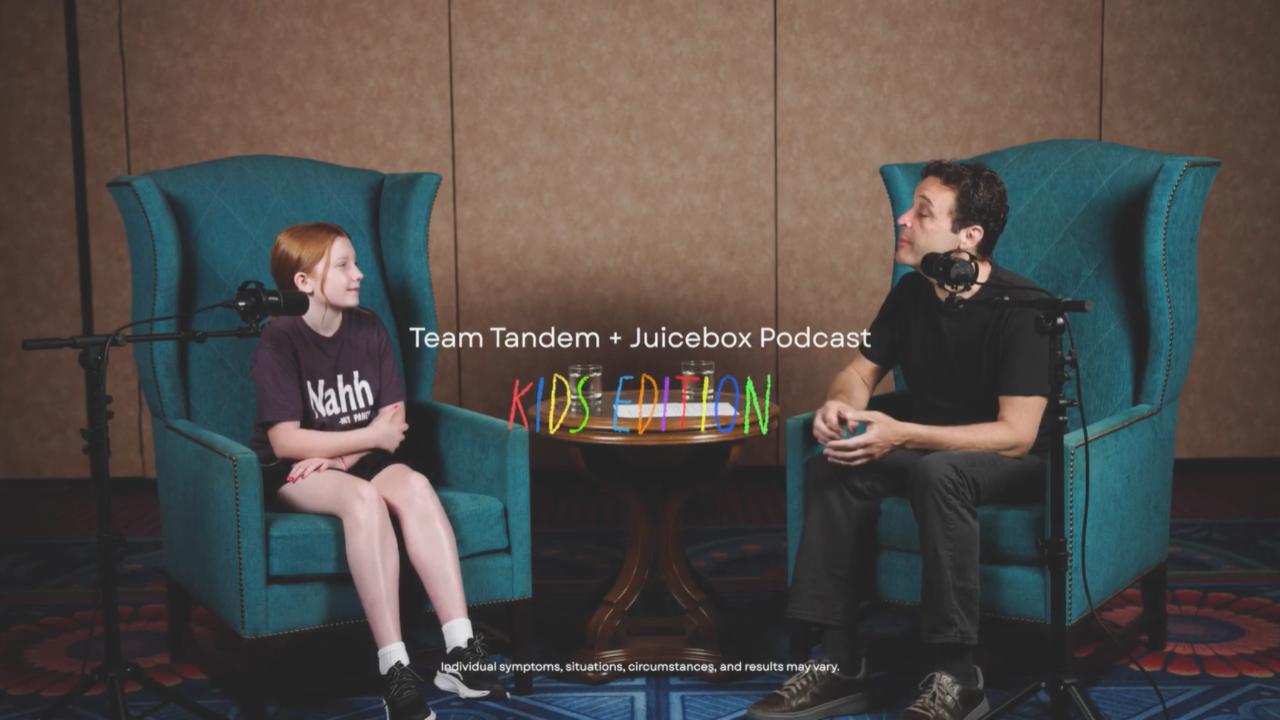
#1765 Tandem Kids: Riley
You can always listen to the Juicebox Podcast here but the cool kids use: Apple Podcasts/iOS - Spotify - Amazon Music - Google Play/Android - iHeart Radio - Radio Public, Amazon Alexa or wherever they get audio.
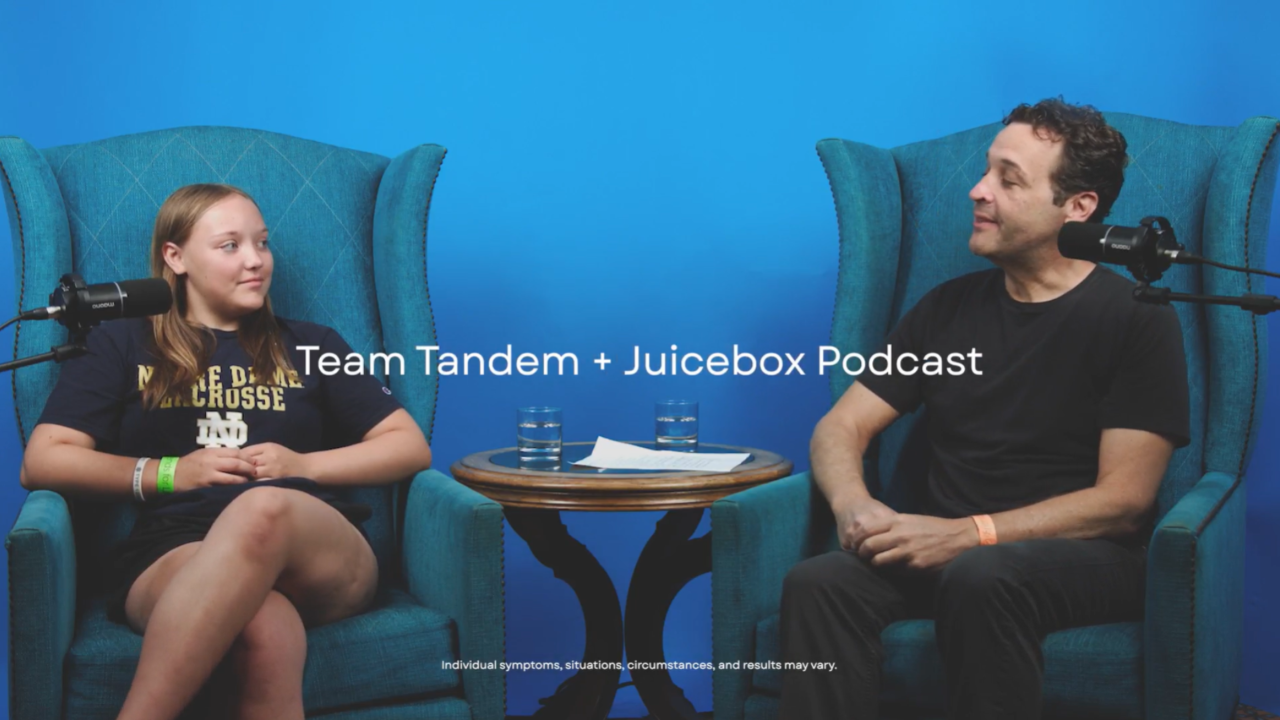
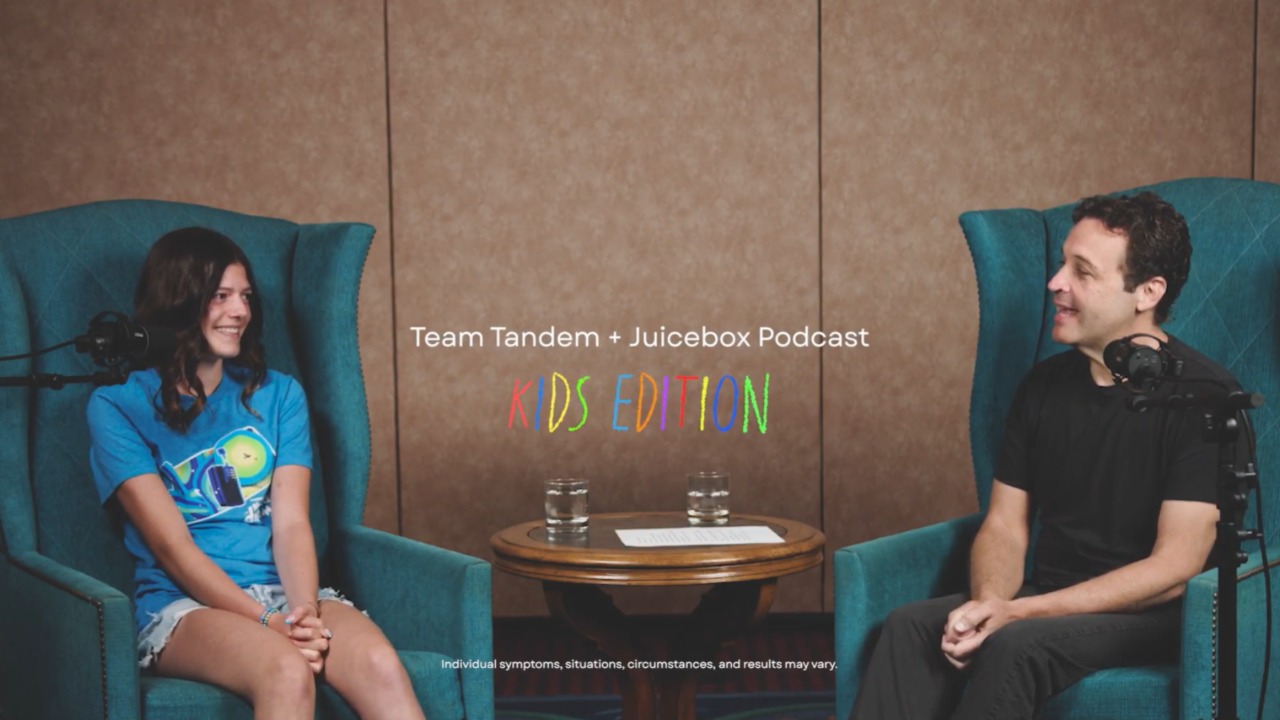
Riley, who was diagnosed with Type 1 diabetes 12 years ago, discusses the unique experience of having her brother and father both diagnosed with the condition within the last year.
+ Click for EPISODE TRANSCRIPT
DISCLAIMER: This text is the output of AI based transcribing from an audio recording. Although the transcription is largely accurate, in some cases it is incomplete or inaccurate due to inaudible passages or transcription errors and should not be treated as an authoritative record. Nothing that you read here constitutes advice medical or otherwise. Always consult with a healthcare professional before making changes to a healthcare plan.
Scott Benner (0:00) I attended my first ever Friends for Life conference in July 2025. (0:05) And while I was there, I interviewed eight children of various ages, all who wear a Tandem pump. (0:10) I wanna thank Tandem Diabetes for sponsoring this short episode of the Juice Box podcast. (0:16) Check them out at tandemdiabetes.com/juicebox. (0:22) Nothing you hear on the Juice Box podcast should be considered advice, medical or otherwise.
Scott Benner (0:28) Always consult a physician before making any changes to your health care plan. (0:35) The episode you're about to listen to is sponsored by Tandem Moby, the impressively small insulin pump. (0:41) Tandem Mobi features Tandem's newest algorithm, Control IQ Plus technology. (0:46) It's designed for greater discretion, more freedom, and improved time and range. (0:50) Learn more and get started today at tandemdiabetes.com/juicebox.
Scott Benner (1:05) Hi. (1:05) How are you?
Riley (1:06) Good. (1:06) How are you?
Scott Benner (1:07) I'm excellent. (1:07) Thank you. (1:08) What's your name?
Riley (1:09) Riley.
Scott Benner (1:09) Riley. (1:10) How old are you?
Riley (1:10) 15.
Scott Benner (1:11) And where are you from?
Riley (1:12) Marysville, Ohio.
Scott Benner (1:13) Awesome. (1:13) Do have type one diabetes? (1:15) Yes. (1:15) How long ago were you diagnosed?
Riley (1:17) Twelve years.
Scott Benner (1:18) Twelve years ago when you were three?
Riley (1:20) Yes.
Scott Benner (1:20) Do you remember anything about that?
Riley (1:23) It was on my brother's birthday, So
Scott Benner (1:26) Go ahead.
Riley (1:27) We were at, like, Chuck E. (1:28) Cheese or something and I just no. (1:32) We were not Chuck E. (1:33) Cheese, that's where we went after I got released from the hospital. (1:36) We my mom, she was like, I need to take my daughter to the doc to the doctors because she's, like, wetting the bed and she's always thirsty and she's just, like, she's just, like, sleeping all the time.
Riley (1:49) Mhmm. (1:50) So she took me to the doctor and he's like, you need to take her to the ER right now.
Scott Benner (1:56) Right.
Riley (1:56) So but I was really hungry, so we stopped for Burger King. (1:59) So when we got to the hospital and I remember, like, we were in this big room, but there were, like, like, bunch of toys in there. (2:08) So they gave me, like, a coloring book because I was just, like, sitting there and I was, like, crying because I didn't wanna be there. (2:13) Right. (2:14) And and I remember I was, like there was one time I was sitting in the room, I had Band Aids all over, like, all 10 of my fingers.
Riley (2:21) Mhmm. (2:22) And I was eating, like, the American, like, Kraft singles and baby carrots. (2:28) And I was just sitting there.
Scott Benner (2:29) Eating cheese slices and baby carrots? (2:31) Yes. (2:31) What were the Band Aids on your fingers for?
Riley (2:33) From all the times I had to poke my fingers check my blood sugar.
Scott Benner (2:35) Oh my gosh. (2:36) Yeah.
Riley (2:36) Because this was 2013, so Yeah. (2:39) They didn't, like, have Dexcoms or insulin So pumps I had, like, Band Aids all over me from where they had to give injections and stuff. (2:47) Right. (2:48) So and then after that, since it was my brother's second birthday, we went to Chuck E Cheese and I remember crying because everyone was getting like the triangle slices of cake, but I had to get the two by two square.
Scott Benner (3:03) They don't the different carbs?
Riley (3:04) Yeah. (3:05) Oh. (3:05) So I could actually count the carbs to make sure I got enough insulin.
Scott Benner (3:07) So you've grown up with type one Have there been moments where you've, like, felt like you've overcome something? (3:14) Have there been moments where it's been hard?
Riley (3:16) Yes. (3:17) There are like so I play lacrosse for my school, and there are many times where I've had to, like, sit out because I'm too low or I have ketones, so I can't do anything, but I still have to be there.
Scott Benner (3:30) Yeah.
Riley (3:30) So I'm just watching everyone play or practice or something.
Scott Benner (3:34) How does that make you feel?
Riley (3:35) I I feel like people are like judging me because I'm sitting out, but there's nothing I can do about it.
Scott Benner (3:40) Okay. (3:40) So do you feel supported by some friends and others so not you have a, like a good Yes, circle of I
Riley (3:45) amazing friends.
Scott Benner (3:46) How did you make that happen? (3:48) Did you, like, tell them about your diabetes? (3:50) Did you
Riley (3:51) Well, they kinda already knew
Scott Benner (3:52) Okay.
Riley (3:52) Because, like, I went to, like, a smaller elementary school, you're the kid with diabetes, so everyone knows.
Scott Benner (3:58) Oh, I see. (3:59) There's no other kids. (4:00) It was you.
Riley (4:00) It was me until third grade.
Scott Benner (4:02) And then somebody else showed up?
Riley (4:04) Yeah. (4:04) Well, she was already there, but she
Scott Benner (4:05) She was diagnosed. (4:06) Yeah. (4:07) Crazy question, but did it make you feel better when somebody else was there with type one? (4:11) Yes. (4:11) It did.
Riley (4:12) Because we were, like, best friends. (4:13) Like, we shared, like, the stories and Yeah. (4:17) We're just there.
Scott Benner (4:18) You know her still today? (4:18) Yes. (4:19) Oh, that's awesome. (4:20) So you're here today at Friends four Life? (4:22) Yes.
Scott Benner (4:22) There's a ton of kids here with type one. (4:24) What does it feel like to be around so many people who are in CGMs, Moby pumps, stuff like that?
Riley (4:29) I I think it I feel more like since most people here have type one that we're, like, not such a smaller group, it's like the majority of people here have it. (4:40) Yeah. (4:40) So it's like
Scott Benner (4:41) Is it like I don't know. (4:43) Does it make you feel lighter?
Riley (4:45) Yeah. (4:45) Like, if I I say something and someone's like, oh, yeah. (4:48) I have that too. (4:49) So It's
Scott Benner (4:50) just easy. (4:51) Yeah. (4:51) Other people beep, nobody acts like it's crazy. (4:53) Right? (4:53) And you're just like and it makes you feel like normal is the wrong word, but, like, there's what what is it?
Scott Benner (4:59) Like, there's a thing that's happening when you're around other people who don't have type one.
Riley (5:02) Like, there's a stigma. (5:03) There is, like, you have to be like, you're always high or you're, like, always beeping and they're, can I catch it?
Scott Benner (5:10) Yeah.
Riley (5:11) And then but everyone here is like just like it's normalized here, so they, like, know what's going on.
Scott Benner (5:16) Yeah. (5:16) So when you say the things you say all day long, nobody thinks, hey. (5:19) I'm high or your mom's yelling do something. (5:21) You're high or that kind of thing.
Riley (5:22) Yeah.
Scott Benner (5:23) Yeah. (5:23) I understand. (5:24) Okay. (5:25) So you told me about the day you were diagnosed. (5:28) That's crazy.
Scott Benner (5:28) Is that from stories that you were told from your parents or do
Riley (5:32) you actually But I remember some of
Scott Benner (5:33) them. (5:34) You have a mix of
Riley (5:34) it. (5:34) Yeah.
Scott Benner (5:35) Okay. (5:35) And then growing up, you've got friends, they're supporting you. (5:38) What has been tell me about a moment, I guess, where you thought, like, I can't believe I accomplished this, and you had, like, a big accomplishment despite diabetes.
Riley (5:50) I don't know.
Scott Benner (5:51) Is it tough? (5:52) Do you have a lot of things that you feel like you're working against that are
Riley (5:55) Yes.
Scott Benner (5:56) Yeah. (5:56) And you are you still working your way through those things? (5:58) What are they?
Riley (6:00) So I have a bunch of, like, scars all over my stomach and my legs. (6:04) Yeah. (6:04) So I can't really go out and, like, wear, like, a swimsuit because everyone's gonna be like, what's on your stomach?
Scott Benner (6:10) You're worried about that right And it makes you feel self conscious. (6:13) Yes. (6:13) Yeah. (6:14) I bet you that gets better as you get older. (6:16) I hope it does for you.
Scott Benner (6:16) I've watched it with my daughter. (6:18) Like, she's, like do you hide your devices? (6:21) Sometimes. (6:22) What insulin pump do you wear?
Riley (6:23) I'm currently on injections.
Scott Benner (6:25) You're doing injections right Are you getting a pump?
Riley (6:28) Eventually. (6:29) Well, I'm gonna try the Mobi here.
Scott Benner (6:31) Oh, okay. (6:32) So you're gonna do a what what are they calling it? (6:34) A try on? (6:35) Or
Riley (6:35) A trial or something like that.
Scott Benner (6:37) So you're gonna check out the Mobi here. (6:38) You're thinking about trying that? (6:39) Yeah. (6:40) Okay. (6:40) And do you think that would make a change for you?
Riley (6:42) I hope so.
Scott Benner (6:43) Yeah. (6:43) What is it about injections that I mean, you've you've been injecting for how long? (6:48) Because it sounds like you've worn pumps in the past.
Riley (6:50) I have. (6:51) So I did injections for about two years when I was first diagnosed, and then I started an Omnipod. (6:57) And then a few years after that, I started a Tandem. (7:00) Mhmm. (7:00) Like, I was on the t slim, and I did that for, like, two or three years.
Riley (7:05) Yeah. (7:05) So then now I'm on injections.
Scott Benner (7:07) What makes you switch?
Riley (7:09) It's just, like, sometimes I just need, like, the reset so I can, like
Scott Benner (7:14) Feel like you need a break? (7:15) Yeah. (7:15) So you just go back to injections for a while. (7:17) How long have you been doing them now?
Riley (7:19) Two or three months.
Scott Benner (7:20) Okay. (7:20) Yeah. (7:21) What pump was prior to that?
Riley (7:22) T slim.
Scott Benner (7:23) T slim. (7:23) And you're thinking about going back to and using the Movian? (7:25) Yes. (7:26) Is that a decision you're making or something your family decided together?
Riley (7:30) We I I decide when I wanna go back on the pump, but I talk with my parents about which one I wanna go back on.
Scott Benner (7:36) Okay. (7:36) And Moby is the one you're thinking about? (7:38) Yeah. (7:38) Tell me the difference between wearing a pump and injecting, like, what do you gain by having a pump on?
Riley (7:43) It's just, like, easier sometimes.
Scott Benner (7:46) How?
Riley (7:46) So instead of, like, having to go to, like, the nurse's office at school to do the injection because most most teachers won't let you do that in class.
Scott Benner (7:53) Okay.
Riley (7:54) But if I'm in class with, like, an insulin pump, I can just press a few buttons and no one would know.
Scott Benner (8:00) Yeah. (8:00) Okay. (8:01) So keeping that kind of anonymity that you want, like, you wanna be a little private Yeah. (8:07) The pump helps you stay private.
Riley (8:08) Yes.
Scott Benner (8:09) Alright. (8:09) And so because you don't mind the injections, it doesn't sound like. (8:12) Right? (8:12) So it's more about, can I keep this hidden? (8:16) Oh, is that why you're interested in the Mobi now?
Scott Benner (8:18) Because it's more
Riley (8:20) Yeah.
Scott Benner (8:20) Concealable? (8:21) Yeah. (8:22) That's why it's attractive to you. (8:23) Okay. (8:25) Tell me how, I guess, when you make that decision to go back and use the pump again, what what do you think like, what do you think is gonna happen?
Scott Benner (8:34) Like, do you know what I mean? (8:35) Like, you have in your mind, like, I'm gonna get a pump and then this is going to change?
Riley (8:39) Sometimes, like, when sometimes at the, like, the end of when I decide to go off the pump, my blood sugars are a little higher.
Scott Benner (8:47) Mhmm.
Riley (8:47) So then I go on the injections, and then when the injections are, like, keeping my blood sugar a little higher, that's when I go back on the pump. (8:55) So I'm hoping that'll keep them lower.
Scott Benner (8:56) You see more stable a one c's when you're pumping? (8:59) Yeah. (9:00) Do you like the Control IQ?
Riley (9:01) Yes.
Scott Benner (9:02) Yeah. (9:02) How come? (9:03) What does it do for you?
Riley (9:04) I it's easier to, like, understand from, like, other insulin pumps. (9:08) Mhmm. (9:08) It's I I like how sometimes I don't have to put in carbs and or not carbs, like, a correction because it, like, it's already, like
Scott Benner (9:17) Correcting for you. (9:17) Yeah. (9:18) Yeah. (9:18) So if you maybe miss on a meal and you start rising up, you have that comfort that it's gonna jump in and and do it for you. (9:25) Yes.
Scott Benner (9:25) That is relieving or
Riley (9:27) Yes. (9:27) It is.
Scott Benner (9:27) Just makes your day easier?
Riley (9:28) Yeah.
Scott Benner (9:29) Yeah. (9:29) How much of the day do you think you think about diabetes, like, normally, and how much less do you think about it when you're pumping with Control IQ?
Riley (9:40) I feel like it's, like, fifty fifty right now. (9:42) So, like, sometimes I'm thinking about it and other times I'm not. (9:45) Yeah. (9:46) But with Control IQ, it's way less.
Scott Benner (9:49) Awesome. (9:50) Okay. (9:50) Do have any heroes, people who have type one that you look up to or you follow in their careers or anything?
Riley (9:55) My dad.
Scott Benner (9:55) Oh, Your dad has type one? (9:57) Mhmm. (9:57) Do you know, when he was diagnosed?
Riley (9:59) He was diagnosed last year.
Scott Benner (10:01) No kidding. (10:01) So you've had type one for, what did we say, thirteen years? (10:04) Twelve. (10:05) Twelve years, sorry. (10:05) And your dad was just diagnosed.
Scott Benner (10:08) How old is he?
Riley (10:08) He's 43.
Scott Benner (10:11) Is there is there any other type one in your family, like aunts, uncles, cousins?
Riley (10:14) My brother.
Scott Benner (10:15) Your brother? (10:16) How old is your
Riley (10:16) brother? (10:17) He's 14.
Scott Benner (10:18) How when was he diagnosed?
Riley (10:19) Also last year.
Scott Benner (10:20) Wow.
Riley (10:21) Yeah. (10:21) So it went me, then my brother, and then my dad.
Scott Benner (10:24) What makes it, I don't know. (10:27) That's the wrong question. (10:28) I guess my question should be is how does it feel to not be alone in your family anymore? (10:32) I've interviewed other people. (10:33) I'm super interested to hear what you say, but was it nice that they got type one?
Scott Benner (10:38) I know that's such a weird way of saying it.
Riley (10:40) Kinda because, I'm not the only one who's, like, doing this stuff. (10:46) Yeah. (10:46) So they're kind of there with me.
Scott Benner (10:49) You don't you feel less alone? (10:50) Yeah. (10:50) Do know I interviewed, a person one time and everybody in the family had diabetes except for this one kid, like the one that, you know, I think it was, like, the youngest boy, if I'm remembering correctly. (11:01) And I inter I interviewed him and he told me do you know what he told me? (11:06) No.
Scott Benner (11:06) He wished he had type one diabetes so he could be like the rest of his family. (11:09) And he was real sincere about it too. (11:12) So I just kind of reverse engineering that figured when they got diagnosed, you probably felt less alone. (11:17) Yeah. (11:17) Do you think your mom feels like on the outside now or do you have other brothers and sisters?
Riley (11:20) I have one other sister.
Scott Benner (11:22) Oh, is she like, oh, I hope I don't get diabetes?
Riley (11:24) Yeah. (11:24) She's she did the trial on that stuff a couple years ago, so that's how I found out my brother had it. (11:29) Oh. (11:30) So she's doing it again this year just to make sure.
Scott Benner (11:32) Do have other autoimmune issues? (11:34) Yeah. (11:35) Hypothyroidism? (11:36) Yeah. (11:36) Do other people in your family have it too?
Riley (11:39) I don't think so. (11:40) Celiac? (11:41) My aunt has celiacs. (11:42) Both of them do.
Scott Benner (11:42) People have eczema in your family?
Riley (11:45) I don't think so.
Scott Benner (11:46) No? (11:46) It's just different. (11:47) That's not actually autoimmune, but it's a thing I see when I talk to people. (11:51) Anxiety?
Riley (11:52) Yeah.
Scott Benner (11:52) Yeah. (11:53) A lot of people have anxiety? (11:54) Yeah. (11:55) That's the other, I don't know, connector I see a lot when I'm talking to people. (12:00) Do are you anxious?
Scott Benner (12:01) No. (12:01) No. (12:02) But other people in your family are. (12:03) Yeah. (12:04) Okay.
Scott Benner (12:04) So your hero is your dad.
Riley (12:05) Yes.
Scott Benner (12:06) How come though? (12:06) What makes him your hero?
Riley (12:08) Because he's always standing up for me and when, like, insurance wouldn't cover something, he was, like, on the phone with them twenty four seven trying to get them to, like, approve the stuff.
Scott Benner (12:18) Right. (12:19) That's great. (12:19) Yeah. (12:19) So he's got your back. (12:21) Mhmm.
Scott Benner (12:21) And that feels what? (12:22) Like, what is it like, what does that give you when you
Riley (12:24) It's, know like, relieving because sometimes I don't wanna do it, but he said he'll always be there and do it for me.
Scott Benner (12:30) Yeah. (12:31) No. (12:31) I see that too with my daughter. (12:32) I think it's really valuable. (12:34) Let me see what else I got here for you.
Scott Benner (12:35) So you had type one diabetes for a long time before your dad was diagnosed and then your brother.
Riley (12:40) Yeah.
Scott Benner (12:41) Do you think they knew how to take care of themselves already from helping you? (12:46) Was it different for your dad? (12:47) Was your brother like, you know what I mean? (12:49) Like, did he go, oh, I've seen this before? (12:51) Do you think that made them more comfortable having watched you grow up with it?
Riley (12:54) I feel like my dad, he knew how to do it pretty good because he was taking care of me for so long, but there are some things that I had to teach my brother.
Scott Benner (13:01) Okay. (13:01) Like what?
Riley (13:03) He had, like, he has some trouble sometimes about, like, putting his, like, Dexcom into his insulin pump. (13:08) So Mhmm. (13:08) I had to remind him how to do that.
Scott Benner (13:10) What pump is he using?
Riley (13:11) He's on Omnipod five.
Scott Benner (13:12) Okay. (13:13) And he uses Dexcom?
Riley (13:14) Yes.
Scott Benner (13:15) G seven. (13:15) What about you?
Riley (13:16) I'm on g seven.
Scott Benner (13:17) G seven too. (13:17) Do you like it? (13:18) Yes. (13:18) Awesome. (13:19) Good.
Scott Benner (13:19) That's cool. (13:22) You count your own carbs, take care of your own meals? (13:24) Yes. (13:24) Yeah? (13:25) Do does your brother?
Riley (13:26) Yes.
Scott Benner (13:27) Yeah. (13:27) Who taught him that, do you think?
Riley (13:29) I think just from watching me and my parents do it, I think he, like, knew how to already. (13:35) Yeah. (13:35) But there are some things where I'm like he's like, I don't know about how much this is.
Scott Benner (13:39) Right.
Riley (13:40) Because, like, sometimes we go out and he doesn't know.
Scott Benner (13:42) Okay. (13:42) And your dad is your mom like, would you call your mom your primary diabetes caregiver or is it your dad?
Riley (13:48) It's both.
Scott Benner (13:49) Yeah. (13:49) So it's been split pretty Yeah. (13:50) The whole time. (13:51) So they both knew how to handle things.
Riley (13:52) Yes.
Scott Benner (13:53) What's your a one c right now? (13:54) Do you know?
Riley (13:56) Eight point something.
Scott Benner (13:57) Okay. (13:58) Yeah. (13:58) And does it change when you're on a pump?
Riley (14:00) Yes.
Scott Benner (14:01) Does it goes down?
Riley (14:02) Sometimes.
Scott Benner (14:03) You think because of the correcting? (14:04) Yeah. (14:05) Okay. (14:06) I had a question. (14:07) I just lost it.
Scott Benner (14:08) So I know that it was, like I know that you said that it was kind of nice when other people had type one, but initially when your dad and your brother were diagnosed, what was your reaction?
Riley (14:18) I kind of didn't want them to have it because it's like a little bit extra steps. (14:23) Yeah. (14:24) Like, we can still do everything else that everyone else can, but it's just extra steps and I didn't want them to have to do that.
Scott Benner (14:29) Yeah. (14:29) So it wasn't like a sadness about the diabetes, it was about the work. (14:32) Yeah. (14:33) Oh, that's interesting. (14:34) Okay.
Scott Benner (14:35) And when you're deciding between different pumps, what made you think about the Mobi?
Riley (14:40) I just wanted to try something else. (14:42) So because I was on Omnipod for so long. (14:44) It was just, like, something new, so I thought it would work better.
Scott Benner (14:47) Okay. (14:48) Alright. (14:48) Well, you're try it on today. (14:49) Hope you love it.
Riley (14:50) Thank you.
Scott Benner (14:50) Excellent. (14:51) Was really great talking to you.
Riley (14:52) You too.
Scott Benner (14:52) Thank you. (14:53) The podcast you just enjoyed was sponsored by Tandem Diabetes Care. (14:58) Learn more about Tandem's newest automated insulin delivery system, Tandem Mobi with Control IQ plus technology at tandemdiabetes.com/juicebox. (15:08) There are links in the show notes and links at juiceboxpodcast.com. (15:12) If you'd like to hear about diabetes management in easy to take in bits, check out the small sips.
Scott Benner (15:18) That's the series on the juice box podcast that listeners are talking about like it's a cheat code. (15:23) These are perfect little bursts of clarity, one person said. (15:27) I finally understood things I've heard a 100 times. (15:30) Short, simple, and somehow exactly what I needed. (15:33) People say small sips feels like someone pulling up a chair, sliding a cup across the table, and giving you one clean idea at a time.
Scott Benner (15:41) Nothing overwhelming. (15:42) No fire hose of information. (15:44) Just steady helpful nudges that actually stick. (15:47) People listen in their car, on walks, or rather actually bolus ing anytime that they need a quick shot of perspective. (15:53) And the reviews, they all say the same thing.
Scott Benner (15:56) Small sips makes diabetes make sense. (15:59) Search for the Juice Box podcast, small sips, wherever you get audio.












Please support the sponsors

The Juicebox Podcast is a free show, but if you'd like to support the podcast directly, you can make a gift here. Recent donations were used to pay for podcast hosting fees. Thank you to all who have sent 5, 10 and 20 dollars!
