#1781 Body Grief: Hopelessness, Hope & Self Care
You can always listen to the Juicebox Podcast here but the cool kids use: Apple Podcasts/iOS - Spotify - Amazon Music - Google Play/Android - iHeart Radio - Radio Public, Amazon Alexa or wherever they get audio.
We continue through the Body Grief process with two deeply connected stages: Hopelessness and Hope, and how they eventually open the door to Body Trust.
+ Click for EPISODE TRANSCRIPT
DISCLAIMER: This text is the output of AI based transcribing from an audio recording. Although the transcription is largely accurate, in some cases it is incomplete or inaccurate due to inaudible passages or transcription errors and should not be treated as an authoritative record. Nothing that you read here constitutes advice medical or otherwise. Always consult with a healthcare professional before making changes to a healthcare plan.
Scott Benner (0:0) Here we are back together again, friends, for another episode of the Juice Box podcast. (0:15) Body grief is the sense of loss and mourning that comes with living in an ever changing body. (0:21) And in this new series with myself and Erica Forsyth, we're gonna talk all about it. (0:27) How would you like to share a type one diabetes getaway like no other? (0:31) Join me on Juice Cruise 2026.
Scott Benner (0:33) You may be asking, what is Juice Cruise? (0:35) It's a week long cruise designed specifically for people and families living with type one diabetes. (0:40) It's not just a vacation. (0:42) It's a chance to relax, connect, and feel understood in a way that is hard to find elsewhere. (0:47) We're gonna sail out of Miami, and the cruise includes stops in CocoCay, San Juan, Saint Kitts, Nevis aboard the stunning Celebrity Beyond.
Scott Benner (0:57) This ship is chosen for its comfort, accessibility, and exceptional amenities. (1:02) You're gonna enjoy a welcoming environment surrounded by others who get life with type one diabetes. (1:08) I'm gonna host diabetes focused conversations and meetups on the days at sea. (1:12) There's thoughtfully designed spaces, incredible dining, and modern amenities all throughout the celebrity beyond. (1:20) Your kids can be supervised, and there's teen programs so everyone gets time to recharge.
Scott Benner (1:26) Not just the the kids going on vacation, but maybe you get the kickback a little bit too. (1:30) There's gonna be zero judgment, real connections, and a whole lot of sun and fun on Juice Cruise twenty twenty six. (1:36) Please come with me. (1:37) You're going to have a terrific time. (1:39) You can learn more or set up your deposit at juiceboxpodcast.com/juicecruise.
Scott Benner (1:45) Get ahold of Suzanne at cruise planners. (1:47) She will take care of everything. (1:49) Link's in the show notes. (1:50) Link's at juice box podcast dot com. (1:53) I created the diabetes variable series because I know that in type one diabetes management, the little things aren't that little, and they really add up.
Scott Benner (2:02) In this series, we'll break down everyday factors like stress, sleep, exercise, and those other variables that impact your day more than you might think. (2:10) Jenny Smith and I are gonna get straight to the point with practical advice that you can trust. (2:15) So check out the diabetes variable series in your podcast player or at juiceboxpodcast.com. (2:21) Nothing you hear on the juice box podcast should be considered advice, medical or otherwise. (2:26) Always consult a physician before making any changes to your health care plan.
Scott Benner (2:33) The episode you're about to listen to was sponsored by Touched by Type one. (2:38) Go check them out right now on Facebook, Instagram, and, of course, at touchedbytype1.org. (2:44) Check out that programs tab when you get to the website to see all the great things that they're doing for people living with type one diabetes. (2:52) Touched by type1.org. (2:54) Today's episode is also sponsored by Eversense three sixty five, the only one year wear CGM.
Scott Benner (3:02) That's one insertion and one CGM a year. (3:05) One CGM, one year. (3:08) Not every ten or fourteen days. (3:10) Ever since cgm.com/juicebox. (3:14) The podcast is also sponsored today by the Tandem MOBI system, which is powered by Tandem's newest algorithm, Control IQ Plus technology.
Scott Benner (3:23) Tandem MOBI has a predictive algorithm that helps prevent highs and lows and is now available for ages two and up. (3:29) Learn more and get started today at tandemdiabetes.com/juicebox. (3:35) Erica, I appreciate you coming back. (3:36) We were gonna try to finish up the body grief series today. (3:39) Is that right?
Erika Forsyth (3:40) That's the plan. (3:42) Yes.
Scott Benner (3:42) Look at us. (3:45) How do you wanna handle this? (3:46) Do wanna do you wanna just give a little overview of what you think what got us to this point and then how we're gonna finish up, or do you just wanna jump in? (3:55) What do you think?
Erika Forsyth (3:56) I think let's do a quick recap in light of this perhaps being our final episode of the series.
Scott Benner (4:03) Okay.
Erika Forsyth (4:03) So we we're kind of reviewing the body grief stages, and this these are as defined by Jane Mattingly from her book. (4:12) This is body grief. (4:13) And body grief is, you know, the experience or, the sense of loss or mourning that comes with living in a body. (4:21) Right? (4:21) So the having that feeling that you wish you could go back to the way your body used to function, the way your body used to look, and the sense of loss that accompanies that that longing.
Erika Forsyth (4:33) And so the stages that she defines, there are seven of them, and so far, we've reviewed five or discussed five. (4:41) The first one's dismissal, which sounds like, I'm fine. (4:45) Everything's fine. (4:46) The second one is shock, though that might sound like you're feeling overwhelmed and feeling like you just can't keep going. (4:54) You can't function.
Erika Forsyth (4:56) Apology is the third stage. (4:59) It's kind of sounding like I'm I'm sorry for being me. (5:02) I'm sorry for the way I'm presenting. (5:04) I'm sorry for my illness. (5:05) The fourth stage is fault, and that sounds like why me?
Erika Forsyth (5:10) Why did this happen? (5:12) Could I done anything differently? (5:14) And the fifth stage is fight, which sounds like I'm gonna beat this thing. (5:20) And so we've discussed all of those in previous episodes. (5:24) And so today, I thought we could discuss the stage six, which is combined hopelessness and hope together.
Erika Forsyth (5:32) And then the the final stage, is body trust, which ultimately, we're discussing it as the final stage and even naming it as such, but, really, it's something that we want to practice and integrate as you work through the different stages.
Scott Benner (5:46) Okay.
Erika Forsyth (5:46) So how does that sound?
Scott Benner (5:47) I'm incredibly interested. (5:49) I have, enjoyed this conversation a lot so far and have seen a number of comments online recently about how people feel just about you being on the podcast in general and and how valuable they find these conversations. (6:02) So, honestly, I'm excited to finish this one up and then figure out what we're gonna talk about next.
Erika Forsyth (6:07) Yes. (6:07) Yes. (6:08) Great. (6:08) Well, thank you. (6:09) I appreciate that.
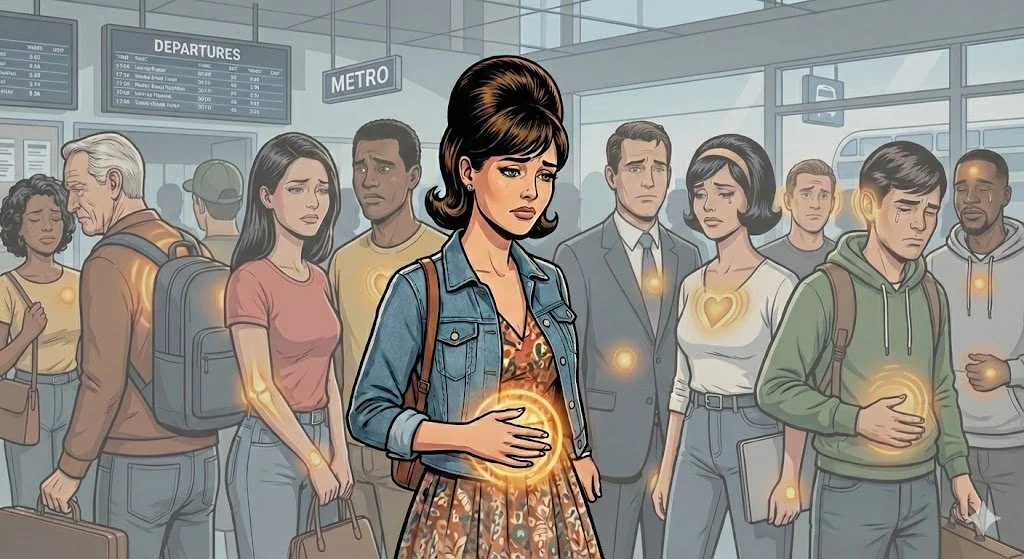
Erika Forsyth (6:10) So so the stage six, hopelessness and hope. (6:13) So, again, these are these are tool these are definitions and tools that Jane, the author, uses, and then we're trying to kind of apply them and discuss them through the lens of living with diabetes. (6:22) Mhmm. (6:23) So when when you're in hopelessness, this one is probably very clear and obvious. (6:28) It sounds like, you know, what is the point of all this?
Erika Forsyth (6:31) You're feeling devastated. (6:34) It's also a very natural place to be. (6:35) We all experience hopelessness at some point. (6:39) It often feels like it hits when there's just no way out. (6:42) Like, you can't excuse yourself.
Erika Forsyth (6:44) You can't dismiss it. (6:46) You are out of kind of the the wimey stage, and you're that might even lead to that feeling of hopelessness. (6:52) You might be feeling like you are forgotten. (6:55) Right? (6:56) Like, you get you get diagnosed or you go through and do challenge within your life with diabetes, and people are are still living their lives.
Erika Forsyth (7:04) And you might feel like you're gonna be left behind. (7:07) If you are in hopelessness, this might feel or sound a little bit like, you know, depression that you're feeling really lethargic. (7:16) You have really intense fatigue. (7:18) You might be sleeping more. (7:20) You are canceling plans.
Erika Forsyth (7:22) And then that isolation as a result of those other feelings and behaviors, that can lead to even more thoughts of just a feeling left behind, a feeling stuck, a feeling like no one really understands what what you're going through. (7:37) And then, ultimately, you stop using the coping skills, right, that you know would help you Right. (7:42) Kind of move out of this space, but you you feel like you just can't.
Scott Benner (7:46) That feels that's maybe the part where you give in and just throw in the towel.
Erika Forsyth (7:51) Yes. (7:51) Yes.
Scott Benner (7:52) So in the beginning, you experienced some sort of a change in your body's ability to do what you expect to do, and you can feel like, okay. (8:04) This this vessel is not doing what was promised here. (8:08) Mhmm. (8:08) And then it this drift, if you're not supporting yourself correctly, this drift can get worse and worse and worse until you finally just throw in the towel and you go, oh, I I I give up. (8:17) Like, I'm gonna I'm gonna feel like this forever.
Scott Benner (8:20) I have a failed body. (8:21) It's not gonna do what I need to do instead of reframing. (8:24) Because I don't find that to be I'm not saying everybody's situation is exactly the same, but for the most part, type one diabetes is not gonna leave you in a situation where your body can't keep up with your activities and your the other things you wanna do. (8:37) There's obviously more steps to take sometimes, and some people have greater struggles than others. (8:42) But I have also seen people who I think are just bowled over by this thing, which I would have probably called depression at first.
Scott Benner (8:50) But now that you've outlined it like this, it really does feel more focused on on this this letdown that you've experienced.
Erika Forsyth (8:57) And and they can they can commingle. (9:00) Right? (9:00) I mean, hopelessness is a a symptom of depression.
Scott Benner (9:04) Mhmm.
Erika Forsyth (9:04) So and and, also, this might sound like burnout. (9:08) Right? (9:09) Like, you might get to this place where you just feel like you can't keep doing what you need to do to take care of yourself. (9:16) And, yes, this might you might experience it's really normal to experience feeling of hopelessness, whether it's with diabetes or any other change in your body. (9:25) Like, even if we were to simplify it with a cold and you had all these plans and then you had to cancel them.
Erika Forsyth (9:33) And when you have that letdown, right, when you feel like you just you can't do anything and your body is is shifting and you're like, gosh. (9:41) Why couldn't it be like it was yesterday?
Scott Benner (9:43) Right.
Erika Forsyth (9:43) So it can be very small, this feeling of hopelessness, but also can be become bigger given many different factors. (9:53) But I think just naming it is really helpful too to notice, oh my gosh. (9:57) Okay. (9:57) I'm I'm having these thoughts and feelings. (9:59) I'm canceling plans.
Erika Forsyth (10:01) I'm feeling isolated. (10:02) I feel like no one really is getting this. (10:04) Oh, I'm I'm in this hopelessness stage. (10:07) And to name it and normalize it. (10:09) And then we're gonna talk about, you know, kind of the flip side of it, which is hope.
Scott Benner (10:13) I think that the thing that I like most about this conversation is that you can see that this exists outside of diabetes Mhmm. (10:21) Or outside of chronic illness at all. (10:23) Like, the people can experience this for, you know, I don't know, pain that won't go away or even a body style change. (10:30) I wouldn't call it body grief, but I've had trouble, like, adjusting to just not weighing as much. (10:36) It it it has been odd at times and and impactful.
Scott Benner (10:40) And so, like, understanding that this feeling can can come from a lot of different places, but that you might be experiencing it out there listening because of type one. (10:50) I find that just I don't know. (10:51) I find that distinction incredibly important. (10:54) Mhmm. (10:55) I I don't wanna
Erika Forsyth (10:55) stop you, but Yes. (10:56) And I think that's, you know, part of why I think this this book, a, I think, has has been successful to a lot of different types of people. (11:05) Right? (11:05) She's she's it is a universal experience of loss that we that we all have, whether it's with a chronic illness or a change in body style or body type or, yeah, the chronic pain that just won't go away. (11:19) Yeah.
Erika Forsyth (11:19) And I think having these and having terms helps us contain, oh, this is what's happening.
Scott Benner (11:27) Mhmm.
Erika Forsyth (11:27) This is what I'm experiencing and feeling less alone in it and less, hopefully, less stuck.
Scott Benner (11:31) It would have never occurred to me without this conversation that I had a preconceived expectation of the shell that I'm walking around in. (11:38) And that if it doesn't do the thing that I've come to expect it to do, that that could be a letdown in some way. (11:43) I never I genuinely never would have thought about it if it if it didn't, if it didn't come up like this. (11:47) So, anyway, I'm I'm grateful you brought this to me.
Erika Forsyth (11:50) It's good.
Scott Benner (11:50) Yeah. (11:51) But but go ahead and move on. (11:52) I I apologize
Erika Forsyth (11:52) for Okay.
Scott Benner (11:53) Cutting you off.
Erika Forsyth (11:54) So I think what I appreciate the way that she discusses the fact that hopelessness and hope can go hand in hand, that whenever we are experiencing hopelessness, we are able to kind of hold on. (12:12) Right? (12:12) And the okay. (12:14) Things have gotta change. (12:15) Things are gonna get better.
Erika Forsyth (12:16) And not in a kind of magical thinking kind of way, but trusting that things are gonna shift. (12:24) Now when we when it's hard to get to that space, that's when perhaps you might be experiencing more clinical levels of depression.
Scott Benner (12:31) Okay.
Erika Forsyth (12:33) So I don't wanna kind of say, just just think that things could change and things will get better, and it'll be fine because that's can be really hard to do Mhmm. (12:42) When you're in severe levels of depression. (12:45) She defines kind of hope that is this glue, right, that keeps the body grief process together. (12:51) And so how do you know if you're able to experience? (12:54) What are some signs that you're in hope?
Erika Forsyth (12:56) So it is allowing yourself to consider that things could possibly get better. (13:02) So I'm envisioning, like, you're you're in this position. (13:05) You're feeling like, first of all, how did I get here? (13:07) How did I get diabetes? (13:09) How am I ever going to feel better?
Erika Forsyth (13:11) How am I gonna cope? (13:12) Why did this happen to me? (13:14) I'm feeling so isolated and alone, and I'm not gonna reach out for help. (13:18) So I that was kinda I'm quickly moving through the stages. (13:21) If you are able to say, okay.
Erika Forsyth (13:22) Things are really hard right now, but I'm gonna allow myself the option to consider that things might get better. (13:30) Mhmm. (13:31) Not not that they will. (13:32) Not that, like, you're gonna click your heels or tomorrow's Monday, and it's gonna be great on Monday. (13:37) Everything's gonna reset, but just holding that hope.
Scott Benner (13:40) The it's a possibility. (13:41) Yeah. (13:44) This episode is sponsored by Tandem Diabetes Care. (13:47) And today, I'm gonna tell you about Tandem's newest pumping algorithm. (13:51) The Tandem Mobi system with Control IQ plus technology features auto bolus, which can cover missed meal boluses and help prevent hyperglycemia.
Scott Benner (14:00) It has a dedicated sleep activity setting and is controlled from your personal iPhone. (14:05) Tandem will help you to check your benefits today through my link, tandemdiabetes.com/juicebox. (14:12) This is going to help you to get started with Tandem's smallest pump yet that's powered by its best algorithm ever. (14:19) Control IQ Plus technology helps to keep blood sugars in range by predicting glucose levels thirty minutes ahead, and it adjusts insulin accordingly. (14:27) You can wear the Tandem Mobi in a number of ways.
Scott Benner (14:30) Wear it on body with a patch like adhesive sleeve that is sold separately, clip it discreetly to your clothing, or slip it into your pocket. (14:38) Head now to my link, tandemdiabetes.com/juicebox, to check out your benefits and get started today. (14:47) When you think of a CGM and all the good that it brings in your life, is the first thing you think about, I love that I have to change it all the time? (14:54) I love the warm up period every time I have to change it? (14:57) I love that when I bump into a door frame, sometimes it gets ripped off.
Scott Benner (15:01) I love that the adhesive kinda gets mushy sometimes when I sweat and falls No. (15:05) These are not the things that you love about a CGM. (15:09) Today's episode of the Juice Box podcast is sponsored by the Eversense three sixty five, the only CGM that you only have to put on once a year, and the only CGM that won't give you any of those problems. (15:21) The Eversense three sixty five is the only one year CGM designed to minimize device frustration. (15:28) It has exceptional accuracy for one year with almost no false alarms from compression lows while you're sleeping.
Scott Benner (15:34) You can manage your diabetes instead of your CGM with the Eversense three sixty five. (15:40) Learn more and get started today at eversensecgm.com/juicebox. (15:46) One year, one CGM.
Erika Forsyth (15:48) Yeah. (15:48) It's a possibility. (15:49) Okay. (15:50) So and that's what she calls practicing blind faith. (15:54) So we're not we're not out there kind of chasing the cure, which I know we so desperately want, and we can get kind of stuck in some of those traps.
Erika Forsyth (16:03) But it's about, she just says, trusting the present enough to wanna stick around for what the future holds. (16:10) I love I like that. (16:12) Even when even when you're in your a really moment full of despair and you're feeling really, you know, just crappy emotionally, maybe even physically, say, okay. (16:22) Things it will it will not stay this way forever.
Scott Benner (16:26) Okay. (16:27) Yeah.
Erika Forsyth (16:27) So if that's hard to envision, how can you cultivate more of that hope? (16:34) So here are some four four tools that I think are are pretty helpful, hopefully, will be helpful. (16:39) Asking yourself, k. (16:41) Who am I gonna be in the future? (16:43) Getting to know your future use.
Erika Forsyth (16:44) So this is if you're feeling really stuck and trapped. (16:47) Who am I gonna be in five minutes, in five days, in in one month, in six months? (16:54) Right? (16:54) Asking yourself, what have you been excited about recently? (16:59) What has been bringing you contentment?
Erika Forsyth (17:02) Do you feel supported right now, and who who is supporting you in the future? (17:07) What is bringing you joy? (17:08) So that is a mind exercise because even though you're feeling maybe hopeless right now, you're kind of getting yourself to the place of, like, things might get better because I'm I'm envisioning in five months from now, oh, this thing is bringing me joy, or this person is really supporting me right now. (17:27) Mhmm. (17:27) Does that make sense?
Scott Benner (17:28) Yeah. (17:29) And can it be small just, like, slam dunks that you know are gonna happen to you? (17:34) Like, can I be like, oh my god? (17:35) Stranger Things is coming out. (17:36) I'm gonna be excited when that happens, that kind of stuff.
Erika Forsyth (17:38) Yes.
Scott Benner (17:39) Sam?
Erika Forsyth (17:40) Yes. (17:40) Anchor. (17:41) Yes. (17:41) Anchoring onto something that you know will be exciting and perhaps fulfilling, and it could be very small or very big.
Scott Benner (17:48) Yeah. (17:48) So it's almost cheat. (17:49) Like, put something out in front of yourself like a goal that you know is definitely gonna happen. (17:52) Like, well, I'm I'm gonna be super excited when Wednesday gets here. (17:55) And then when Wednesday comes, be like, woo.
Scott Benner (17:56) We did it. (17:57) Right? (17:57) Yeah. (17:57) No. (17:58) It's just hey.
Scott Benner (17:58) Listen. (17:59) I do that with does everyone not do this? (18:01) Like, I think it keeps me alive to wanna see a movie that's coming out a year from now. (18:06) I always think like, oh, I just wanna watch that movie. (18:08) Then once I see it, I go, oh, I I wanna make it to next summer to see this one.
Scott Benner (18:11) I know that's got no real bearing on my my actual longevity, but I do think it has a bearing on I don't think it's debatable that human beings do better when they have tasks to do and when they have goals. (18:24) And so if you're if you can do goal setting around the body grief thing, that makes complete sense to me. (18:32) And, yeah, it's really awesome. (18:33) It's positive self talk. (18:35) That's what it is, really.
Scott Benner (18:36) Right?
Erika Forsyth (18:37) That this is a form of it for sure. (18:39) Yeah. (18:39) Yeah. (18:39) Just reminding yourself that even though you don't feel great right now, you in five and six months from now, I know I'm gonna be excited because, to use your example, the show is coming out or this new episode. (18:52) So you're you're reminding yourself internally that the way you're thinking and feeling right now is not permanent.
Erika Forsyth (18:57) It's not fixed.
Scott Benner (18:59) Do know small things give me that feeling? (19:01) I actually thought today when I was thinking about, like, the span of time that I've owned a car in the past that I don't remember driving anymore. (19:09) But at the time, it was my car. (19:12) Like, it was important to me. (19:13) It got dirty.
Scott Benner (19:13) I washed it off. (19:14) I kept it clean inside. (19:15) It got me where I was going, and now it's as if it didn't exist. (19:19) And when I think about, like, struggle the same way, I have struggled in the past too, but that struggle that I remember doesn't exist anymore. (19:26) I actually can't even feel it anymore.
Scott Benner (19:28) And that helps me the next time there's a struggle because I think that there'll be a day in my life where I won't remember this and it'll be gone. (19:36) And therefore, it makes it feel very transient, and it doesn't stick to me the same way then. (19:40) I've been doing that my whole life, though. (19:42) So I don't know what that is. (19:44) I'm sure at some point it was coping, but now I just realized it works.
Scott Benner (19:47) But yeah.
Erika Forsyth (19:49) Yeah. (19:49) Let's see. (19:49) Well, it's coping that works Yeah. (19:51) For you.
Scott Benner (19:51) Who cares. (19:52) Right? (19:52) Anyway, I'm sorry. (19:53) Keep going.
Erika Forsyth (19:54) No. (19:54) It's good. (19:54) Yeah. (19:55) Okay. (19:55) So another, you know, another tool to help you cultivate some more hope is reminding yourself of what she calls anchors.
Erika Forsyth (20:03) The people it could be people, but places or things too that bring you meaning and keep you kind of anchored, tethered to the world no matter how bad things may feel or how bad things may get. (20:18) And so you're remembering this is kind of like you could do even guided imagery exercises. (20:26) Right? (20:26) Anchoring yourself to that feeling that you had laying on the beach that one time. (20:32) It doesn't have to always necessarily be the people that you're counting on because sometimes that might lead you to feel if you're feeling lonely or alone and don't have that sense of support right now, that can also maybe take you down a path you don't wanna go down.
Erika Forsyth (20:46) But just remembering those places, people, things that make you feel connected
Scott Benner (20:52) Right.
Erika Forsyth (20:52) To the world. (20:53) Okay. (20:54) The next couple, you know, becoming a a role model. (20:58) You might even have role models that you look to whether it's on, you know, in your personal life, you know, on social media, but also considering, can you be someone else's role model? (21:13) I think this is oftentimes I know teens and young adults who maybe have gone through a challenging time of kind of integrating diabetes into their identity.
Erika Forsyth (21:24) They often then find great healing and joy by looking kind of backwards and seeing who who can I support now who's newly diagnosed is a is a really beautiful way to kinda help cultivate more of that hope? (21:37) Yeah. (21:37) Okay. (21:39) Last two, play, finding moments of play. (21:42) And I think we often think these can be really like, I need to go into the show.
Erika Forsyth (21:46) I need to go on a trip. (21:47) I need to have buy this big thing. (21:49) But just going back down to the small things of, like, playing a card game. (21:53) I know we'd like know, dancing to your favorite song in the kitchen. (21:57) Like, these are really small things that interrupt the spiral of thinking that you're stuck and that the way you feel is permanent.
Erika Forsyth (22:06) And you're thinking about, well, what am I what hand am I gonna play next? (22:09) What card can I play next? (22:10) Right? (22:10) It's just very, very small things that you might be hard to to start. (22:15) But if you can get to that first few minutes of, like, I'm gonna play I'm gonna press play on this music.
Erika Forsyth (22:20) I'm gonna ask this person to play this game and see what happens.
Scott Benner (22:24) Is that a distraction? (22:25) Is that the is that the role it plays? (22:27) Or am I Yes.
Erika Forsyth (22:28) Yeah. (22:28) Absolutely. (22:29) It's a distraction and then gets you to a different place in your mind. (22:32) It interrupts the thought pattern of a feeling of permanency, of hopelessness, and it gets kind of that little dopamine hit. (22:41) And so this is, you know, separate from maybe going you know, I know we often will wanna go to this to scrolling to get those dopamine hits, but this is something different that's really small within your control.
Scott Benner (22:52) Is there can I take a sidebar for a second? (22:54) Maybe you don't do or don't know the answer to my question. (22:57) Maybe my question's ridiculous. (22:58) But is there a, like, a, intellectual scientific understanding of how people get stuck in that loop? (23:06) Because that is really what because you're describing, like, you're caught in a loop, like, get out of it.
Scott Benner (23:10) And so that your brain can focus on other things. (23:13) You know, you start I don't know. (23:14) I broke up with a girl. (23:15) I broke up, and you keep thinking about it, and then it just feels like it gets heavier and heavier and and worse. (23:20) Almost like a centrifuge.
Scott Benner (23:21) You're stuck to the side. (23:22) You can't peel yourself off the wall. (23:24) It's as faster it goes, the more you're stuck. (23:26) Is there an understanding of why that happens to human beings at all, or is that just the thing we know happens and we're not sure why?
Erika Forsyth (23:33) Like, neuro in a neuropsychological way?
Scott Benner (23:37) Is something happening to them, or is this purely brain chemistry?
Erika Forsyth (23:42) I think it's how our brains operate.
Scott Benner (23:43) Yeah.
Erika Forsyth (23:44) And then we gets we get stuck in this way of thinking, and this is if we're we're gonna delve into, you know, cognitive behavioral therapy and and kind of neuroscience, we get stuck in this way of thinking because, like, with the cognitive behavioral triangle, you know, we will do something and then we think a certain way, and then that makes us feel a certain way. (24:05) Or you could start with a thought, and then we get stuck in
Scott Benner (24:08) that It stutters almost, and then it just kick and it kicks over and does it again. (24:11) Yes. (24:12) Yeah. (24:12) Yeah.
Erika Forsyth (24:12) And now neuro like, neurologically neuro kind of in a psychological way, I'm not sure I could explain why, but I think that's a good question for us to explore.
Scott Benner (24:25) How do you get on that off ramp when you feel it coming?
Erika Forsyth (24:29) You know? (24:30) Because That's that's yeah. (24:31) That's another
Scott Benner (24:32) I have a I have a silly example. (24:34) Okay? (24:34) Okay. (24:34) Sorry for everybody. (24:36) I guess I'm announcing here one of my chameleons has passed away.
Erika Forsyth (24:39) And Oh, I'm sorry.
Scott Benner (24:41) She lived a good long time and made it pretty far. (24:44) But I had space and a and a different animal that I had considered, getting for a number of years. (24:50) And yesterday, I went to pick it up, and I've done all of my research. (24:56) I'm completely comfortable on how to take care of it. (24:59) I have the cagings correct.
Scott Benner (25:00) Everything about it is right. (25:02) I have the desire. (25:03) I can afford it. (25:04) Like, the entire thing. (25:05) Like, I there's nothing there.
Scott Benner (25:06) The only thing that exists that is outside of my control is that I've never owned this kind of animal before, and I have some trepidation about that. (25:14) But that's it. (25:15) It it's it's a healthy amount of trepidation. (25:18) And as I was driving to the FedEx location to pick it up, I felt myself getting nervous to the point where I thought, oh my god. (25:27) I shouldn't have done this.
Scott Benner (25:29) And as soon as I had that thought, I stopped myself and I went, oh, shut up, idiot. (25:34) You're just nervous because you don't know what's about to happen. (25:38) You just can't see on the other side of the wall. (25:40) Like, you've got it all thought through. (25:42) You're good to go.
Scott Benner (25:43) You'll know what to do as the things happen. (25:45) But my god, how interesting is that? (25:47) That even on something so small that I prepared so much for that my brain was able to look at me and go, hey. (25:55) You are making a huge mistake right now. (25:57) And I don't know why I was able to go I mean, it's a small example, but, like, what allows you to go, I'll be alright, and keep going and trust yourself versus getting caught in that stutter spiral and then going, oh god.
Scott Benner (26:10) I did the wrong thing. (26:11) I gotta call the guy and take it back and hopefully he'll refund it. (26:14) Like like you know what I mean? (26:15) Like but, you know, why can't you get off that that ramp when when it's the right thing to do? (26:20) I don't know.
Scott Benner (26:21) Sorry.
Erika Forsyth (26:21) Well, so you you probably have had experience of interrupting that thought. (26:27) You know, we have all these different types of cognitive distortions that could be you know, they're they're fear based. (26:32) They're they're all different reasons why we have different distortions, like catastrophic thinking, black and white thinking, magical thinking. (26:40) And so in that moment, you are having some normal, probably, anxiety and fear based from probably your grief.
Scott Benner (26:47) Mhmm.
Erika Forsyth (26:47) I I don't know if we're doing really quick analysis here. (26:51) And and then you were able to interrupt it, and you did some externalizing and names like, oh, this is this is fear talking.
Scott Benner (26:58) Mhmm.
Erika Forsyth (26:59) Right? (26:59) That's what we talk about in the CBT tool is to, like, name and notice when those thoughts are happening, and that takes practice because then you're you're noticing it. (27:08) You know what it sounds like. (27:10) You're naming it, and then you're interrupting it. (27:12) You you chose shut up, stupid.
Erika Forsyth (27:14) Yes. (27:14) Sometimes that works for people. (27:16) Sometimes it doesn't.
Scott Benner (27:17) Right.
Erika Forsyth (27:17) That might cause more kind of conflictual dialogue in people's minds. (27:21) Yeah. (27:21) But it could also be like, oh, you could choose, like, the compassionate way of like, oh, this is this is you feeling nervous. (27:29) This is me feeling nervous, and I think I I've got the tools, and we're gonna give it a go.
Scott Benner (27:33) I will tell I'll give you the end of how I taught after I told myself to shut up, I I actually I gave myself some grace back. (27:39) I can't believe I'm using words like this. (27:41) I've become
Erika Forsyth (27:42) This is good.
Scott Benner (27:42) I've become such a hippie. (27:44) But You become self compassionate. (27:47) I said to myself, this is good. (27:49) There's a thing out in the world that makes me a little nervous. (27:51) That's good.
Scott Benner (27:52) I should keep doing things that make me feel like I don't exactly have control over this. (27:57) Like, that's how I'm gonna grow. (27:58) And, you know, and and I get so I ended up just I basically took the thing I was afraid of and then gave myself credit for it and then just zipped on, didn't think about it again. (28:07) Okay. (28:08) Alright.
Scott Benner (28:08) I I don't know. (28:09) I feel like that story fit here. (28:10) But
Erika Forsyth (28:10) It did. (28:11) No. (28:11) I think it's good because it's, yeah, again, we're noticing those patterns. (28:16) You're naming it, interrupting it, and then you offered but then the tool was the compassionate self talk
Scott Benner (28:22) Mhmm.
Erika Forsyth (28:22) And not the shame. (28:23) Like, oh, you did this again. (28:24) Right? (28:25) Because then that keeps you trapped.
Scott Benner (28:26) Yeah. (28:26) I didn't feel bad for that. (28:28) I just I probably just you know, the shut up stupid part. (28:32) That was just how I was raised. (28:34) Like, you know, if and so I I know I can shut my emotions off if if I get yelled at.
Scott Benner (28:38) So I was like, okay. (28:39) Like, I'll just stop myself for a second. (28:41) Then once I had a clear mind, I recognized why I was nervous. (28:45) And I and then I actually thought and it's funny. (28:48) It's not a feeling for me.
Scott Benner (28:49) I've heard other people say it, that it's good to do things that stretch you, that make you a little nervous. (28:54) Right? (28:54) And I thought, okay. (28:55) Well, I'll just believe those people who say that, and I'll apply that to myself, and I was on my way again. (29:01) So Mhmm.
Scott Benner (29:02) Mhmm. (29:02) My point is is that if you just believe Erica, you should be able to apply it and move on. (29:07) I mean, hopefully, good luck and all. (29:09) But
Erika Forsyth (29:09) yeah. (29:09) Yes. (29:10) Yeah. (29:10) I wanted to say well, I'm sorry for the loss of your chameleon, and I am tempted to ask you which animal that maybe you're you wanna save that for another time. (29:20) I can't see because of your
Scott Benner (29:21) Yeah. (29:21) I'm blurred out in the background. (29:23) Yeah. (29:23) You're fine. (29:23) I'll save that for another time, Erica.
Scott Benner (29:25) Yeah. (29:25) Yeah. (29:25) But I I I gotta get it's not a chameleon. (29:28) It's a different kind of lizard. (29:29) Okay.
Scott Benner (29:30) So Okay. (29:31) Alright. (29:31) That's what I'll say for now.
Erika Forsyth (29:32) Okay. (29:33) Alright. (29:33) And we will wait anxiously to
Scott Benner (29:35) hear more. (29:36) At some point in 2026, I'll Yeah. (29:39) I can't give it all away today. (29:40) Okay?
Erika Forsyth (29:41) Oh, gosh.
Scott Benner (29:43) I'm sorry. (29:43) Go ahead. (29:43) So
Erika Forsyth (29:44) okay. (29:44) So I think we we are gonna actually move into some self compassion and some tools, but I think one last tool in terms of the hopelessness and hope conversation is, you know, if you're able to ask yourself, what what do you need in that moment? (30:00) Is it is it some an actual physical hug from someone? (30:04) Is it a phone call, or do you need a solution? (30:07) Do you need a fix?
Erika Forsyth (30:08) Do you need more support from your endo? (30:12) Do you need more support from how to change your rates? (30:16) You know, just being able to ask yourself, okay. (30:19) I'm really feeling stuck, but what is it that I need? (30:21) And sometimes hard to identify what you need in that moment.
Scott Benner (30:24) Yeah.
Erika Forsyth (30:25) And it might take a couple tries to say, maybe I need this. (30:27) Maybe I need that.
Scott Benner (30:29) Yeah. (30:29) No. (30:29) I I hope I hope everybody finds that answer. (30:31) But okay. (30:32) Move move please move on.
Erika Forsyth (30:33) Okay. (30:33) Yes. (30:33) Let's move on. (30:34) So when you are experiencing hopelessness, believing that someday you will feel hope again, practicing that blind faith, recognizing that I think it's important to recognize that self compassion and gratitude go hand in hand. (30:52) And perhaps I don't know if I've said this quote before in previous episodes, but this is one of my favorites in the book is we cannot hate ourselves into becoming what we will be grateful for someday.
Erika Forsyth (31:05) Right? (31:05) That is shame. (31:06) And we often feel like shame can move us, but it keeps us trapped. (31:11) So switching that and thinking for this diabetes example, if you're looking at your numbers, right, and you're saying, okay. (31:19) My numbers are higher today than I want them to be, or I miss bolus whatever for this meal.
Erika Forsyth (31:25) That's okay. (31:26) I'm allowed to be flawed. (31:28) I'm allowed to be human, and I'm grateful that I have the ability to make a correction now or next time. (31:35) Right? (31:35) So this is obviously, we're gonna we wanna look at patterns, and we need to make shifts.
Erika Forsyth (31:40) But this is you know, if you're noticing that you're experiencing the shame and, like, why why can't I get this? (31:45) Why can't I figure this out? (31:46) Why do I keep messing up? (31:48) Going back to not only the self compassion, but trying to integrate moments of that gratitude too. (31:54) Like, okay.
Erika Forsyth (31:55) I messed up. (31:56) It's okay. (31:57) I'm gonna make I'm gonna make a I'm grateful that I can make this correction now. (32:01) I can do something different next time. (32:03) That leads us to the final stage, body trust, which is a reminder, the definition is in order to trust our bodies, our body needs to trust us to take care of it, be kind to it, and nourish it in all ways.
Erika Forsyth (32:16) So, again, body trust is not this final destination that we're trying to reach, but something that we want to kind of practice and integrate as you're moving through these stages. (32:26) Body trust is something that is innate, but we kind of skip over that. (32:32) Like, we for when we're hungry, we our body gives us this cue, and it growls. (32:37) But oftentimes, instead of, you know, having being able to have a meal and sit down and enjoy it, we'll grab a a bar and run. (32:46) I know that's not always practical to be able to do that, but just we're talking about, like, consistently maybe ignoring
Scott Benner (32:52) Mhmm.
Erika Forsyth (32:52) These cues. (32:53) Maybe you're you're sleepy every afternoon, and we just you know, instead of taking a nap, you drink your third cup of coffee, which I can be certainly guilty of. (33:03) Right? (33:03) So instead of taking a nap, resting, listening to your body, we're kind of pushing through those cues. (33:08) Practicing body trust can be intuitive, but oftentimes we get so consumed by this by societal pressure, by our kind of culture that that your that your body is defective, right, when we're when we're diagnosed with something.
Erika Forsyth (33:27) But it actually we we know it's not. (33:30) And it understanding that we're we wanna be more okay with not being okay because it's really normal. (33:38) Like, I wonder, you know, if we were to take a toll a poll of everyone every day and how many people are like, I'm great. (33:44) I'm fine. (33:45) Or we or more people are like, I'm I'm not okay, but I'm just pretending.
Erika Forsyth (33:49) You know?
Scott Benner (33:49) I always think that, there's got you know, we we people are like, oh, I'd like to be normal. (33:54) Like, you know, I hear people say all the time, like, my kid got diabetes. (33:57) I just want them to be normal. (33:59) Between diabetes and everything else and all the other things that go wrong with people's bodies as they age, I would imagine that people who don't have any issues are probably far fewer than the ones that do. (34:08) Aren't we normal and they're not?
Erika Forsyth (34:10) Yeah. (34:11) Yeah. (34:11) You know? (34:12) And what and, yeah, what is normal? (34:13) You know?
Erika Forsyth (34:14) I think
Scott Benner (34:14) It really does lead you into expectation. (34:17) Like Mhmm. (34:18) You expect your body to be perfect, but, I mean, look around. (34:21) That's not really what happens. (34:22) I mean, I don't know that I know anyone well who I could say they don't have one issue and their system just works perfectly.
Scott Benner (34:31) You know? (34:32) And if even if the ones that do eventually will run into something, and I don't mean like, you know, I don't mean death at the end. (34:37) I mean, along the way, like, body wears out. (34:39) It's a machine. (34:40) You know?
Scott Benner (34:40) It rubs and it rubs and breaks down. (34:43) So okay. (34:44) I'm sorry. (34:45) Anyway, just think of try thinking of maybe you're normal and they're not. (34:47) That's what I was gonna say.
Erika Forsyth (34:50) Yeah. (34:51) As you are trying to integrate this practice of the two way street of, you know, listening to your body and your body trusting you, So trying to listen and respond to your body cues with compassion instead of just, like, ignoring it, having the coffee, pushing through. (35:04) And, again, I know it's not practical all the time, but just trying to integrate some of that.
Scott Benner (35:09) Yeah.
Erika Forsyth (35:10) Okay. (35:11) So how do you build more moments of body trust? (35:16) I know we've talked about self care various times throughout all of our episodes that we've recorded, but I think it I like this perspective and that self care is not about indulgence. (35:28) Even though in our, you know, in our capitalist society, we are often told that buying the thing that you've always wanted or getting the massage or doing the thing that will make you happy. (35:40) That's a form of self care.
Erika Forsyth (35:42) And while, certainly, that is, and it's about you know, you're trying to make yourself feel better, what we wanna kind of shift is that basic self care is is about listening to your body and giving it what it needs and not necessarily always trying to make it feel better. (36:02) Does that does that make sense that shift of, like, we're trying to listen and build trust with our body as opposed to trying to just always and and and in in that process, you might feel better, but we're not doing the thing that's gonna make it feel better in the moment all of the time.
Scott Benner (36:19) Support yourself without expecting perfection afterwards. (36:23) Give it the thing like, I I went to I I got a massage last week. (36:26) I'm not embarrassed, Erica.
Erika Forsyth (36:28) No. (36:28) That's good. (36:29) Massages are great.
Scott Benner (36:30) My hip pointers were really sore, and my lower back is always stiff, and my neck is stiff. (36:35) Right? (36:35) So when I went in, you know, the person asked me, like, what what are my problem areas? (36:40) So my neck's stiff, my neck's stiff, my lower back, and, you know, my hips. (36:44) And I left and she when she got all the pain out of my hips.
Scott Benner (36:47) And she loosened up my neck. (36:49) It isn't great, but it was better. (36:50) And I left thinking, oh, good. (36:52) This was an improvement. (36:53) That's what you're talking about.
Scott Benner (36:54) Like, do something, but, like, I could have left going, like, well, my shoulders aren't completely better and my back still feels a little stiff, so this is a waste of time. (37:02) Like, just is that what you're saying? (37:04) Like, don't expect perfection at the end? (37:05) Just do something for yourself and hopefully, cumulatively, it might help?
Erika Forsyth (37:09) Yes. (37:10) And
Scott Benner (37:10) Oh, I I missed it. (37:12) Go ahead.
Erika Forsyth (37:12) No. (37:12) No. (37:13) I think so getting a massage, buying that sweater you've always wanted, taking that trip that you've always longed to do, that those are all beautiful and great things to do. (37:25) But if you're hanging your hat on that type of what we might label as self indulgence as always trying to make yourself that's what you you do to make yourself feel better, that isn't necessarily building the body trust. (37:38) Yeah.
Erika Forsyth (37:39) Because, a, you can't always maybe afford it. (37:41) You might not have the time. (37:42) And then you realize, wait. (37:44) But I'm still feeling this way, or I'm still kind of questioning why did this happen to me.
Scott Benner (37:50) Don't fall back on big gestures and use them as, a pacifier. (37:54) Is that the idea?
Erika Forsyth (37:55) Yes. (37:56) Yes. (37:56) So I think what maybe we give some examples of, like, building body trust and what basic self care looks like. (38:03) So it's going back to, you know, eating when you're hungry, sleeping when you're tired, crying when you're sad, like, letting yourself connect physically with your body and what it needs. (38:14) Mhmm.
Erika Forsyth (38:14) You know, hygiene, being practicing hygiene self care. (38:19) Maybe it's taking a longer shower. (38:21) And for some people, it might mean brushing your teeth twice a day. (38:24) Sometimes that can be hard to do given whatever stage of grief you might be in. (38:29) Maybe it's, using perfume or lotion that you save for special occasions and use it at the day you're at home.
Erika Forsyth (38:36) Right? (38:37) K. (38:38) Building in time to call your friends. (38:41) Some people for for diabetes, after showers, they like to take a little bit longer before they put their devices on if you're happen to have a, you know, the the naked shower or the whatever. (38:54) You know what I mean?
Scott Benner (38:54) Naked shower is one of my favorite diabetes terms because it must
Erika Forsyth (38:57) sound funny.
Scott Benner (38:57) It must sound ridiculous to everybody else.
Erika Forsyth (38:59) Yeah. (38:59) Yeah.
Scott Benner (39:00) Yeah. (39:00) Yeah.
Erika Forsyth (39:01) Even I yeah. (39:02) It it is a funny thing because we usually are naked when we shower, but we know what that means.
Scott Benner (39:06) Wait. (39:07) You take all your clothes off in the shower? (39:10) I think I'm doing it wrong. (39:11) Okay. (39:12) No.
Erika Forsyth (39:12) So taking taking that just that if you are able to, obviously, making sure you're safe, etcetera, but tending to your body, listening to your body, giving it what it needs, not only basic self care, hygiene, digital hygiene, being mindful of, you know, as we've talked about before, how much time you're spending on social media for people who only have diabetes accounts and they follow only diabetes, you know, groups, influencers, etcetera, I know that can be really encouraging and supportive and you feel like you're a bigger part of this community. (39:46) But I know it also can lead to feeling either envious or you kind of get stuck in this comparison trap. (39:53) And so just being mindful of your digital hygiene practice as well.
Scott Benner (39:57) In all the years we've been doing stuff together, Erica, you finally said something I cannot get behind. (40:01) I need everybody to listen to the podcast and keep following on the podcast. (40:05) I think you may With
Erika Forsyth (40:06) the exception of juice bugs, always follow Yeah.
Scott Benner (40:08) Yeah. (40:08) No. (40:09) But no. (40:09) I you make a great point there, and I've actually I get to watch people have an experience of being group experts in the Facebook page. (40:18) And my feeling about how to manage that a big community like that very much is that it's about sharing information with people, pointing them in the right direction.
Scott Benner (40:28) You know, if people are being, you know, horrible, stopping them, that kind of stuff. (40:32) But mostly, I just I'm live and let live. (40:34) I like to see adults act as adults and figure things out for themselves. (40:38) But I've seen that sometimes you can make somebody, you know, a group expert, for example, and it gives them a pressure that they have to impact the thing. (40:47) And and I can see the anxiety that it puts on them, some of them, when they see something and they think that can't stand like that.
Scott Benner (40:57) It needs to be commented on or changed or stopped or, you know, corrected or whatever. (41:03) And then there are times when they realize they don't they don't have power over it and it is it it causes what I would call consternation with them. (41:11) Like, they can't just walk away from it. (41:13) I've been doing this a long time, and I recognize that, you know, we've got some ways we do things. (41:20) We do them that way.
Scott Benner (41:21) If it doesn't work out, we tried, but it's not on me. (41:26) I can't carry that. (41:27) That's not a wait for me to carry after that. (41:30) I did what I could do. (41:31) If you don't wanna interact with it in a way that's gonna resolve it, I feel bad for you, but I gotta move on.
Scott Benner (41:37) But I see some people can't think it's stuck. (41:39) Like, we you know, I but we can't let them say that. (41:42) It's wrong or, you know, some I'm like, no. (41:45) It's just their people talking. (41:47) Like, you can't you can't make yourself responsible for everything coming out well.
Scott Benner (41:51) And I can see that bigger picture happening to people when they're involved in this too. (41:56) Like, they get that feeling of, like, you feel responsible for what the whole world's saying, and that is just not a reasonable position to put yourself in. (42:03) Mhmm. (42:04) Yeah. (42:04) Mhmm.
Scott Benner (42:04) I appreciate you bringing that up.
Erika Forsyth (42:06) Yeah. (42:06) That's it's just another thing to be mindful of, you know, what Yeah. (42:11) How much time you're spending and how is that impacting how you feel, for whatever it may be.
Scott Benner (42:18) You can get caught up in something too and not see the forest or the trees in those situations. (42:22) And Mhmm. (42:23) And that's that's why I think putting it down once in a while, anything really, and getting some distance from it really does help, you know, refocus your perspective. (42:31) So I'm sorry. (42:32) You
Erika Forsyth (42:32) Yes. (42:33) This is good. (42:34) Okay. (42:34) So a few more examples of, you know, trying to build increase more moments of body trust. (42:40) Obviously, regulating your nervous system with with breathing, with grounding.
Erika Forsyth (42:44) We know that tool, and that can be a very small but significant tool. (42:49) Building trust with others, you know, have offering empathy and compassion towards people, but also reminding yourself that they are human.
Scott Benner (42:59) Mhmm.
Erika Forsyth (43:00) But then also leaning on them. (43:01) Right? (43:01) I think so often, we might be hesitant to reach out for help because we think, well, mate, they've got too much going on. (43:11) How could they ever listen to what I need or what I'm going through? (43:16) And then that keeps you trapped and isolated.
Erika Forsyth (43:19) So it's risky. (43:20) It's risky to build trust in this kind of the healthy codependency with others, but that is a tool to to build some of this body trust. (43:29) And then finally, this is the probably the hardest thing is surrendering, letting go of control, and accepting that life isn't fair all the time. (43:40) And this this is hard because we don't wanna accept that. (43:44) We wanna fight.
Erika Forsyth (43:45) We wanna make sure we are the healthiest possible and pain free and chronic illness free. (43:51) But when more we lean into this and say, okay. (43:55) This is I cannot control what happened. (43:57) This happened to me, or I got diagnosed with this. (44:02) The more we can trust that we don't always have control, we don't always get what we want, but we can practice building that body trust that we have everything we need in our body.
Erika Forsyth (44:14) And that goes right back to then to the basics again of eating when you're hungry, sleeping when you're tired. (44:21) So it's kind of this full circle loop that, hopefully, all of these tools will help you move through these body grace stages. (44:30) Again, body trust is something that we don't it's not like you once you do this all the time, you've, like, arrived. (44:37) Right? (44:37) These are things that we can always practice and integrate as we feel in shock or we're in the apology stage or fight stage or what wherever it might be.
Scott Benner (44:47) Great conversation. (44:48) That's really wonderful. (44:49) I have to ask a question. (44:51) I mean, we're pretty much through and gotten through what you wanted to talk about, and I'm gonna pull the curtain back for some people. (44:57) A few moments ago, Erica's reading, and she's got some notes for herself here.
Scott Benner (45:02) And in under examples of regulate your nervous system, she has three examples. (45:06) She read you two of them and skipped the third one, and I thought
Erika Forsyth (45:09) Oh, yeah.
Scott Benner (45:10) I did. (45:10) That because she doesn't want me to say something stupid, or did she miss it? (45:14) Now
Erika Forsyth (45:17) you want me to say.
Scott Benner (45:17) I yes. (45:18) Did you skip it because she thought dummy's gonna say something dumb if I say self massage? (45:23) No. (45:23) Okay.
Erika Forsyth (45:23) Because when I when I have spoken, you know, I I have spoken on this topic before, and I know I'm pretty sure I've said self massage. (45:32) I don't know. (45:33) I wonder, Scott. (45:34) I wonder if I had said that you might have said something, and that would have made me feel embarrassed.
Scott Benner (45:39) I actually was thinking, like, is she trying to like, is her because I I really looked at your face. (45:45) And when you skipped it, I laughed to see to see if you would acknowledge my laughter, but you didn't. (45:51) So, like, so I So
Erika Forsyth (45:52) I might have done it.
Scott Benner (45:54) Yeah. (45:54) The adult inside of you is like, let's not go down this road with this guy.
Erika Forsyth (45:57) The I am not conscious of what decision I made there, but you're right. (46:02) I mean, I think I skip around a little bit here and there.
Scott Benner (46:05) Yeah. (46:05) Yeah. (46:05) I wanna make sure clear to people. (46:06) Like, Erica's not reading. (46:08) She has, like, an outline for herself that she puts together.
Scott Benner (46:11) And but sometimes when she hits examples that she's laid down for herself, she goes through them. (46:16) And so I listen. (46:18) So people can get the curtain pulled back a little bit. (46:20) I've been trying to do a better job of keeping up with your notes because I think there are times in the past when I'm, like, coming to these realizations and realizing
Erika Forsyth (46:28) to the end too quickly.
Scott Benner (46:30) And then and Erica's like, oh, I was getting to that, man. (46:32) Stop it. (46:32) Yeah. (46:34) It's because I'm unaware of her notes. (46:35) I'm just going through the process with her, and she's giving me moments as I'm listening.
Scott Benner (46:40) But I've been trying to look while you're like, I don't know if you've noticed. (46:43) I haven't been looking at you as much. (46:44) I've been looking at what you're reading. (46:46) Right? (46:47) And, boy, I just was like, you were, like, grounding, deep breathing, and then you went to and you can trust others like, damn.
Scott Benner (46:53) She skipped right over self massage. (46:56) Also, what is self massage? (46:57) Is that me rubbing my own arm or something? (46:59) Is that really helpful?
Erika Forsyth (47:01) Yeah. (47:01) Or, like, people do they can put, you know, pressure points on your forehead.
Scott Benner (47:07) To myself?
Erika Forsyth (47:08) Yeah. (47:09) Alright. (47:10) Yeah. (47:10) Or on your your palms.
Scott Benner (47:12) What do I get married for? (47:13) Why do I have to do this? (47:14) I
Erika Forsyth (47:15) mean, there's all different types.
Scott Benner (47:18) Do you know the one in between your thumb and your pointer finger? (47:20) You press into that web there? (47:22) Yeah. (47:23) Uh-huh. (47:23) That's a good one.
Erika Forsyth (47:24) Yeah. (47:24) That is a good one. (47:25) Yeah. (47:26) All sorts of and those those are some examples.
Scott Benner (47:29) Yes. (47:30) Yes. (47:30) Well, thank you. (47:32) I I hope I hope
Erika Forsyth (47:33) you Oh my gosh. (47:34) I can't believe we're ending on on this, but I kind of can. (47:37) Yeah.
Scott Benner (47:37) I mean, what are we gonna do? (47:38) I'm trying to keep it light. (47:41) Listen. (47:41) We just did a whole series about what happens when people feel like their body abandoned them. (47:45) I was like, if we don't try to lighten this up, my goodness.
Scott Benner (47:48) I hope Jay Mattingly hears this. (47:50) I hope she's, impressed Yes. (47:51) Impressed with our breakdown of of her book. (47:54) And, and and you really do suggest people go out and get the book. (47:58) Right?
Erika Forsyth (47:59) Yes. (47:59) I think it's I mean, it's she covers a lot. (48:01) I mean, this is we're we're covering the basics, but I think it's the first book that I have read that really connects to the experience of not just grief stages that we've talked about a lot over the years, but really apply it to the physical sense of loss that people experience with the diagnosis of diabetes.
Scott Benner (48:23) Listen. (48:23) A bunch of you go get that book, like it, and then leave a nice Amazon review that mentioned you heard it on the podcast. (48:29) Maybe we'll get Jane Mattingly on, and then Erica can keep I'll in invite Erica on and she'll geek out and ask her a bunch of questions.
Erika Forsyth (48:36) Yes. (48:36) I'll sit
Scott Benner (48:36) in the background and just wait for self massage to pop up again. (48:40) Doing my part in this whole thing, which apparently is listening to smart people talk than saying something stupid that dumbs down their conversation.
Erika Forsyth (48:48) Oh my gosh.
Scott Benner (48:49) I was interviewing someone the other day, and she's such a such a bright lady, and she laid this whole thing out. (48:55) And then I kinda, threw a synopsis together, and she goes, well, you really reframed that wonderfully. (48:59) I was like, that's my whole job. (49:01) I was like, I've come to understand that's actually my job. (49:04) So, anyway
Erika Forsyth (49:06) That's a skill.
Scott Benner (49:06) Yeah. (49:07) Appreciate you bringing this to me. (49:08) Do you have any idea? (49:09) Let us let us tease the audience. (49:10) Do you have any idea what you think you and I are gonna do next?
Erika Forsyth (49:13) I know we've talked about it, and we've written it down, but I cannot recall the moment.
Scott Benner (49:20) Or it's like, it's written down somewhere. (49:22) I don't remember what it is. (49:23) And trust me, I don't either. (49:24) That's why I was asking you.
Erika Forsyth (49:27) We have a list somewhere.
Scott Benner (49:31) Let them wonder. (49:32) It's fine. (49:34) These people gotta go. (49:35) They gotta go back to work. (49:36) I mean, there oh, you guys are all just
Erika Forsyth (49:38) sitting teen a a teen series. (49:41) I know we've talked about that.
Scott Benner (49:42) You will find something.
Erika Forsyth (49:43) Don't worry. (49:44) Yeah. (49:44) It'll be Yeah. (49:45) It'll be great.
Scott Benner (49:45) Scotty will come up with something or Erica will. (49:47) Like, this was your baby here, this body grief
Erika Forsyth (49:50) thing.
Scott Benner (49:50) Yes. (49:51) Yeah. (49:51) Yeah. (49:51) Actually, if you ever see Erica out in the wild giving talks, she does a great little, little breakdown of body grief in person you might wanna check out.
Erika Forsyth (49:59) Oh, thank you. (50:00) Of course.
Scott Benner (50:01) Do you have any talking, speaking gigs coming up?
Erika Forsyth (50:03) The only one for sure is next September.
Scott Benner (50:07) Could be by Touch by Type one.
Erika Forsyth (50:08) Touch by Type one. (50:09) Okay. (50:10) Uh-huh.
Scott Benner (50:10) Yes. (50:11) See there too. (50:11) That's the yearly time when Eric and I have dinner together.
Erika Forsyth (50:14) Yes. (50:14) It's lovely. (50:15) The annual conference in Orlando.
Scott Benner (50:17) Nine more months, then we can do it again. (50:19) Yeah. (50:20) Alright.
Erika Forsyth (50:21) Is it really nine months till then?
Scott Benner (50:22) I mean, it's January.
Erika Forsyth (50:23) Oh my gosh. (50:23) Yeah. (50:24) Yeah. (50:24) That's how it works.
Scott Benner (50:25) I isn't it I'm at the age where I'm like, god. (50:26) If I live that long, that'll be amazing. (50:28) I know that's ridiculous, but it's how I feel.
Erika Forsyth (50:30) Yeah. (50:31) I think you're on a good check.
Scott Benner (50:32) Yeah. (50:32) We'll see. (50:33) Thank you so much for doing this. (50:34) Erica foresythe dot com. (50:36) Head over.
Erika Forsyth (50:36) Thank you.
Scott Benner (50:37) Yep.
Erika Forsyth (50:37) Thank you, Scott.
Scott Benner (50:38) Bye.
Erika Forsyth (50:38) Bye.
Scott Benner (50:46) The conversation you just heard was sponsored by Touched by Type One. (50:50) Check them out, please, at touchedbytype1.org on Instagram and Facebook. (50:55) You're gonna love them. (50:56) I love them. (50:57) They're helping so many people at touchedbytype1.org.
Scott Benner (51:01) Today's episode is also sponsored by the new Tandem Mobi system and Control IQ Plus technology. (51:08) Learn more and get started today at tandemdiabetes.com/juicebox. (51:13) Check it out. (51:15) Are you tired of getting a rash from your CGM adhesive? (51:19) Give the Eversense three sixty five a try.
Scott Benner (51:21) Eversense cgm.com/juicebox. (51:25) Beautiful silicone that they use. (51:27) It changes every day. (51:27) Keeps it fresh. (51:29) Not only that, you only have to change the sensor once a year.
Scott Benner (51:32) So, I mean, that's better. (51:36) Okay. (51:36) Well, here we are at the end of the episode. (51:38) You're still with me? (51:39) Thank you.
Scott Benner (51:39) I really do appreciate that. (51:41) What else could you do for me? (51:43) Why don't you tell a friend about the show or leave a five star review? (51:47) Maybe you could make sure you're following or subscribed in your podcast app, go to YouTube and follow me, or Instagram, TikTok. (51:56) Oh, gosh.
Scott Benner (51:56) Here's one. (51:57) Make sure you're following the podcast in the private Facebook group as well as the public Facebook page. (52:03) You don't wanna miss please, do you not know about the private group? (52:07) You have to join the private group. (52:09) As of this recording, it has 74,000 members.
Scott Benner (52:12) They're active talking about diabetes. (52:15) Whatever you need to know, there's a conversation happening in there right now. (52:19) And I'm there all the time. (52:20) Tag me. (52:20) I'll say hi.
Scott Benner (52:26) If this is your first time listening to the Juice Box podcast and you'd like to hear more, download Apple Podcasts or Spotify, really any audio app at all. (52:35) Look for the Juice Box podcast and follow or subscribe. (52:38) We put out new content every day that you'll enjoy. (52:42) Wanna learn more about your diabetes management? (52:44) Go to juiceboxpodcast.com up in the menu and look for bold beginnings, the diabetes pro tip series, and much more.
Scott Benner (52:51) This podcast is full of collections and series of information that will help you to live better with insulin. (52:59) Hey. (52:59) What's up, everybody? (53:00) If you've noticed that the podcast sounds better and you're thinking, like, how does that happen? (53:05) What you're hearing is Rob at Wrong Way Recording doing his magic to these files.
Scott Benner (53:11) So if you want him to do his magic to you, wrongwayrecording.com. (53:15) You got a podcast? (53:16) You want somebody to edit it? (53:18) You want Rob.
















Please support the sponsors








The Juicebox Podcast is a free show, but if you'd like to support the podcast directly, you can make a gift here. Recent donations were used to pay for podcast hosting fees. Thank you to all who have sent 5, 10 and 20 dollars!
